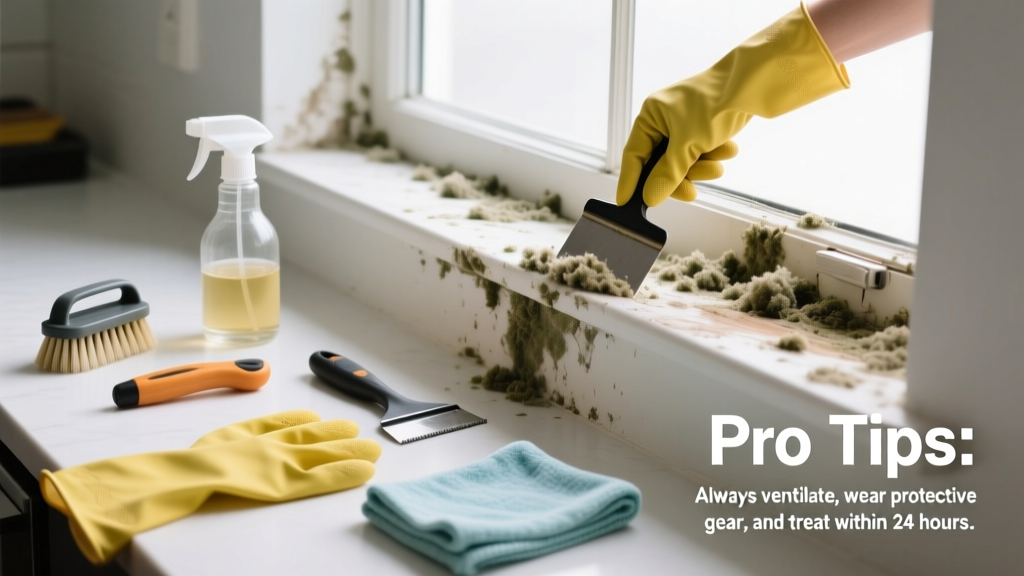
Mold on your window sill isn’t just unsightly—it’s a red flag for hidden moisture problems that can worsen over time. Left untreated, it can spread to drywall, insulation, or even your HVAC system. The good news? Most surface-level cases are fixable in under two hours with the right prep and products.
Quick Diagnosis
Before grabbing supplies, identify the root cause. Mold thrives where moisture lingers—especially in cold-bridge areas like window perimeters. Common culprits include:
- Condensation buildup from poor indoor ventilation or high humidity (above 60%)
- Rotten or cracked wood sills allowing water infiltration from outside
- Failed caulk or sealant around the window frame
- Clogged exterior weep holes or improperly sloped sills trapping rainwater
- Leaking double-pane windows with failed seals (visible fogging + interior moisture)
Tools & Materials Needed
| Item | Purpose | Estimated Cost |
|---|---|---|
| N95 respirator mask | Blocks inhalation of airborne spores during cleaning | $12–$25 |
| White vinegar (5% acidity) or EPA-registered mold inhibitor | Kills surface mold without toxic fumes; safer than bleach on porous wood | $3–$8 |
| Stiff nylon brush (non-metal) | Scrubbing without gouging soft wood or paint | $4–$10 |
| Microfiber cloths & disposable rags | Wipe residue without spreading spores; avoid cotton towels that trap mold | $6–$15 |
| Exterior-grade silicone caulk (mildew-resistant) | Re-sealing gaps after repair to prevent future moisture entry | $5–$12 |
Step-by-Step Fix
Follow this sequence whether you’re dealing with black, green, or fuzzy white growth:
- Isolate & protect: Close nearby doors, turn off HVAC, and tape plastic sheeting over the window opening to contain spores.
- Scrape loose growth: Use a plastic putty knife to gently lift flaky mold from painted or sealed surfaces—never sand or power-scrub.
- Apply vinegar solution: Spray undiluted white vinegar onto affected areas; let sit 10 minutes, then scrub with nylon brush. Rinse with distilled water (not tap—minerals feed mold).
- Dry thoroughly: Run a fan blowing across the sill for at least 4 hours. Use a moisture meter to confirm wood reads below 15% MC before resealing.
- Re-caulk & seal: Remove old caulk completely, clean groove with isopropyl alcohol, then apply new mildew-resistant silicone—smooth with a damp finger for full adhesion.
When to Call a Pro
DIY works only when mold covers less than 10 square feet *and* hasn’t penetrated deeper than the surface finish. Call a certified mold remediation specialist if:
- You find mold behind the trim, inside the wall cavity, or on structural framing
- The sill feels soft, spongy, or crumbles when pressed—indicating rot beyond surface treatment
- There’s been repeated flooding, roof leaks, or chronic condensation for more than 48 hours
- You or household members experience respiratory symptoms (wheezing, headaches, persistent cough) that improve when away from home
According to the Insurance Institute for Business & Home Safety's 2023 report, 72% of mold-related insurance claims involve delayed intervention—often because homeowners attempted DIY on advanced infestations.
Prevention Tips
Stopping recurrence means managing moisture—not just killing spores. Start here:
- Install interior storm windows or low-emissivity (Low-E) glass to reduce condensation by up to 40%
- Run bathroom and kitchen exhaust fans for 20+ minutes after showers or cooking
- Check exterior grading: soil should slope away from the foundation at 6 inches over 10 feet
- Inspect caulk annually—especially where the sill meets the frame—and replace every 3–5 years
- Use a hygrometer to monitor indoor RH; aim for 30–50% year-round
Can I use bleach on this?
No—bleach is ineffective on porous surfaces like wood or drywall. It only kills surface spores and leaves roots intact. The CDC explicitly advises against using chlorine bleach for mold remediation on absorbent materials (CDC Guidelines for Mold Remediation, 2022). Vinegar or hydrogen peroxide-based cleaners work better and won’t corrode metal window parts.
Is black mold on my window sill dangerous?
Color alone doesn’t indicate toxicity—Stachybotrys (‘black mold’) requires prolonged saturation to grow and is rare on sills. More common culprits are Cladosporium or Penicillium, which still trigger allergies and asthma. If you suspect Stachybotrys, get lab testing—but assume all visible mold warrants removal and source correction.
Do I need to replace the whole window?
Not usually. Replacement is only necessary if the frame is warped, the glazing seal is broken (causing persistent fog), or the sill has >1 inch of rot depth. A qualified contractor can often sister in a new wood sill or install a PVC cap over existing framing—a fraction of full-window cost.
Will painting over mold fix it?
No—painting traps moisture and accelerates decay. Mold will bleed through primer and paint within weeks. Always remove mold and dry the substrate first. Use mold-inhibiting primer like Zinsser Mold Killing Primer only as a final barrier—not a substitute for cleaning.
How long does mold take to grow after a leak?
Mold spores germinate in as little as 24–48 hours when moisture and organic material (like wood dust or dust buildup) are present. The U.S. EPA estimates that 14% of household water usage is from leaks—and undetected slow leaks behind windows account for nearly 1 in 5 basement mold cases (EPA WaterSense Report, 2023).
Can I clean this myself if I have asthma?
Only with strict PPE: N95 respirator, goggles, and nitrile gloves. Even brief exposure can trigger bronchospasm. If symptoms flare during cleanup—or if mold covers more than a 3' x 3' area—hire an IICRC-certified firm. Their containment protocols cut airborne spore counts by 97% versus DIY (IICRC S520 Standard, 2022).
A well-maintained window sill shouldn’t host mold—ever. What looks like a cosmetic issue is really your home’s early warning system for moisture imbalance. Tackle it promptly, document your repairs, and revisit your home’s ventilation strategy. For ongoing support, check our guide to condensation control and wood sill restoration techniques.