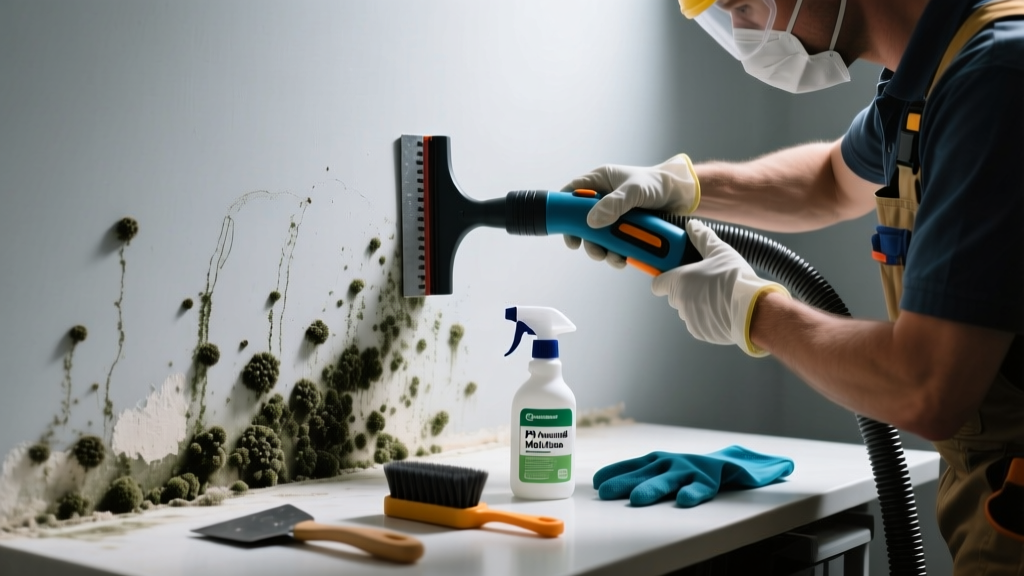
If you’ve scrubbed, sprayed, and sanded mold off your walls—only to watch it creep back in the same spot weeks later—you’re not dealing with surface grime. You’re facing active moisture intrusion or incomplete remediation. Mold doesn’t 'not work'—it’s signaling that the root cause hasn’t been addressed.
Quick Diagnosis
Mold recurrence isn’t random. It points to one or more underlying issues:
- Hidden water leak behind drywall (e.g., from a faulty pipe joint or roof flashing)
- Condensation buildup due to poor insulation or vapor barrier failure
- Inadequate ventilation in bathrooms, basements, or closets
- Using bleach-only treatment on porous surfaces like drywall or wood (bleach doesn’t penetrate)
- Previous cleanup missed mold growing inside wall cavities or under baseboards
Tools & Materials Needed
| Item | Purpose | Estimated Cost |
|---|---|---|
| HEPA vacuum with mold-rated filter | Removes spores without recirculating them into air | $120–$280 |
| Non-porous mold removal solution (e.g., EC3 or Concrobium) | Kills mold at roots on porous surfaces; no VOCs or fumes | $25–$45 |
| Plastic sheeting (6-mil poly) | Creates containment barrier to prevent cross-contamination | $15–$30 |
| Moisture meter (pin-type + pinless) | Detects hidden moisture in drywall, studs, and subfloor | $80–$220 |
| N95 respirator + goggles + nitrile gloves | Protects against airborne spores and chemical exposure | $20–$40 |
Step-by-Step Fix
Don’t repeat the same failed method. Try these escalating interventions based on severity and location:
- Confirm moisture source: Use a moisture meter to test drywall (above 15% moisture content indicates active saturation) and adjacent framing. Check behind outlets, baseboards, and ceiling corners.
- Remove affected drywall: Cut out all visibly stained or soft drywall plus 12 inches beyond visible mold. Discard in sealed plastic bags—not through HVAC or open windows.
- Treat framing and cavity: Spray non-toxic mold inhibitor (e.g., Concrobium Mold Control) on exposed studs, sill plates, and insulation. Let dry fully before re-drywalling.
- Install vapor-permeable barrier: Use smart vapor retarders (e.g., MemBrain) instead of polyethylene—allows walls to dry inward while blocking outward vapor drive.
- Verify airflow and exhaust: Test bathroom fans with an anemometer—they must move ≥50 CFM. Add a timer switch if they’re rarely used.
When to Call a Pro
DIY stops where health risk and structural integrity begin. Call a certified mold remediator (IICRC AMRT-certified) if:
- Mold covers more than 10 square feet—or is growing behind tile, under flooring, or inside HVAC ducts
- You smell persistent musty odors but see no visible growth (indicates hidden colony in wall cavities or crawlspaces)
- There’s evidence of chronic leaks: peeling paint, warped baseboards, efflorescence on concrete, or rust on metal fasteners
- Household members report worsening respiratory symptoms (wheezing, headaches, nasal congestion) only at home
According to the EPA’s Mold Remediation in Schools and Commercial Buildings (2022), improper mold removal can increase airborne spore counts by up to 10x—making conditions worse, not better.
Prevention Tips
Stopping recurrence means managing humidity and water movement—not just killing spores:
- Maintain indoor relative humidity between 30–50% year-round using a dehumidifier with auto-drain and hygrometer readout
- Install exterior-grade caulk around window frames, door thresholds, and siding joints—renew every 3 years
- Use closed-cell spray foam insulation in rim joists and basement walls to eliminate thermal bridging and condensation points
- Run bathroom fans for 20 minutes post-shower—and duct them outside, not into attics or soffits
Can I use bleach on this?
No—especially not on drywall, wood, or plaster. The U.S. EPA explicitly advises against bleach for mold remediation on porous materials because it leaves roots intact and can feed mold via residual sugars in cellulose. Bleach only works on non-porous surfaces like tile grout, and even then, it’s less effective than hydrogen peroxide-based cleaners.
How long does mold take to grow after a leak?
Under ideal conditions (≥60% RH, temps 70–90°F), mold spores can germinate in as little as 24–48 hours and become visible in 3–12 days. That’s why the water damage timeline stresses immediate drying—within 24 hours—to prevent colonization.
Is black mold always toxic?
No. “Black mold” is a misnomer—it refers to any dark-colored mold (like Stachybotrys, Cladosporium, or Nigrospora), not a specific species. Only certain strains produce mycotoxins, and toxicity depends on concentration, exposure duration, and individual sensitivity. Lab testing is required to identify species and quantify risk.
Do I need to replace insulation after mold?
Yes—if it’s fiberglass batts or cellulose. These materials trap moisture and cannot be effectively cleaned. According to the mold in attic insulation guide, contaminated insulation must be removed in sealed containment and replaced with mold-resistant options like mineral wool or rigid foam board.
Will painting over mold kill it?
No—painting seals spores in place and creates a food source for future growth. Mold will bleed through primer and continue spreading beneath the paint film. Always remove mold and dry the substrate completely before priming with a mold-inhibiting primer like Zinsser Mold Killing Primer.
How do I know if mold is gone after cleaning?
Visual clearance isn’t enough. Use a moisture meter to confirm drywall reads ≤12% MC, then swab-test with a DIY mold test kit (e.g., Mold Armor). For peace of mind, hire an independent hygienist for post-remediation verification (PRV) testing—required for insurance claims over $5,000 per the IICRC S520 Standard (2023).
Fixing stubborn mold isn’t about stronger chemicals—it’s about drier walls, smarter materials, and slower, more deliberate work. When you treat the symptom instead of the cause, you’ll keep fighting the same patch for years. But once you locate and stop the moisture, the mold won’t come back—and neither will the frustration. For deeper moisture mapping, check our guide to finding hidden leaks behind walls.