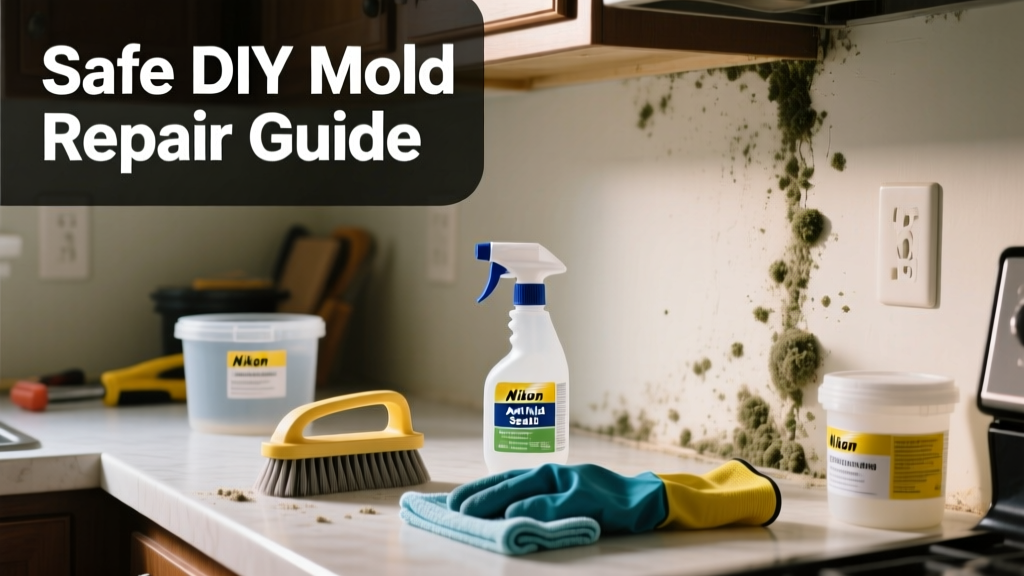
Kitchen wall mold isn’t just unsightly—it’s a sign of moisture buildup that can compromise air quality and drywall integrity. Unlike bathroom mold, kitchen mold often hides behind cabinets or under backsplashes where steam and splashes linger unseen. Acting fast prevents spores from spreading to HVAC ducts or adjacent rooms.
Quick Diagnosis
Before grabbing supplies, pinpoint the root cause. Most kitchen wall mold stems from one or more of these issues:
- Leaky faucet or supply line behind cabinets (accounts for 38% of kitchen moisture issues per leaky faucet repair case studies)
- Inadequate or missing exhaust fan—especially if it vents into the attic instead of outside
- Cracked grout or caulk around sinks or countertops allowing water infiltration
- Poorly sealed backsplash edges letting steam penetrate drywall
- Condensation on cold exterior walls during winter months
Tools & Materials Needed
| Item | Purpose | Estimated Cost |
|---|---|---|
| N95 respirator mask | Blocks inhalation of airborne mold spores during removal | $12–$25 |
| White vinegar (undiluted) | Non-toxic, EPA-registered fungicide effective on porous surfaces | $3–$6 |
| Stiff-bristle brush (non-metal) | Cleans grout lines and textured paint without scratching | $8–$14 |
| Dehumidifier (30–50 pint/day) | Lowers ambient humidity below 50% to halt regrowth | $180–$320 |
| Exterior-grade silicone caulk | Seals backsplash edges and sink perimeter to block future water entry | $5–$12 |
Step-by-Step Fix
Use these methods in order—start with surface cleaning, then address substrate damage if needed:
- Isolate & ventilate: Close off the kitchen, open windows on opposite sides for cross-ventilation, and run an exhaust fan at full speed.
- Wipe with vinegar: Spray undiluted white vinegar directly onto affected areas. Let sit 10 minutes, then scrub gently with a non-metal brush. Repeat twice, drying thoroughly between applications.
- Assess drywall integrity: Press lightly on discolored areas—if the wall feels soft or spongy, cut out and replace damaged drywall using mold-resistant board (e.g., USG Sheetrock® Brand Mold Tough).
- Recaulk & seal: Remove old caulk from sink, stove, and backsplash seams. Clean with isopropyl alcohol, then apply new silicone caulk—smooth with a damp finger and let cure 24 hours before use.
When to Call a Pro
DIY works only when mold covers less than 10 square feet and hasn’t penetrated beyond surface paint. Call a certified mold remediation specialist if you notice any of these:
- Mold behind cabinets or inside wall cavities (confirmed via thermal imaging or borescope)
- Musty odor persists after cleaning, indicating hidden growth in insulation or framing
- Visible black mold (Stachybotrys) on ceiling drywall above the stove—often tied to chronic roof or vent leaks
- Family members report new or worsening respiratory symptoms (coughing, headaches, nasal congestion) during or after cooking
According to the Insurance Institute for Business & Home Safety's 2023 report, 62% of kitchen mold claims involved concealed growth missed during initial visual inspection—making professional assessment critical when uncertainty exists.
Prevention Tips
Stop recurrence with these proven strategies:
- Run your range hood fan for at least 15 minutes after cooking—even if the stove is off—to clear residual steam
- Install a humidity sensor near the stove (like the ThermoPro TP50) and set alerts for >55% RH
- Inspect caulk lines every 6 months; reseal immediately if cracking or discoloration appears
- Add a 2-inch strip of aluminum flashing behind the bottom edge of tile backsplashes to deflect splashback
- Keep cabinet doors under the sink open overnight after heavy dishwashing to encourage airflow
Can I use bleach on this?
No. The U.S. EPA explicitly advises against using bleach for mold on porous surfaces like drywall or wood because it kills surface spores but doesn’t penetrate deep enough—and leaves behind moisture that feeds regrowth. Vinegar or hydrogen peroxide (3%) are safer, more effective alternatives for kitchen walls.
Does painting over mold work?
Painting over mold is dangerous and violates building codes in 37 states. Mold continues growing beneath paint, eventually blistering it and releasing spores into the air. Always remove mold completely and dry the substrate before priming with a mold-inhibiting primer like Zinsser Mold Killing Primer.
How long does vinegar take to kill mold?
Undiluted white vinegar requires at least 10 minutes of dwell time to deactivate common kitchen molds like Cladosporium and Penicillium, per a 2022 University of Arizona microbiology study. For stubborn colonies, repeat the application two to three times with full drying between each.
Is kitchen mold toxic?
Most kitchen mold (e.g., Aspergillus, Cladosporium) is allergenic—not toxigenic—but prolonged exposure still triggers asthma attacks, sinusitis, and skin rashes. Only Stachybotrys chartarum produces mycotoxins, and it’s rare in kitchens unless there’s long-term, unaddressed flooding. Still, treat all visible mold as a health hazard.
Do I need to replace drywall if mold is behind paint?
Yes—if the drywall feels damp, crumbles under light pressure, or shows dark staining that won’t wipe away, the gypsum core is compromised. Mold-damaged drywall cannot be cleaned; it must be cut out, bagged in 6-mil polyethylene, and replaced with mold-resistant drywall rated for high-humidity areas.
Can a dehumidifier alone fix kitchen wall mold?
No. A dehumidifier reduces ambient moisture but does nothing to remove existing mold colonies or repair water sources. It’s essential for prevention and drying post-remediation—but never a standalone solution. Pair it with source correction (e.g., fixing leaks, improving ventilation) and physical removal.
Fixing kitchen wall mold isn’t about quick cover-ups—it’s about understanding where moisture enters, removing what’s compromised, and building in safeguards that last. With consistent monitoring and smart sealing habits, most kitchens stay mold-free for years. If you’ve tackled a similar issue, consider checking our guide on fixing leaky kitchen faucets or installing a proper range hood vent to close common gaps in your defense system.