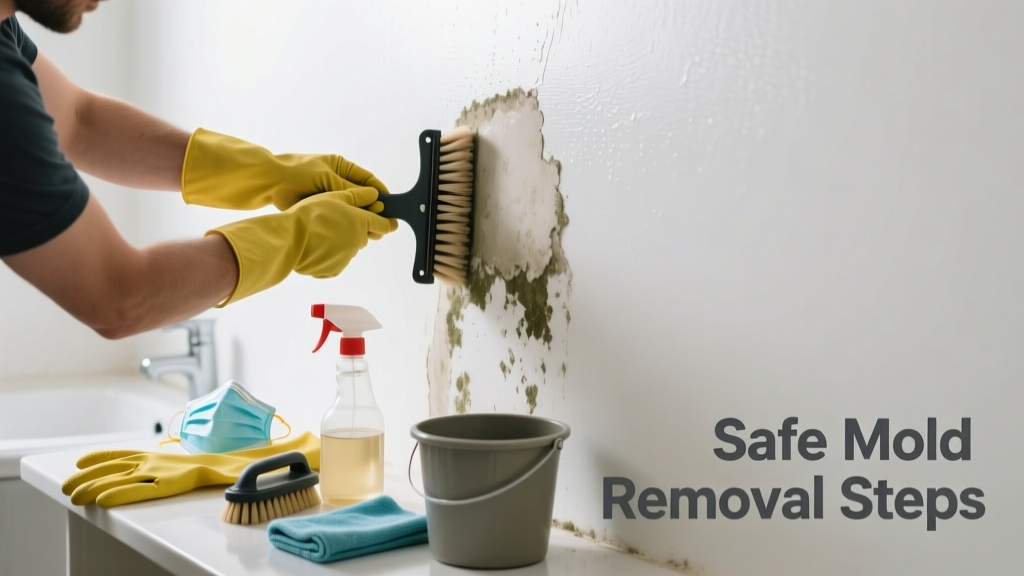
Bathroom mold isn’t just ugly—it’s a sign of moisture control failure and potential health risk. If you’ve spotted fuzzy black, green, or white patches on grout lines, drywall seams, or behind shower tiles, act fast before it spreads or compromises structural integrity.
Quick Diagnosis
Mold thrives where moisture lingers. Before grabbing supplies, identify the root cause:
- Poor ventilation—bathroom fan runs <15 minutes post-shower or isn’t vented outdoors
- Cracked or missing caulk around tub, sink, or tile edges
- Leaking supply lines or shower valve behind walls (check for discoloration or soft drywall)
- Insufficient insulation in exterior walls causing condensation in cold months
- Old or improperly installed drywall (e.g., standard drywall instead of mold-resistant green board)
Tools & Materials Needed
| Item | Purpose | Estimated Cost |
|---|---|---|
| N95 respirator mask | Blocks inhalation of airborne spores during removal | $8–$15 |
| White vinegar (undiluted) or EPA-registered mold cleaner (e.g., Concrobium) | Kills surface mold without toxic fumes; vinegar is effective on non-porous surfaces per EPA 2022 guidelines | $3–$22 |
| Stiff-bristle nylon brush | Scrubbing grout and textured tile without scratching surfaces | $4–$10 |
| Mold-resistant drywall patch kit | For replacing water-damaged sections with Type X or MR board | $18–$35 |
| 100% silicone caulk (mildew-resistant) | Seals joints to prevent future water intrusion | $5–$9 |
Step-by-Step Fix
Choose your method based on severity and surface type:
- Surface Mold on Tile/Grout: Spray undiluted white vinegar, let sit 10 minutes, scrub with stiff brush, rinse with clean water, dry thoroughly with microfiber cloth.
- Mold on Painted Drywall (small area, <10 sq ft): Lightly sand affected area with 120-grit paper, wipe dust, apply Concrobium Mold Control, then prime with Zinsser Mold Killing Primer before repainting.
- Behind Tiles or in Wall Cavity: Cut out damaged drywall (minimum 6 inches beyond visible mold), inspect framing for rot, replace with mold-resistant drywall, seal seams with mold-inhibiting joint compound, and re-caulk all penetrations.
When to Call a Pro
DIY crosses into unsafe territory when:
- Mold covers more than 10 square feet (EPA recommends professional remediation above this threshold)
- You suspect mold inside wall cavities without visible access points
- There’s evidence of chronic leaks (e.g., warped baseboards, musty odor behind walls, recurring stains)
- Family members experience unexplained respiratory symptoms, headaches, or allergy flare-ups tied to bathroom use
"Mold exposure in damp indoor environments is associated with increased risk of asthma development in children, according to a 2021 study published in the Journal of Allergy and Clinical Immunology."
Prevention Tips
Stopping recurrence means controlling humidity and eliminating hidden water sources:
- Run the bathroom exhaust fan for at least 20 minutes after every shower—and verify it vents outside, not into the attic (a common error found in 62% of homes inspected by the Building Science Corporation in 2022)
- Wipe down shower walls and doors with a squeegee after each use
- Re-caulk tub/shower surrounds every 12–18 months—even if it looks intact
- Install a hygrometer; keep relative humidity below 55% (ideal range: 30–50%)
- Use mold-resistant drywall and paint (e.g., Benjamin Moore Aura Bath & Spa) on all bathroom walls and ceilings
Can I use bleach on this?
No—bleach is ineffective on porous surfaces like drywall or grout and only removes surface discoloration. The EPA states bleach does not penetrate deep enough to kill mold roots and can even feed some mold species due to its high water content. Stick to vinegar, hydrogen peroxide, or EPA-registered fungicides.
How long does mold removal take?
Small surface jobs (grout/tile) take under 2 hours start-to-finish. Replacing drywall and re-finishing takes 2–3 days, including drying time between primer, paint, and caulk cure cycles. Always allow 48 hours of continuous airflow and dehumidification before resealing.
Is black mold in the bathroom dangerous?
Color alone doesn’t indicate toxicity—Stachybotrys (often called “black mold”) is rare in bathrooms; most black growth is Cladosporium or Aspergillus, which still trigger allergies and asthma. Regardless of species, any visible mold warrants removal—especially in high-moisture zones where exposure is frequent.
Do I need to replace the drywall?
Yes—if the drywall feels soft, crumbles when pressed, shows brown staining, or has mold penetrating deeper than the surface paper layer. Standard drywall absorbs water like a sponge; once saturated, it cannot be fully cleaned and must be cut out and replaced with mold-resistant board. Learn more about mold-resistant drywall options.
Can a dehumidifier help prevent bathroom mold?
A portable dehumidifier helps—but only if placed inside the bathroom *during and immediately after* showers. For lasting results, pair it with proper ventilation. A ducted exhaust fan moving ≥50 CFM (per ASHRAE 62.2) is far more effective than a dehumidifier alone. See our guide on bathroom exhaust fan installation for sizing tips.
What’s the best mold-resistant paint for bathroom walls?
Look for paints labeled "mildew-resistant" *and* containing an EPA-registered fungicide—not just antimicrobial additives. Top performers include Sherwin-Williams Duration Home Mildew Resistant and Benjamin Moore Aura Bath & Spa. Both passed ASTM D3273 testing with zero mold growth after 28 days of continuous exposure. Apply two full coats over mold-killing primer.
Fixing bathroom mold isn’t just about scrubbing—it’s about diagnosing moisture pathways, choosing materials that resist future growth, and building habits that keep humidity in check. Once you’ve sealed the leaks, upgraded the ventilation, and selected the right products, your bathroom can stay clean, healthy, and mold-free for years. And if you’re tackling other moisture issues, check out our guide on leaky shower valve repair—a frequent hidden source of behind-the-wall mold.