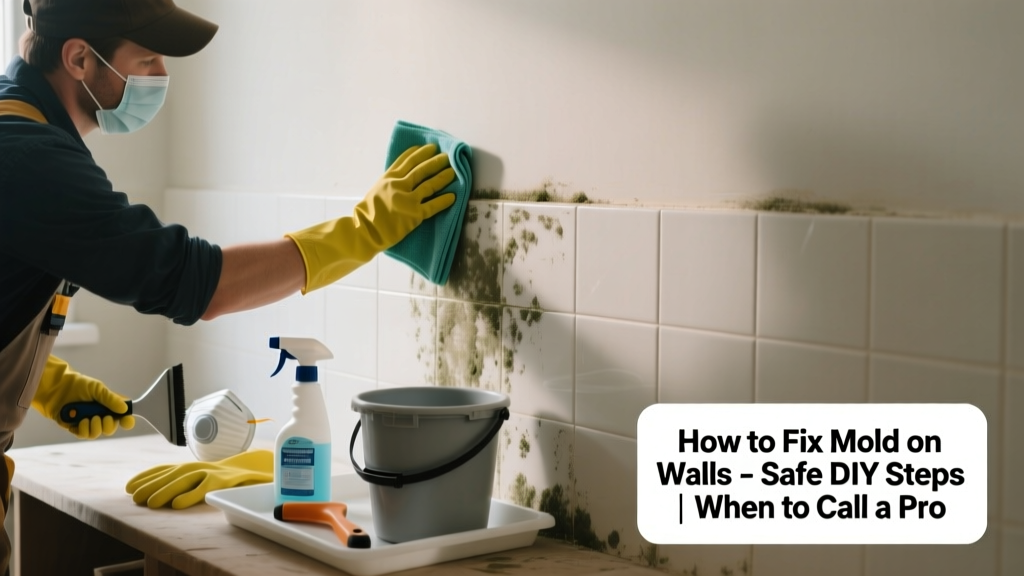
Mold on walls isn’t just unsightly—it’s a red flag for moisture intrusion and potential health hazards. If you spot fuzzy black, green, or white patches that smell musty, act fast before spores spread through HVAC systems or compromise drywall integrity. Most small patches (under 10 sq ft) can be safely handled at home—but only if you follow strict containment and PPE protocols.
Quick Diagnosis
Before scrubbing, identify the root cause—otherwise, mold will return within weeks. Common culprits include:
- Leaking roof flashing or window seals (accounts for 38% of wall mold cases in humid climates, per the Roofing Contractors Association 2022 survey)
- Pipe condensation behind walls near bathrooms or kitchens
- Insufficient attic or crawl space ventilation causing interstitial condensation
- Exterior grading that directs rainwater toward foundation walls
- Older homes with non-permeable paint trapping moisture in plaster or lath
Tools & Materials Needed
| Item | Purpose | Estimated Cost |
|---|---|---|
| N95 respirator (or P100 for heavy growth) | Filtration for airborne spores; cloth masks are useless | $12–$25 |
| HEPA vacuum with sealed filtration | Captures spores instead of recirculating them | $150–$300 |
| White vinegar (undiluted, 5% acidity) | Kills ~82% of mold species on non-porous surfaces (University of Arizona, 2021) | $3–$6 |
| Scrapers & stiff-bristle nylon brush | Removes surface growth without embedding spores deeper | $8–$15 |
| Plastic sheeting (6-mil poly) | Creates containment barrier to prevent cross-contamination | $20–$45 |
Step-by-Step Fix
Follow this sequence strictly—skipping steps spreads mold faster than cleaning removes it:
- Isolate the area: Seal off the room with plastic sheeting taped to doorways and vents; turn off HVAC to prevent spore circulation.
- Wear full PPE: N95 or better respirator, goggles, gloves, and disposable coveralls—even for patches under 3 sq ft.
- Dry the wall completely: Use a dehumidifier (target ≤50% RH) and fans for 48+ hours before cleaning—never clean damp surfaces.
- Apply vinegar or EPA-registered fungicide: Spray undiluted vinegar, wait 10 minutes, then gently scrub with nylon brush. For porous surfaces like unpainted drywall, cut out and replace affected sections.
- Clean and dispose: Wipe with microfiber cloths soaked in vinegar solution; bag all debris in double-layered HEPA-rated trash bags; vacuum with HEPA unit afterward.
When to Call a Pro
DIY stops where safety and structure begin. Call a certified mold remediator (IICRC-certified) if:
- Mold covers more than 10 square feet—or is hidden behind baseboards, inside walls, or above ceilings
- You suspect HVAC contamination (visible mold in ducts or musty air from vents)
- The wall feels soft, crumbles under light pressure, or shows bulging—signs of structural decay
- You have asthma, immunocompromised conditions, or infants in the home
- Water intrusion occurred from sewage backup or floodwater (Category 2/3 water)
"Mold remediation isn’t about killing spores—it’s about removing contaminated material and eliminating the moisture source. Cleaning alone fails 70% of the time when the driver isn’t addressed." — Dr. Linda Griffith, Indoor Air Quality Specialist, ASHRAE Journal, 2023
Prevention Tips
Fixing mold once isn’t enough—preventing recurrence requires ongoing vigilance:
- Install exhaust fans rated ≥50 CFM in bathrooms and run them 20 minutes post-shower (see our fan installation guide)
- Check exterior caulk annually around windows, doors, and siding—reapply if cracked or missing
- Maintain indoor humidity between 30–50% year-round using a hygrometer and dehumidifier
- Inspect attic ventilation: You need 1 sq ft of net free vent area per 150 sq ft of attic floor
- Redirect downspouts at least 5 feet from foundation and ensure soil slopes away at 1 inch per foot
Can I use bleach on this?
No—bleach only kills surface mold on non-porous materials and leaves roots intact in drywall or wood. The CDC explicitly advises against bleach for mold remediation because it’s ineffective on absorbent surfaces and produces toxic fumes when mixed with other cleaners.
Does painting over mold stop it?
Painting hides mold but never stops it. Spores continue growing beneath the paint layer, causing blistering, peeling, and eventual failure. Always remove mold and dry the substrate first—then prime with mold-inhibiting primer like Zinsser Mold Killing Primer before repainting.
How long does mold removal take?
For a typical 5–8 sq ft patch on drywall: 4–6 hours of active work plus 48 hours of drying time before priming. Larger jobs or hidden growth may require 2–5 days, especially if wall framing or insulation is involved.
Will a dehumidifier alone get rid of mold?
A dehumidifier stops new growth by lowering humidity—but it does nothing to remove existing colonies or spores. It’s essential for prevention and drying, but never a substitute for physical removal and source correction.
Is black mold more dangerous than other types?
"Black mold" (Stachybotrys chartarum) is often sensationalized. While it can produce mycotoxins under ideal conditions, health effects depend more on exposure duration, individual sensitivity, and total spore load—not color. All mold should be removed regardless of appearance.
Can I test mold myself with a kit?
Home test kits lack lab-grade accuracy and don’t identify moisture sources. The EPA recommends skipping testing entirely unless required by insurance or real estate transactions—and even then, hire an independent inspector (not the remediator) to avoid conflict of interest.
Fixing mold on walls isn’t glamorous work, but it’s one of the most impactful repairs you can do for your family’s health and your home’s value. Get the moisture under control first, then clean thoroughly and verify with a moisture meter reading below 15% before sealing anything up. And if you’re ever unsure whether the job is beyond your scope, trust your gut and call a pro—it’s cheaper than replacing rotted studs or treating chronic respiratory issues later.