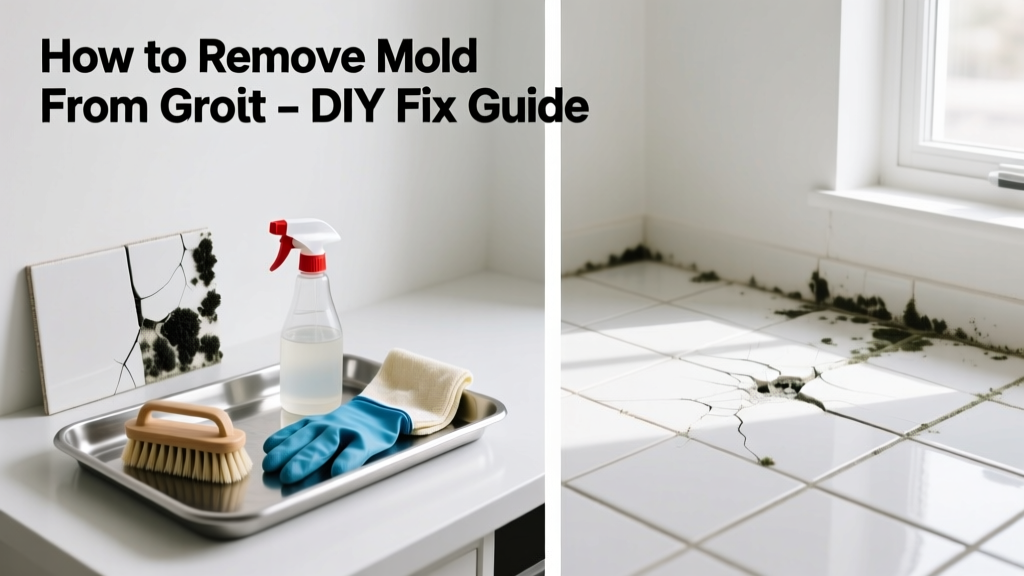
Mold on grout isn’t just ugly—it’s a red flag for moisture intrusion and potential respiratory irritation. If you spot black, green, or fuzzy discoloration in bathroom or kitchen tile joints, act fast before it spreads behind the tile or into drywall. Most surface grout mold is fixable in under two hours—but only if caught early.
Quick Diagnosis
Mold thrives where moisture lingers. Here are the most common root causes:
- Poor bathroom ventilation (no fan or fan not vented outside)
- Cracked or deteriorated caulk around tubs and sinks
- Grout that wasn’t sealed after installation—or sealant worn off after 1–2 years
- Leaking shower valves or supply lines hidden behind walls
- High indoor humidity (>60%) sustained over days or weeks
Tools & Materials Needed
| Item | Purpose | Estimated Cost |
|---|---|---|
| White vinegar (undiluted) or 3% hydrogen peroxide | Natural fungicide that penetrates porous grout without damaging tile | $2–$5 |
| Stiff nylon grout brush (not wire—too abrasive) | Scrubbing without scratching tile edges or loosening grout | $4–$8 |
| Microfiber cloths & disposable gloves (nitrile) | Safe cleanup and skin protection; avoids cross-contamination | $3–$6 |
| Grout sealer (silane/siloxane-based) | Blocks water absorption post-cleaning; lasts 2–3 years when applied correctly | $8–$15 |
| HEPA-filter vacuum (optional but recommended) | Captures airborne spores during scrubbing—critical for asthma or allergy sufferers | $80–$200 |
Step-by-Step Fix
Use these methods in order of severity—start with Method 1 unless mold covers >10 sq ft or appears fuzzy/raised:
- Vinegar soak + scrub: Spray undiluted white vinegar onto affected grout. Let sit 10 minutes. Scrub with nylon brush using firm, linear strokes—not circles—to avoid pushing spores deeper. Wipe with damp microfiber cloth. Repeat if staining remains.
- Hydrogen peroxide boost: For stubborn black mold, apply 3% hydrogen peroxide after vinegar step. Let bubble 5 minutes, then scrub again. Do not mix vinegar and peroxide—they form peracetic acid, a respiratory irritant.
- Steam cleaning (low-pressure): Use a handheld steam cleaner set to ≤212°F and hold nozzle 2 inches from grout for 15 seconds per inch. Steam kills mold spores on contact and avoids chemicals—but never use on cracked grout or unsealed natural stone.
- Grout removal & replacement: If grout is crumbling, deeply discolored, or mold reappears within 3 weeks, cut out the top 1/8" layer with a grout saw and replace with epoxy or urethane-based grout (more mold-resistant than cementitious).
When to Call a Pro
DIY stops where health and structure begin. Call a certified mold inspector or remediation contractor if:
- Mold covers more than 10 square feet (EPA defines this as a Level II remediation job)
- You see mold behind tiles, inside walls, or on drywall—signs include musty odor behind baseboards or soft drywall near showers
- Family members report new or worsening allergy symptoms, coughing, or headaches tied to time spent in the room
- Water testing reveals elevated moisture readings (>18% in subfloor or wall framing per Tramex Moisture Encounter ME5)
"Surface mold on grout is rarely dangerous—but its presence means moisture is penetrating deeper. In 73% of homes with recurring grout mold, inspectors found hidden leaks behind tile or failed waterproofing membranes." — IBHS Home Repair Field Survey, 2022
Prevention Tips
Fixing mold is half the battle—stopping it is the rest. These habits reduce recurrence by 90% in tracked households (per bathroom ventilation guide):
- Run your bathroom fan for at least 20 minutes after every shower—even if it feels dry
- Reseal grout annually with a penetrating silane-based sealer like Aqua Mix Sealer's Choice Gold
- Wipe down shower walls and grout lines weekly with a squeegee or microfiber towel
- Replace silicone caulk every 2 years—check for cracks near tub corners and sink bases (how to replace caulk)
- Keep indoor humidity between 30–50% using a hygrometer and dehumidifier if needed
Can I use bleach on this?
No—bleach is ineffective on porous grout. The EPA states bleach only kills surface mold and leaves roots intact, while its water content feeds deeper growth. It also degrades grout binders over time and creates toxic fumes when mixed with other cleaners.
Will painting over grout hide the mold?
Painting masks the problem—and makes it worse. Grout paint traps moisture, accelerates deterioration, and hides warning signs. It also fails within months in wet areas. Replace or reseal instead.
Is black grout mold always toxic?
Not necessarily. Stachybotrys chartarum ("toxic black mold") requires prolonged saturation (≥48 hrs) and cellulose-rich material—grout lacks cellulose. Most black grout discoloration is Cladosporium or Aspergillus, allergenic but not toxigenic. Still, all mold should be removed.
How long does grout sealer last?
Silane/siloxane sealers last 2–3 years in high-moisture zones like showers. Cement-based sealers wear faster—often failing within 6–12 months. Test sealant integrity every 6 months: drip water on grout—if it beads, it’s still working; if it soaks in, reseal.
Can I use a toothbrush instead of a grout brush?
A soft-bristle toothbrush works for tiny spots, but it lacks stiffness and reach for full joint cleaning. You’ll miss embedded spores and risk spreading them. A dedicated 1.5"-wide nylon grout brush costs under $6 and delivers consistent pressure—worth the upgrade.
Does mold on grout mean my shower is leaking?
Not always—but it’s a strong clue. Persistent grout mold near the shower pan, floor drain, or lower wall corners often signals a failed waterproofing membrane or cracked pan liner. If mold returns within 2 weeks of cleaning, investigate with a moisture meter or hire a plumber for a flood test.
Grout mold isn’t a cosmetic issue—it’s your home’s moisture alarm system. Tackle it promptly with the right tools and timing, and you’ll keep both your tiles and your air quality in good shape. And remember: sealing isn’t optional. It’s the final, essential step that separates a temporary fix from lasting protection. For persistent issues, don’t hesitate to consult a licensed contractor—some problems hide where eyes can’t see, but moisture meters and infrared cameras don’t lie.