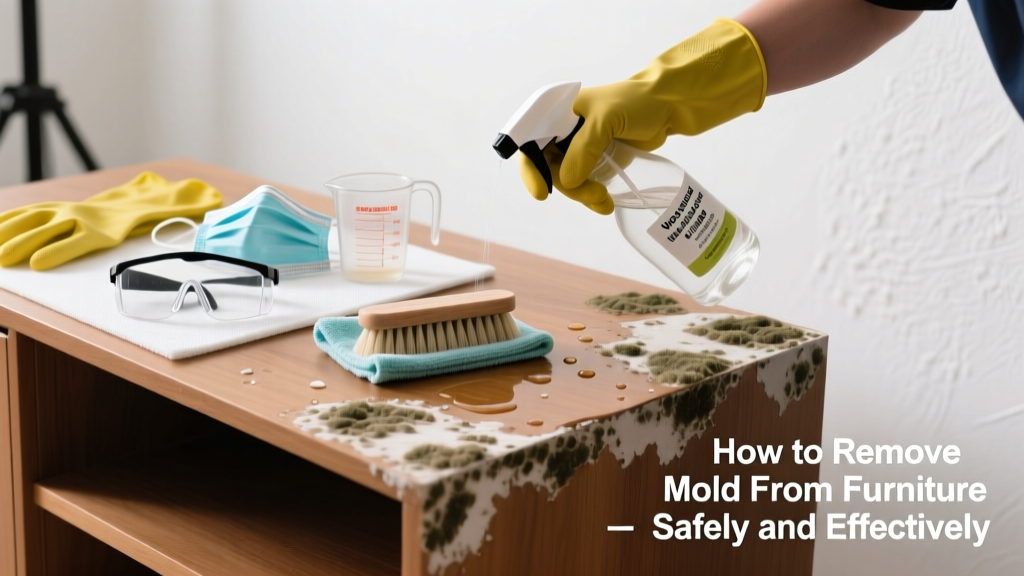
Mold on furniture isn’t just unsightly—it’s a red flag for hidden moisture and potential health hazards. Whether it’s fuzzy spots on your leather couch or black streaks under a wooden dresser, acting fast prevents spread and structural damage. Most surface mold can be safely removed at home—if you know the right steps and limits.
Quick Diagnosis
Mold thrives where moisture lingers. Before scrubbing, identify the root cause:
- Water leaks from pipes, roofs, or windows near furniture placement
- Poor ventilation in basements, closets, or garages where items are stored
- High indoor humidity (above 60%) sustained for more than 48 hours
- Furniture pressed against exterior walls with no airflow behind it
- Previous flood or spill that wasn’t fully dried within 24–48 hours
Tools & Materials Needed
| Item | Purpose | Estimated Cost |
|---|---|---|
| N95 respirator mask | Blocks inhalation of mold spores during cleaning | $12–$25 |
| White vinegar (undiluted) | Natural fungicide effective on non-porous surfaces | $3–$6 |
| HEPA vacuum with brush attachment | Removes spores from fabric without spreading them | $120–$300 |
| Microfiber cloths (lint-free) | Prevents scratching; holds moisture without dripping | $8–$15 for pack of 12 |
| Isopropyl alcohol (70% or higher) | Kills mold on hard, non-porous surfaces like metal or plastic frames | $5–$10 |
Step-by-Step Fix
Choose the method based on furniture material and mold severity. Always wear gloves, goggles, and an N95 mask—even for small patches.
- Assess & Isolate: Move furniture outdoors if possible. Cover nearby surfaces with plastic sheeting. Seal off the room with tape and plastic if indoors.
- Surface Mold on Hard Surfaces (wood, metal, plastic): Wipe with undiluted white vinegar using a microfiber cloth. Let sit 10 minutes, then wipe dry. Follow with 70% isopropyl alcohol to kill residual spores.
- Fabric Upholstery (non-removable covers): Vacuum thoroughly with HEPA filter first. Then lightly mist with vinegar-water (1:1), blot—not rub—with clean cloth. Air-dry in direct sun if safe for fabric.
- Leather or Vinyl: Use pH-neutral leather cleaner first, then apply diluted tea tree oil (1 tsp per cup water) with soft cloth. Never use bleach—it degrades leather fibers.
When to Call a Pro
DIY stops where safety and structural integrity begin. Call a certified mold remediation specialist if:
- Mold covers more than 10 square feet—per EPA guidelines, this requires containment and air filtration
- You suspect mold inside furniture framing, padding, or wall cavities behind it
- Someone in the household has asthma, allergies, or compromised immunity
- The furniture was submerged in floodwater (Category 3 water), which carries bacteria and toxins
"Mold growing inside upholstery or particleboard frames often means irreversible contamination—replacing the item is safer and cheaper than full remediation." — Indoor Air Quality Association, Mold Remediation Standards Manual (2022)
Prevention Tips
Stopping recurrence matters more than cleaning once. Focus on moisture control:
- Use a hygrometer to monitor indoor humidity—keep it between 30–50%
- Run a dehumidifier in basements or crawlspaces year-round
- Leave 3 inches of space between furniture and exterior walls for airflow
- Inspect and reseal wood furniture every 12–18 months with water-resistant finish
- Air out upholstered pieces monthly by rotating cushions and vacuuming seams
Can I use bleach on this?
No—bleach only kills surface mold on non-porous materials and doesn’t penetrate porous wood or fabric. Worse, it leaves behind moisture that feeds regrowth. The U.S. EPA explicitly advises against bleach for mold removal on absorbent surfaces (EPA Mold Remediation Guidelines, 2021).
Will sunlight kill mold on my couch?
Sunlight’s UV rays can inhibit surface mold growth—but only on exposed, dry areas. It won’t reach deep into cushion foam or fabric backing. Combine sun exposure with HEPA vacuuming and vinegar treatment for best results.
Is mold on antique furniture salvageable?
Sometimes—but proceed cautiously. Surface mold on solid hardwood antiques may respond to gentle vinegar + soft-bristle brushing. Avoid water-based cleaners on veneer or gilding. Consult a conservator first via antique furniture restoration specialists.
How long does mold take to grow after a spill?
Mold colonies can establish in as little as 24–48 hours under warm, humid conditions. That’s why drying wet furniture within 24 hours is critical—especially if it’s upholstered or made with particleboard or MDF.
Does mold smell go away after cleaning?
Yes—if the source is fully removed and the area dried. Lingering musty odors mean mold remains in padding, joints, or substructure. If odor persists past 72 hours post-cleaning, assume hidden growth and inspect seams, undersides, and internal cavities.
Can I reuse the same cleaning cloth for multiple areas?
No. Reusing cloths spreads spores. Use fresh microfiber cloths for each pass—and launder them immediately in hot water with vinegar (no fabric softener). Replace disposable sponges after one use.
Removing mold from furniture isn’t about erasing a stain—it’s about interrupting a moisture cycle before it compromises your health or your home’s structure. When you act early, choose the right tools, and respect the limits of DIY, most cases stay manageable. But never ignore recurring mold: it’s not a cleaning problem—it’s a warning sign your environment needs attention. For deeper issues, like persistent dampness in walls or HVAC systems, start with a moisture audit—here’s how to run one yourself.