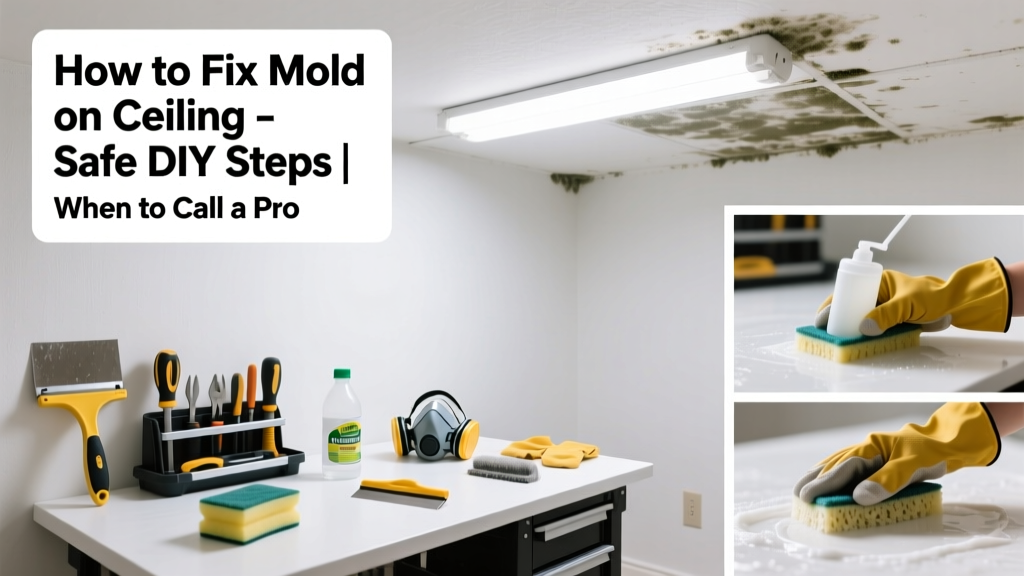
Mold on your ceiling isn’t just ugly—it’s a red flag for hidden moisture, potential structural decay, and indoor air quality hazards. Left untreated, it can spread into insulation, drywall, or attic framing within days. Spotting fuzzy black, green, or white patches—especially near corners, vents, or light fixtures—is your cue to act fast.
Quick Diagnosis
Before grabbing supplies, identify the root cause. Most ceiling mold stems from one (or more) of these issues:
- Roof leaks—especially around chimneys, skylights, or damaged shingles
- Clogged or disconnected attic ventilation ducts
- Poor bathroom or kitchen exhaust fan venting (venting into attic instead of outside)
- Condensation from uninsulated HVAC ducts or cold roof decking in winter
- Leaking plumbing pipes running above the ceiling (common in multi-story homes)
Tools & Materials Needed
| Item | Purpose | Estimated Cost |
|---|---|---|
| N95 respirator mask (not surgical) | Blocks airborne mold spores during removal | $12–$25 |
| HEPA vacuum with sealed filtration | Captures spores instead of recirculating them | $180–$350 |
| White vinegar (5% acetic acid) or EPA-registered mold inhibitor | Kills surface mold without chlorine fumes; safer than bleach on porous surfaces | $3–$15 |
| Stiff-bristle brush & microfiber cloths | Scrubbing without embedding spores deeper into drywall paper | $8–$22 |
| Plastic sheeting (6-mil) & painter’s tape | Contain spores during work and protect floors/furniture | $15–$30 |
Step-by-Step Fix
Follow this sequence for small areas (<10 sq ft) with no visible water damage or sagging:
- Isolate the area: Seal off the room with plastic sheeting taped to doorways and vents. Turn off HVAC to prevent spore circulation.
- Wear full PPE: N95 mask, goggles, gloves, long sleeves—even for minor spots. Mold exposure can trigger asthma and allergic reactions in sensitive individuals.
- Apply cleaning solution: Spray undiluted white vinegar directly onto moldy surface. Let sit 10 minutes—do not rinse. Vinegar penetrates paper facing better than bleach and doesn’t produce toxic gas when mixed with household cleaners.
- Gently scrub and dry: Use a stiff brush (not wire) to lift growth, then wipe with dry microfiber cloths. Never sand or power-wash drywall—it aerosolizes spores and destroys integrity.
- Treat and monitor: After drying fully (use fans + dehumidifier), apply an EPA-registered mold inhibitor like Concrobium Mold Control. Reinspect weekly for 3 weeks.
When to Call a Pro
DIY stops where safety and code compliance begin. Call a certified mold remediator (IICRC-certified) if any of these apply:
- Mold covers more than 10 square feet (EPA recommends professional remediation beyond this threshold)
- You see black, slimy patches that don’t respond to vinegar—or smell persistent mustiness after cleaning
- There’s visible water staining, bubbling paint, or soft/delaminating drywall
- The mold is behind ceiling tiles, inside light fixtures, or embedded in insulation
- You or household members have unexplained respiratory symptoms, headaches, or fatigue worsening indoors
Prevention Tips
Fixing mold is half the battle—the other half is stopping recurrence. These measures cut moisture at the source:
- Install a hygrometer and keep indoor humidity between 30–50% year-round
- Verify bathroom and kitchen exhaust fans vent *outside*, not into attics—check duct termination points in soffits or roof caps
- Clean gutters twice yearly and inspect roof flashing annually (especially after storms)
- Add R-30+ insulation to attic floor and seal all recessed light cans and duct penetrations
- Run bathroom fans for 20 minutes post-shower—and consider upgrading to a humidity-sensing model like Bathroom Exhaust Fan Installation
Can I use bleach on this?
No—bleach is ineffective on porous surfaces like drywall and ceiling texture. The CDC states bleach only kills surface mold and leaves roots intact, while its water content wicks deeper, feeding regrowth. It also produces hazardous fumes when mixed with ammonia or acids. Stick to vinegar or EPA-registered inhibitors.
Is black mold on ceiling always toxic?
No—not all black mold is Stachybotrys chartarum (the so-called 'toxic mold'). Many common molds appear black but pose only allergenic risks. However, color alone doesn’t indicate hazard level. According to the American College of Occupational and Environmental Medicine’s 2022 clinical guidance, health effects depend more on individual sensitivity and exposure duration than species identification.
Do I need to replace the drywall?
Yes—if the mold has penetrated past the surface paper layer or if the drywall feels soft, crumbly, or discolored beyond the stain. Drywall isn’t salvageable once compromised. Cut out affected sections back to the nearest stud, using a utility knife and straightedge. Replace with mold-resistant drywall (e.g., USG Sheetrock Brand Mold Tough), and seal seams with mold-inhibiting joint compound like Drywall Joint Compound Types.
Will a dehumidifier fix ceiling mold?
A dehumidifier helps *prevent* new growth by lowering ambient humidity—but it won’t remove existing mold or address the underlying leak or condensation issue. Think of it as a support tool, not a cure. Pair it with root-cause repair, like fixing a leaking roof boot or insulating cold ductwork.
How long does mold take to grow after a leak?
Under ideal conditions (48–72°F, >60% RH), mold spores germinate and become visible in as little as 24–48 hours. The U.S. EPA estimates that unchecked moisture leads to active mold colonies within 48–72 hours—a window that shrinks further in warm, humid climates.
Can ceiling mold make me sick?
Yes—especially with prolonged exposure. Symptoms include nasal congestion, throat irritation, coughing, wheezing, and skin rashes. Children, seniors, and immunocompromised individuals face higher risk. A 2021 study in the Journal of Allergy and Clinical Immunology linked chronic indoor mold exposure to a 40% increased risk of developing asthma in preschool-aged children.
"Mold remediation isn't about cleaning—it's about controlling moisture first, then removing contamination safely. If you skip the moisture fix, you're just repainting the problem." — Dr. Linda L. K. Smith, Indoor Air Quality Specialist, ASHRAE Handbook 2023 Edition
Fixing ceiling mold isn’t glamorous, but it’s urgent. Every day you delay increases spore load, material damage, and health risk—not just for you, but for anyone sharing that space. Tackle small spots immediately with proper PPE and vinegar, but don’t hesitate to bring in certified help when the scope expands beyond your comfort zone or safety limits. And remember: the real win isn’t just clean drywall—it’s a home where air stays dry, safe, and truly breathable.