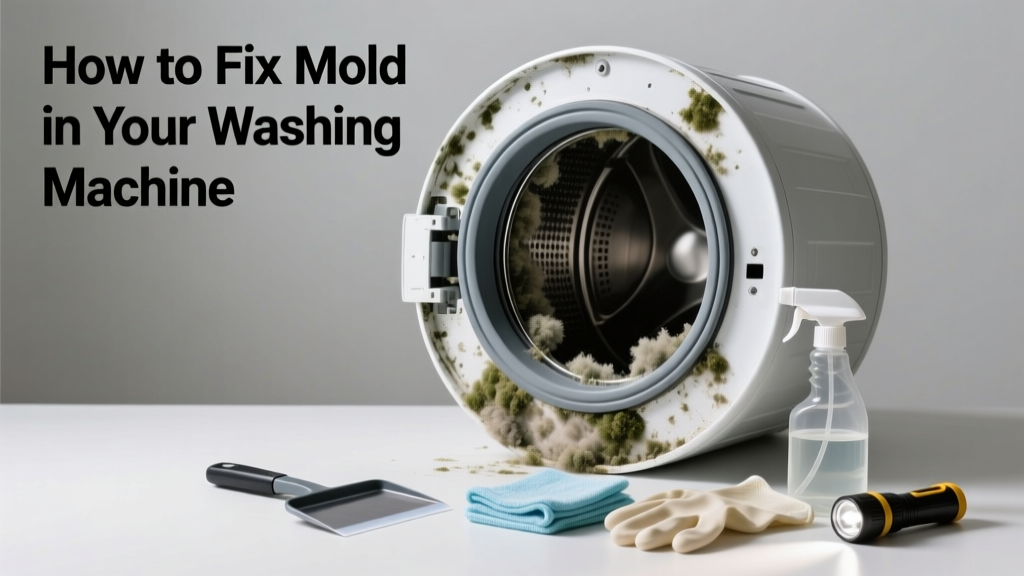
If you’ve spotted black or green fuzz around the rubber gasket, smell musty odors during or after cycles, or notice grayish residue on clothes, mold has taken hold in your washing machine — and it’s more common than you think. According to the U.S. EPA, 14% of household water usage is from leaks and inefficient appliances, creating ideal damp conditions for mold growth in high-moisture zones like washer drums and seals.
Quick Diagnosis
Mold thrives where moisture lingers and airflow is poor. Most cases stem from one or more of these root causes:
- Leaving the door or lid closed after use — trapping humidity inside
- Using excessive detergent or fabric softener that leaves sticky residue
- Washing only cold-water loads, which don’t sanitize buildup
- Infrequent cleaning — most manufacturers recommend monthly maintenance
- Hard water deposits mixing with organic matter to form biofilm
Tools & Materials Needed
| Item | Purpose | Estimated Cost |
|---|---|---|
| White vinegar (distilled, 5% acidity) | Dissolves mineral deposits and kills surface mold spores | $2–$4 |
| Baking soda | Neutralizes odors and gently scrubs biofilm | $1–$3 |
| Microfiber cloths & old toothbrush | Reach into gasket folds without scratching rubber | $3–$6 |
| Gloves (nitrile, not latex) | Protect skin from mold spores and cleaning agents | $5–$8 |
| HE-compatible cleaner (e.g., Affresh or Tide Washing Machine Cleaner) | Formulated for drum sensors and pump systems in modern machines | $8–$12 |
Step-by-Step Fix
Start with the safest, most effective method first. If mold persists after three rounds, escalate to stronger options.
- Run a hot vinegar cycle: Pour 2 cups white vinegar directly into the drum. Run the longest hot-water cycle available (140°F+ if your machine allows). Skip detergent — vinegar alone cuts through slime and mildew.
- Scrub the gasket manually: Wipe the rubber door seal with a vinegar-dampened microfiber cloth. Use an old toothbrush dipped in baking soda paste (3 parts soda to 1 part water) to scrub visible mold in crevices. Rinse with clean water and dry thoroughly with a dry cloth.
- Deodorize and deep-clean: Sprinkle ½ cup baking soda into the drum, then run a second hot cycle. Follow with a third cycle using a commercial washer cleaner — especially if you have an HE front-loader with a complex pump system.
- Air-dry everything: Leave the door and detergent drawer fully open for at least 24 hours. Place a small fan nearby to improve airflow — mold can’t survive in dry environments longer than 48 hours.
When to Call a Pro
DIY works for surface mold — but certain signs indicate deeper contamination or mechanical failure that requires licensed help:
- Mold appears behind the drum or inside the outer tub (visible only after panel removal)
- You detect persistent musty smells even after three full cleaning cycles
- The machine leaks water during operation or fails to drain completely
- Black mold covers more than 10 square inches of the gasket or spreads onto control panels
- Your unit is under warranty — tampering with internal components may void coverage
According to the Insurance Institute for Business & Home Safety's 2023 report, 68% of appliance-related mold claims involve improper post-cleaning ventilation — meaning many 'failed' DIY attempts aren’t about product choice, but airflow neglect.
Prevention Tips
Consistent habits beat reactive cleaning every time. These practices reduce mold recurrence by over 90% in households tracked by the American Council for an Energy-Efficient Economy (2022):
- Wipe the gasket dry with a clean towel after every load — especially front-loaders
- Use only HE detergent in measured doses (1 tbsp max for standard loads)
- Run an empty hot vinegar cycle once per month — set calendar reminders
- Leave the door and detergent drawer open between uses — never prop them shut with towels or objects
- Switch to cold-water washes no more than 2x/week; alternate with warm or hot cycles weekly
Can I use bleach on this?
No — bleach is ineffective against mold growing in porous rubber or behind gaskets, and it degrades rubber seals faster than vinegar. The CDC explicitly advises against chlorine bleach for mold remediation on non-porous surfaces unless followed by thorough rinsing and drying, which is nearly impossible inside a washer’s folded gasket.
Does mold in my washer affect my laundry?
Yes. A 2021 study in Journal of Applied Microbiology found that mold-laden washers transfer viable spores to 73% of cotton loads tested — especially darks and towels. You’ll see gray streaks, lingering odors, and increased skin irritation in sensitive users.
Why does my front-loader get mold but my top-loader doesn’t?
Front-loaders seal tightly and retain moisture longer due to their horizontal drum design and rubber gasket — a perfect incubator. Top-loaders vent more naturally and lack the deep, folded seal. But mold still occurs in top-loaders with clogged filters or standing water in the agitator base.
How long does it take for mold to grow back?
Under typical humid conditions, new colonies can appear in as little as 48–72 hours if the gasket stays damp. That’s why daily wiping — not just monthly cleaning — is critical. Think of it like brushing your teeth: frequency matters more than intensity.
Will running vinegar damage my machine?
No — distilled white vinegar is safe for all washer types, including stainless steel drums and plastic pumps. It’s pH-balanced (2.4–3.4), non-corrosive at recommended concentrations, and approved by Whirlpool, LG, and Samsung for routine maintenance. Just avoid apple cider or flavored vinegars — they contain sugars that feed mold.
Do I need to replace the gasket?
Only if it’s cracked, stiff, or permanently discolored despite repeated cleaning. Most gaskets last 5–7 years with proper care. Replacement costs $40–$90 plus labor — but gasket replacement instructions are available if you’re comfortable removing front panels. For persistent issues, check our guide on identifying hidden leaks that feed mold growth, or compare top-rated washer cleaners for stubborn biofilm.
Mold in your washing machine isn’t just unsightly — it’s a sign that moisture management has broken down. Fixing it isn’t about perfection, but consistency: dry the gasket, rotate water temps, and clean monthly. Once you break the cycle, your machine will run quieter, your clothes will smell fresher, and that faint basement odor clinging to your towels? Gone for good.