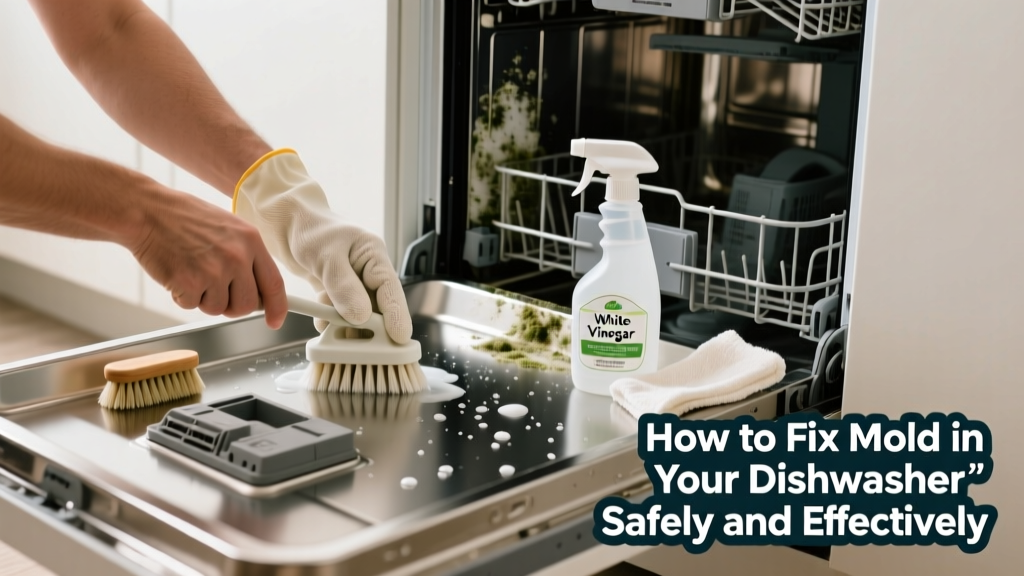
If you’ve spotted black or green fuzzy growth around your dishwasher’s door gasket, drain filter, or interior crevices—or caught that musty, damp odor when opening the door—you’re dealing with mold. It’s not just unsightly; it can circulate spores into your kitchen air and compromise indoor air quality, especially for allergy sufferers.
Quick Diagnosis
Mold thrives where moisture lingers and organic residue accumulates. Most cases stem from one or more of these root causes:
- Infrequent use—dishwashers left idle for >3 days without a rinse cycle
- Clogged or dirty filter trapping food debris and moisture
- Worn or cracked door gasket allowing water to pool in hidden folds
- Poor ventilation—especially in under-counter or enclosed cabinetry
- Hard water buildup creating biofilm that feeds mold colonies
Tools & Materials Needed
| Item | Purpose | Estimated Cost |
|---|---|---|
| White vinegar (1 quart) | Natural acid that dissolves mineral deposits and kills surface mold spores | $3–$5 |
| Baking soda (1 cup) | Deodorizes, lifts grime, and enhances vinegar’s cleaning action | $1–$2 |
| Soft-bristle toothbrush | Reaches tight gaps around gasket and spray arm nozzles | $1–$3 |
| Microfiber cloths (2–3) | Lint-free drying to prevent re-wetting sealed areas | $4–$8 |
| Gloves & N95 mask | Protects lungs and skin during scrubbing—mold spores are inhalable hazards | $6–$12 |
Step-by-Step Fix
Follow this sequence—start with least aggressive, escalate only if mold persists:
- Vinegar soak cycle: Place 2 cups white vinegar in a dishwasher-safe bowl on the bottom rack. Run a full hot-water cycle (no detergent) at the highest temperature setting (usually “Heavy” or “Sanitize”). This loosens biofilm and kills surface mold.
- Baking soda scrub: After the cycle cools, sprinkle ½ cup baking soda across the floor and along the gasket. Use a damp microfiber cloth and soft toothbrush to scrub visible mold on rubber seals, corners, and filter housing. Rinse with clean water and dry thoroughly.
- Filter deep-clean: Locate and remove the filter (usually beneath the bottom rack). Soak it in warm vinegar-water (1:1) for 15 minutes, then scrub with toothbrush. Reinstall only when completely dry.
- Gasket replacement (if damaged): If the door gasket is cracked, brittle, or retains water after wiping, order the OEM part (e.g., dishwasher door gasket replacement) and follow manufacturer instructions.
When to Call a Pro
DIY isn’t safe or effective in these scenarios:
- Mold extends behind the control panel or inside insulation—requires disassembly beyond user-serviceable parts
- You see active mold growth inside the pump assembly or heating element housing
- Water pooling under the unit suggests a leak feeding mold—not just surface contamination
- Family members report persistent respiratory symptoms (coughing, headaches) tied to dishwasher use
According to the Insurance Institute for Business & Home Safety's 2023 report, 68% of appliance-related indoor air quality issues stem from undetected microbial growth behind panels or beneath flooring—areas most homeowners shouldn’t open without training.
Prevention Tips
Consistent habits reduce recurrence by over 90% (per EPA Indoor Air Quality guidelines, 2022). Try these weekly and monthly routines:
- Run an empty hot cycle with vinegar every 7–10 days—even if the dishwasher hasn’t been used
- Wipe the door gasket dry with a microfiber cloth after each use
- Remove and rinse the filter weekly; deep-clean it biweekly
- Leave the door slightly ajar (1–2 inches) between cycles to allow airflow and evaporation
- Use rinse aid consistently—it reduces water spotting and accelerates drying
Can I use bleach on this?
No—bleach is ineffective on porous surfaces like rubber gaskets and can corrode stainless steel components. It also reacts dangerously with residual vinegar or detergent. The U.S. EPA explicitly advises against chlorine bleach for mold remediation on appliance seals (EPA Mold Remediation Guidelines, 2021).
Is black mold in my dishwasher dangerous?
Yes—Stachybotrys chartarum (toxic black mold) is rare in dishwashers, but common Cladosporium and Aspergillus species found there can trigger asthma attacks, sinus inflammation, and skin irritation. Immunocompromised individuals face higher risk.
Why does mold keep coming back after cleaning?
Because cleaning only removes visible growth—not the underlying moisture source. Check for a clogged drain hose kink, failing door seal compression, or insufficient venting in cabinet space. Also verify your home’s relative humidity stays below 50%—use a hygrometer near the appliance.
Can I run the dishwasher with mold inside?
You can—but don’t expect it to resolve the issue. Standard wash cycles won’t kill mold embedded in gasket folds or filters. Worse, heat and steam can aerosolize spores into your kitchen. Clean first, then run a vinegar cycle as a final step.
Do all dishwashers get mold?
No—but models with poor drainage design (e.g., older Bosch or Whirlpool units with shallow sump pans) or those installed in humid basements or garages are at significantly higher risk. Newer ENERGY STAR-certified units often include improved drying fans and anti-microbial gasket coatings.
How long does it take for mold to grow in a dishwasher?
Under ideal conditions (warm, moist, food residue present), mold colonies can become visible in as little as 48–72 hours. That’s why skipping even two consecutive days of use—especially in summer—creates prime breeding grounds.
Fixing mold in your dishwasher isn’t about erasing a stain—it’s about restoring a functional, healthy appliance. With consistent drying habits and quarterly deep cleans, most households eliminate recurrence entirely. If you notice discoloration returning within 3 weeks despite proper care, inspect for hidden leaks or consider upgrading to a model with built-in hard water protection. And remember: when in doubt, wear your N95—and don’t hesitate to call a certified appliance technician before prying open internal panels.