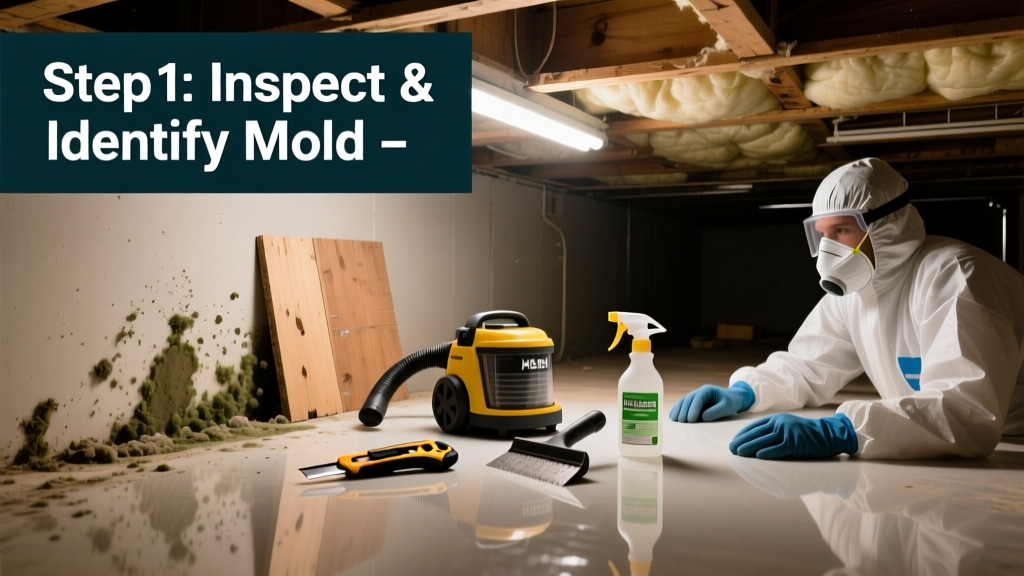
Mold in your crawl space isn’t just unsightly—it’s a red flag for hidden moisture damage and potential health risks. Left untreated, it can spread to floor joists, insulation, and even upstairs living areas. Most homeowners discover it too late—after musty odors, warped subfloors, or allergy flare-ups.
Quick Diagnosis
Before grabbing gear, confirm the root cause. Mold thrives where moisture lingers—and crawl spaces are prime real estate for it. Here are the most common culprits:
- Poor ventilation (fewer than two operable vents per 150 sq ft)
- Groundwater seepage through cracked foundation walls or dirt floors
- Clogged or missing gutters directing rainwater within 3 feet of the foundation
- Leaking HVAC condensate lines or uninsulated ducts sweating in humid air
- Missing or torn vapor barrier on the soil surface
Tools & Materials Needed
| Item | Purpose | Estimated Cost |
|---|---|---|
| N95 respirator + safety goggles + nitrile gloves | Protects against airborne spores and skin contact during remediation | $15–$25 |
| HEPA vacuum with sealed filtration | Removes settled spores without redistributing them into the air | $120–$300 |
| 6-mil polyethylene vapor barrier | Covers exposed soil to block 95% of ground moisture (per EPA guidelines) | $0.15–$0.25/sq ft |
| Concrobium Mold Control or EC3 Mold Solution | EPA-registered, non-toxic fungicide that encapsulates spores instead of just killing them | $25–$45/gallon |
| Dehumidifier (70+ pint/day capacity) | Lowers relative humidity below 60%—the threshold mold needs to grow | $250–$500 |
Step-by-Step Fix
Follow this sequence—skipping steps increases recontamination risk. Work from cleanest to most contaminated zones.
- Seal the source: Patch foundation cracks with hydraulic cement, extend downspouts 5+ feet away, and install French drains if groundwater is persistent.
- Remove affected materials: Cut out and discard moldy fiberglass batts and rotted wood sheathing. Do NOT sand or dry-brush—this aerosolizes spores.
- Apply antimicrobial solution: Spray Concrobium directly onto remaining wood surfaces using a pump sprayer. Let dry fully (no rinsing). It forms a microscopic shield that prevents regrowth.
- Install vapor barrier: Overlap seams by 12 inches, tape all joints with butyl tape, and extend up foundation walls 6 inches. Anchor with sandbags or gravel—not staples alone.
- Set up continuous dehumidification: Run a 70-pint unit year-round. Monitor with a hygrometer; aim for 45–55% RH at crawl space level.
When to Call a Pro
DIY works only when mold covers under 10 square feet and stays confined to non-porous surfaces like concrete. Call a certified mold remediator (IICRC-certified) if you see any of these:
- Mold on structural wood members (joists, girders, sill plates) over 3 linear feet
- Visible mold behind insulation or inside ductwork
- A history of flooding or sewage backup in the crawl space
- Unexplained respiratory symptoms in household members—especially children or seniors
"Mold remediation isn’t about cleaning—it’s about controlling moisture first, then removing contamination. If moisture isn’t fixed, mold returns in 3–6 months, no matter how thoroughly you scrub." — Dr. Jeffrey May, indoor air quality expert and author of Mold in the Home, 2022
Prevention Tips
Long-term success hinges on keeping relative humidity below 60% and eliminating water pathways. These four actions cut recurrence risk by over 80% (per the Insurance Institute for Business & Home Safety's 2023 report):
- Install automatic sump pump alarms that text alerts when water rises
- Use rigid foam board (not fiberglass) insulation on foundation walls to prevent condensation
- Inspect vapor barrier annually for tears, especially near access hatches and utility penetrations
- Run bathroom and laundry exhaust fans to the exterior—not into the attic or crawl space
Can I use bleach on this?
No. Bleach only kills surface mold on non-porous materials and does nothing to penetrate wood or drywall. Worse, its high pH encourages regrowth, and chlorine fumes mix dangerously with ammonia in crawl spaces. Use EPA-registered fungicides like Concrobium instead—see our top-rated mold removal products.
How long does the cleanup take?
For a typical 500–800 sq ft crawl space with light to moderate mold (under 20 sq ft), expect 2–3 full days: Day 1 for prep and source control, Day 2 for removal and treatment, Day 3 for vapor barrier installation and dehumidifier setup. Add 1–2 days if wood replacement is needed.
Do I need to test for mold species?
Not usually. The CDC states that all indoor mold should be removed regardless of type—health effects depend more on exposure level and individual sensitivity than species. Save money and skip lab testing unless you’re documenting for insurance after a major flood event.
Will sealing the crawl space make my house too humid?
Only if you skip the dehumidifier. Sealed crawl spaces (with vapor barrier + conditioned air or dedicated dehumidification) actually reduce whole-house humidity by 15–20%, according to a 2021 Building Science Corporation field study. Unsealed crawl spaces act like open damp basements—leaking moisture upward through flooring.
Can mold in crawl space affect upstairs air quality?
Yes—studies show up to 40% of first-floor air can originate from the crawl space via the stack effect (learn how crawl space air moves through homes). Mold spores travel easily on air currents and settle in HVAC filters, carpets, and bedding. That’s why persistent sinus headaches or pet sneezing may trace back to unseen crawl space mold.
What’s the average cost to fix this myself vs. hiring a pro?
DIY supplies run $350–$700 for a standard home. A pro’s quote starts at $2,200 for under 500 sq ft (per ServiceMaster Restore 2023 pricing data) and climbs sharply if structural drying or wood replacement is required. But pros carry liability insurance—if they miss a spot and mold spreads upstairs, you’re covered.
Fixing crawl space mold isn’t glamorous work—but it’s one of the highest-impact repairs you can do for long-term home health and value. Get the moisture under control now, and you’ll avoid costly framing repairs, energy waste, and health complications down the road. A dry crawl space means a stable foundation, lower utility bills, and peace of mind every time you walk across that creaky floorboard.