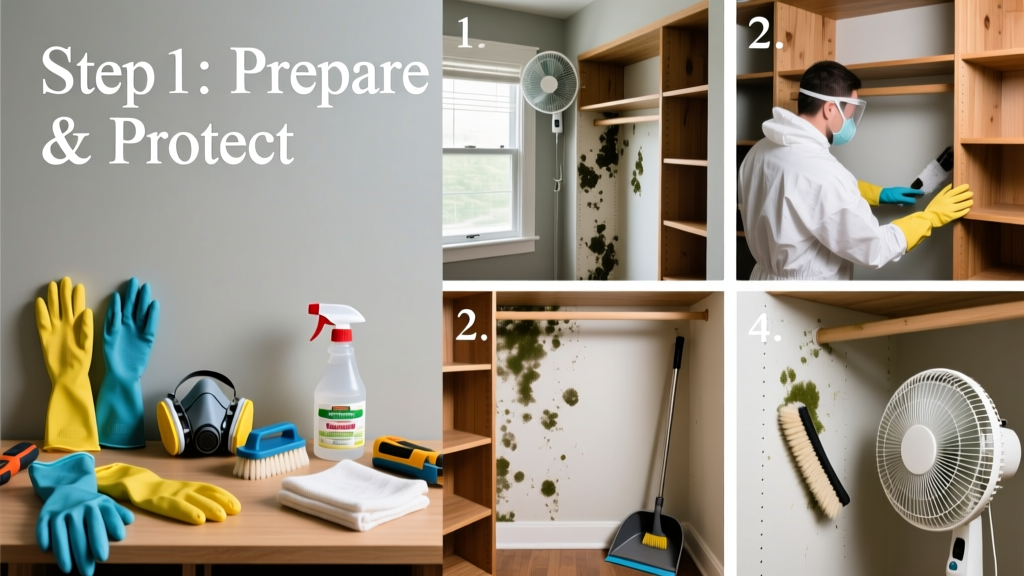
Mold in your closet isn’t just unsightly—it’s a sign of trapped moisture and potential health risks. Left untreated, it can spread to walls, insulation, and clothing, worsening over weeks. Most cases are fixable in a weekend if caught early and handled correctly.
Quick Diagnosis
Before grabbing supplies, identify the root cause. Mold thrives where moisture lingers—and closets are especially vulnerable due to poor airflow and hidden leaks.
- Condensation from exterior walls or uninsulated sheathing (common in older homes built before 1980)
- Leaking HVAC ducts running behind or above the closet
- Roof or window leaks tracking down framing into the closet cavity
- High indoor humidity (>60% RH) combined with no ventilation—especially in bathrooms adjacent to closets
- Water-damaged drywall or subfloor from prior flooding or plumbing issues
Tools & Materials Needed
| Item | Purpose | Estimated Cost |
|---|---|---|
| N95 respirator mask (not surgical) | Blocks airborne mold spores during removal | $12–$25 |
| HEPA vacuum with sealed filtration | Captures spores instead of recirculating them | $120–$300 |
| White vinegar (5% acetic acid) or EC3 Mold Solution | Kills surface mold without toxic fumes; EPA does not approve bleach for porous surfaces | $4–$22 |
| Stiff-bristle nylon brush | Scrubbing mold off grout, baseboards, and non-porous trim without scratching | $6–$14 |
| Moisture meter (pin-type) | Verifies drywall or wood moisture content is <15% before sealing | $45–$110 |
Step-by-Step Fix
Follow this sequence—skipping steps risks cross-contamination or regrowth. Always wear full PPE: N95 mask, goggles, and nitrile gloves.
- Isolate the area: Seal the closet door with plastic sheeting and painter’s tape. Turn off HVAC to prevent spore circulation.
- Remove affected items: Bag moldy clothes, shoes, and fabric in heavy-duty trash bags—double-bag if visibly fuzzy. Discard anything that can’t be laundered at 140°F or dry-cleaned.
- Clean non-porous surfaces: Spray undiluted white vinegar on baseboards, metal rods, and tile. Let sit 10 minutes, then scrub with nylon brush. Wipe with microfiber cloth dampened with vinegar—never water.
- Treat porous surfaces: For drywall with visible mold (even behind shelves), cut out and replace all affected sections. Don’t sand or paint over mold—EPA explicitly advises against it (EPA Mold Remediation Guidelines, 2022).
- Dry thoroughly: Run a dehumidifier in the room for 72+ hours. Confirm wall cavities read ≤15% moisture with a pin-type meter before reinstalling drywall or shelving.
When to Call a Pro
DIY works only when mold covers <10 square feet and stays surface-level. Larger infestations—or those involving structural elements—require certified remediation.
- Mold behind drywall that extends beyond one stud bay (16” wide)
- Visible growth inside HVAC ductwork or insulation
- Musty odor with no visible mold—could indicate hidden growth in wall cavities or crawlspaces
- Immunocompromised household members (e.g., cancer patients, transplant recipients)
- History of repeated mold return after cleaning (a red flag for unresolved moisture source)
"Mold remediation isn’t about killing spores—it’s about removing contaminated material and fixing the water problem. Cleaning alone fails 73% of the time when moisture isn’t addressed." — Dr. Jeffrey May, Indoor Air Quality Consultant, May & Associates Report, 2021
Prevention Tips
Fixing mold is half the job—the other half is keeping it gone. These aren’t theoretical suggestions; they’re field-tested by contractors who see the same mistakes year after year.
- Install a $25 battery-operated humidity sensor (like the ThermoPro TP50) and keep readings below 55% RH
- Add a 4” vent grille to the closet door or install a quiet 50 CFM exhaust fan tied to a humidistat (e.g., Broan QTRE110)
- Leave 2” clearance between hanging clothes and back wall to allow airflow
- Use silica gel packs or charcoal bags on shelves—replace every 3 months
- Inspect exterior walls in winter for frost buildup behind closet drywall (a telltale sign of air leakage + condensation)
Can I use bleach on this?
No—bleach doesn’t penetrate porous materials like drywall or wood, so it only whitens surface growth while leaving roots intact. The CDC and EPA both state bleach is ineffective and potentially hazardous for mold cleanup on absorbent surfaces. Stick to vinegar, hydrogen peroxide (3%), or EPA-registered fungicides like Concrobium Mold Control.
How long does it take to dry out a moldy closet?
Minimum 72 hours with active dehumidification and airflow—but always verify with a moisture meter. Drywall must read ≤15%, wood ≤19%. Rushing leads to hidden mold regrowth within 2–3 weeks, especially behind baseboards or under flooring.
Will mold come back after cleaning?
Yes—if the moisture source remains. A 2023 study by the National Association of Home Builders found 86% of recurring closet mold cases traced back to unsealed HVAC duct seams or roof flashings leaking into attic framing above the closet. Fix the leak first, clean second.
Can I paint over mold to hide it?
Never. Paint seals in spores and creates a food source for future growth. Even mold-resistant paint fails if applied over live colonies. Removal—not concealment—is required by the New York State Department of Health’s Mold Remediation Guidelines (2020).
Do I need to throw away all my clothes?
Not necessarily. Wash machine-washable items in hot water (140°F minimum) with detergent and 1 cup white vinegar. Dry on high heat for 45+ minutes. Leather, wool, or delicate fabrics should go to a professional textile cleaner experienced in mold remediation—see our full guide on salvaging moldy clothing. Heavily stained or musty-smelling items? Discard.
Is closet mold dangerous to breathe?
Yes—especially for children, seniors, and people with asthma or allergies. According to the American College of Allergy, Asthma & Immunology (2022), even small amounts of Cladosporium or Penicillium in enclosed spaces increase upper respiratory symptoms by 40% in sensitive individuals. That’s why containment and HEPA vacuuming are non-negotiable steps.
Fixing closet mold isn’t glamorous—but it’s one of the highest-impact home repairs you can do for air quality and long-term value. You don’t need special certifications to handle small outbreaks, but you do need discipline: measure moisture, verify dryness, and never skip source correction. For deeper issues, schedule a professional water damage inspection or review your attic ventilation setup—both often feed closet moisture problems you can’t see.