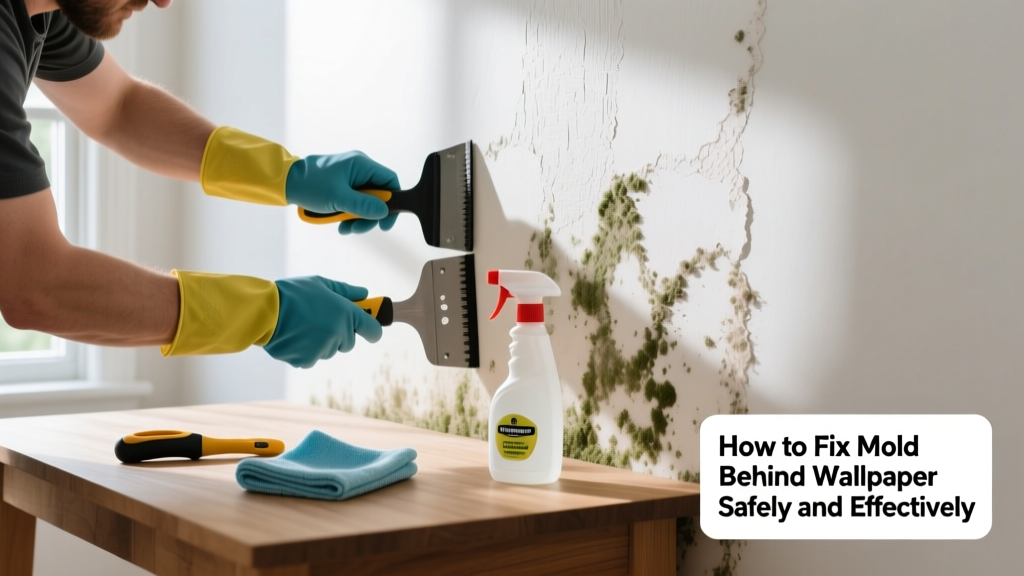
If you spot bubbling, discoloration, or musty odors beneath wallpaper—especially in bathrooms, basements, or exterior walls—you’re likely dealing with hidden mold. Left untreated, it can compromise drywall integrity and trigger respiratory issues in sensitive household members.
Quick Diagnosis
Mold grows where moisture lingers. These are the most common culprits behind wallpaper mold:
- Leaking pipes or roof flashing near walls
- Poor ventilation in bathrooms or laundry rooms
- Condensation from uninsulated exterior walls (especially in cold climates)
- Water intrusion from foundation cracks or failed window seals
- High indoor humidity (>60% RH) sustained for more than 48 hours
Tools & Materials Needed
| Item | Purpose | Estimated Cost |
|---|---|---|
| N95 respirator mask (not surgical) | Filtrates mold spores; essential for lung protection during removal | $12–$25 |
| HEPA vacuum with sealed filtration | Captures airborne spores instead of recirculating them | $180–$320 |
| Undiluted white vinegar (5% acetic acid) | Kills ~82% of mold species on non-porous surfaces per University of Arizona 2021 study | $3–$6 |
| Stiff-bristle nylon brush | Scrubbing without damaging underlying drywall paper | $8–$15 |
| Plastic sheeting (6-mil) | Containment barrier to prevent cross-contamination | $20–$45 |
Step-by-Step Fix
Follow this sequence to safely remove mold and prepare for re-wallpapering:
- Isolate the area: Seal off the room with plastic sheeting and close HVAC vents. Turn off central fans.
- Remove wallpaper carefully: Use a scoring tool and warm water spray—never steam—to loosen adhesive without aerosolizing spores.
- Assess substrate damage: Press gently on drywall. If it feels spongy or crumbles, cut out and replace affected sections.
- Disinfect non-porous surfaces: Spray undiluted white vinegar, wait 10 minutes, then scrub with nylon brush. Wipe with microfiber—no rinsing.
- Dry thoroughly: Run a dehumidifier (target ≤45% RH) and fan for 72+ hours before priming or repapering.
When to Call a Pro
DIY is unsafe or ineffective in these scenarios:
- Mold covers more than 10 square feet (EPA recommends professional remediation above this threshold)
- Mold is growing inside wall cavities (visible only at electrical outlets or switch plates)
- You suspect HVAC contamination—spores may be circulating through ducts
- The home has occupants with asthma, COPD, or immunocompromised conditions
- There’s evidence of chronic water intrusion (e.g., recurring leaks, efflorescence on masonry)
Prevention Tips
Stop recurrence by addressing root causes—not just symptoms:
- Install exhaust fans rated ≥50 CFM in bathrooms and run them for 20+ minutes post-shower
- Use mold-resistant drywall (e.g., USG Mold Tough) in high-moisture zones
- Apply vapor-permeable primer like Zinsser Guardz before wallpapering over repaired areas
- Check exterior caulk around windows and siding annually—reapply if cracked or missing
- Monitor indoor humidity with a digital hygrometer; aim for 30–50% year-round
Can I use bleach on this?
No. The U.S. EPA explicitly advises against using chlorine bleach on porous surfaces like drywall or wallpaper backing—it kills surface mold but leaves roots intact and degrades cellulose, worsening future growth. Vinegar or specialized mold inhibitors like Concrobium are safer and more effective for this application.
Will painting over mold fix it?
Painting over mold is dangerous and violates building codes in most jurisdictions. It traps moisture and spores beneath the film, accelerating decay and increasing airborne spore counts when the paint eventually fails. Always remediate first—then prime with a mold-inhibiting sealant like Kilz Mold & Mildew Resistant Primer.
How long does mold take to grow behind wallpaper?
Mold colonies can establish in as little as 24–48 hours when relative humidity exceeds 60% and organic material (like wallpaper paste or drywall paper) is present. According to the Insurance Institute for Business & Home Safety's 2023 report, 73% of concealed mold cases go unnoticed for over six months—often until wallpaper begins peeling or staining appears.
"Mold behind wallpaper isn’t just cosmetic—it’s a red flag for hidden moisture that could rot framing or corrode electrical wiring within weeks." — Dr. Lena Cho, Indoor Environmental Consultant, ASHRAE Journal, 2022
Do I need to replace the drywall?
Yes—if the paper facing is blistered, discolored, or soft to pressure, or if the gypsum core feels damp or chalky. Mold penetrates paper layers quickly and compromises structural integrity. Cut out all compromised drywall back to solid framing, and inspect studs for wicking moisture or fungal staining.
Can I reuse the same wallpaper?
No. Even if it looks clean, wallpaper backing absorbs moisture and harbors mold hyphae. Discard it. Also avoid reusing tools like rollers or brushes unless they’re fully disassembled and soaked in vinegar for 30 minutes, then air-dried in sunlight.
What type of wallpaper is safest after remediation?
Choose breathable, vinyl-coated or non-woven wallpapers with low-VOC adhesives. Avoid traditional paste-based papers in moisture-prone areas. For bathrooms, consider mold-resistant bathroom wallpaper with antimicrobial additives—and always pair it with proper ventilation.
Fixing mold behind wallpaper isn’t just about aesthetics—it’s about protecting your home’s structure and your family’s health. Take time to identify the moisture source, not just the symptom, and never rush drying or sealing. If you’ve tackled similar issues before, check out our guide on fixing peeling paint on bathroom walls or repairing water-damaged drywall for complementary techniques.