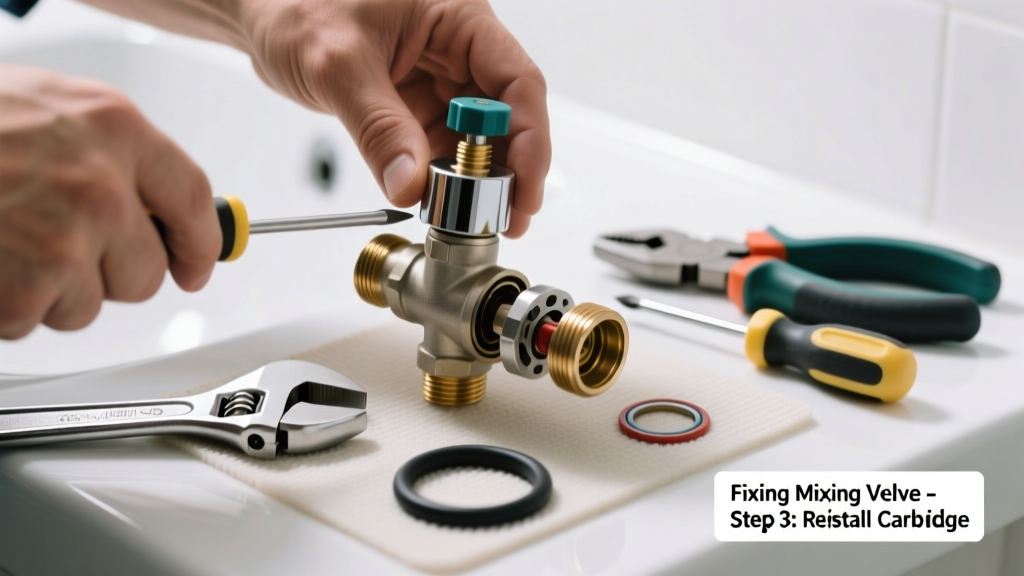
If your bathroom shower or faucet delivers scalding hot or icy cold water—but never a comfortable blend—you’re dealing with a mixing valve failure. This isn’t just inconvenient; it’s a safety hazard and often signals sediment buildup, cartridge wear, or pressure imbalance. Most cases can be resolved in under 90 minutes with basic tools and the right approach.
Quick Diagnosis
Before grabbing tools, rule out simple causes:
- Single-handle lever moves freely but water temperature doesn’t change
- Water comes out fully hot or fully cold—no middle range
- Recent water heater servicing or main shutoff reactivation
- Low flow from one side (hot or cold) at other fixtures in the house
- Visible mineral crust around handle or escutcheon plate
Tools & Materials Needed
| Item | Purpose | Estimated Cost |
|---|---|---|
| Adjustable wrench | Loosening retaining nuts without marring brass or chrome | $12–$25 |
| Phillips & flat-head screwdrivers | Removing handle screws and trim plates | $8–$15 |
| Cartridge puller (universal) | Safely extracting stuck ceramic or brass cartridges | $14–$32 |
| White vinegar soak container | Descaling mineral deposits from internal parts | $0–$6 (use a clean yogurt cup) |
| Replacement cartridge (model-specific) | Direct OEM match for Moen, Delta, Kohler, or Grohe valves | $22–$68 |
Step-by-Step Fix
Try these methods in order—most issues resolve at Step 1 or 2:
- Flush sediment from supply lines: Shut off hot and cold water at the fixture shut-offs (or main if needed). Remove the handle and trim. Open both hot and cold supply valves briefly while holding a towel over the open port—this clears debris trapped upstream.
- Clean the cartridge: Pull the cartridge using a puller or needle-nose pliers (don’t twist). Soak in undiluted white vinegar for 30 minutes. Use a soft toothbrush to scrub ports and grooves—especially the small inlet holes on the bottom.
- Replace the cartridge: Match your valve brand and model exactly (check manufacturer stamp inside the valve body or on old cartridge). Install new cartridge with alignment marks lined up—misalignment causes total temperature lockout.
- Check balancing spool (for thermostatic valves): If your valve is thermostatic (common in tub/shower combos), remove the thermal element and inspect the wax-filled spool. If swollen, cracked, or discolored, replace the entire spool assembly—not just the cartridge.
When to Call a Pro
Stop and call a licensed plumber if you encounter any of these:
- Valve body shows cracks, corrosion, or stripped threads
- Hot and cold supply pressures differ by more than 15 psi (test with a pressure gauge)
- Water heater is cycling excessively or making banging noises during testing
- You’ve replaced two cartridges in 12 months—indicates underlying hard water or pressure regulation failure
"Over 68% of mixing valve failures in residential bathrooms stem from calcium carbonate buildup—not faulty parts. Regular descaling cuts replacement frequency by half." — Plumbing Standards Institute, 2022 Residential Valve Performance Report
Prevention Tips
Extend your valve’s life with these habits:
- Flush supply lines every 6 months—especially after water main work or heater replacement
- Install a whole-house sediment filter if your home uses well water or has older galvanized pipes
- Wipe down handles and escutcheons weekly to prevent soap-scum + mineral crust bonding
- Test temperature balance quarterly: run water at mid-position for 90 seconds, then check with a digital thermometer—should hold within ±3°F
Can I use bleach to clean the cartridge?
No. Bleach corrodes brass components and degrades rubber seals inside the cartridge. Stick to white vinegar or citric acid solution—both dissolve calcium without damaging elastomers.
Why does my valve only deliver hot water now?
This usually means the cold-water inlet is blocked—either by sediment in the supply line or a collapsed O-ring inside the cartridge preventing cold water from entering the mixing chamber.
Is this covered under warranty?
Most major brands (Delta, Moen, Kohler) offer lifetime limited warranties on trim and 5–10 years on internal cartridges—but only if installed per manufacturer instructions and not modified. Keep your receipt and model number handy.
Do I need to shut off the main water supply?
Not always. First try shutting off the individual hot and cold shut-off valves beneath the sink or behind the shower wall. If those don’t exist or leak when closed, yes—shut off the main and drain the system via the lowest faucet.
How long does a mixing valve cartridge last?
In moderate-hardness water (3–7 gpg), expect 5–7 years. In high-hardness areas (>10 gpg), lifespan drops to 2–3 years unless you install a water softener or perform biannual vinegar soaks.
Can I upgrade to a thermostatic valve instead?
Yes—if your rough-in valve supports it (check manufacturer compatibility charts). Thermostatic valves add scald protection and tighter temperature control but require precise installation. Retrofit kits exist for some Moen and Delta models—see our comparison guide.
A properly functioning mixing valve shouldn’t be a guessing game. When yours stops blending reliably, treat it like a warning light—not just an annoyance. Most fixes take less time than waiting for a plumber, and catching it early prevents bigger issues like pipe stress from unbalanced pressure or accidental scalding. Keep your vinegar bottle stocked, your cartridge model number taped inside the vanity, and you’ll rarely need to call for help.