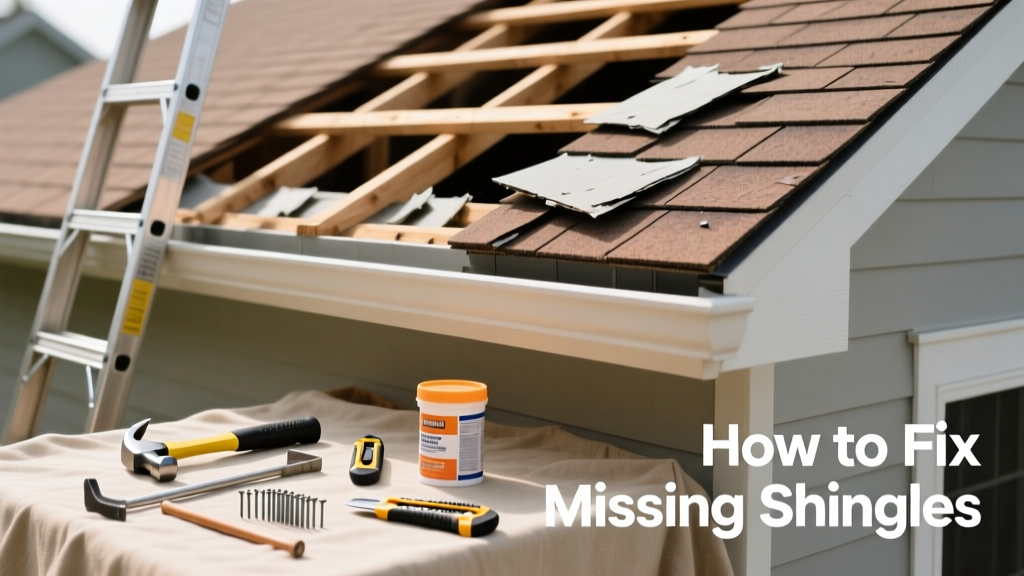
That small gap in your roofline isn’t just an eyesore—it’s an open invitation for rain, wind-driven debris, and ice dams. Even one missing shingle can lead to water infiltration behind the underlayment within days, especially during spring storms or winter freeze-thaw cycles.
Quick Diagnosis
Before grabbing tools, identify why shingles went missing. Most cases trace back to one or more of these causes:
- High winds (especially gusts over 50 mph during storms)
- Aging asphalt shingles losing granules and flexibility (typically after 15–20 years)
- Poor nailing technique—nails placed too high, too low, or driven crooked
- Ice dam pressure lifting edges from the roof deck
- Animal activity (squirrels or raccoons prying up corners)
Tools & Materials Needed
| Item | Purpose | Estimated Cost |
|---|---|---|
| Roofing ladder stabilizer | Prevents gutter damage and ladder slippage on sloped roofs | $45–$85 |
| Roofing nailer or hammer | Drives galvanized roofing nails (1¼") without overdriving | $0–$250 (rental available) |
| 3-in-1 roofing sealant (e.g., Henry 208) | Bonds shingle tabs and seals nail heads against moisture | $8–$12 |
| Replacement architectural shingles (same brand/model) | Ensures color match and thermal expansion compatibility | $25–$45 per bundle (covers ~33 sq ft) |
| Roofing tear-off shovel or flat bar | Lifts adjacent shingles without breaking them for nail access | $12–$22 |
Step-by-Step Fix
Work only on dry, calm days above 40°F—cold shingles crack; hot ones warp. Always wear non-slip shoes and use fall protection.
- Lift the shingle above: Slide a flat bar gently under the shingle directly above the missing one. Pry up just enough to expose the nail heads holding the shingle beneath.
- Remove old nails: Use a cat’s paw or nail puller to extract nails from the damaged area. If the surrounding shingle is brittle, snip the nail heads with end-cutting pliers instead of risking breakage.
- Slide in replacement: Align the new shingle’s starter strip with the butt line of the course below. Slide it fully under the lifted shingle until its top edge sits flush with the row above.
- Nail and seal: Drive four galvanized roofing nails—two just above the adhesive strip, two near the bottom edge—leaving ¼" head exposure. Dab sealant over each nail head and along the top edge where it meets the shingle above.
- Press and cure: Press down firmly along the sealed edge with a clean rag. Let sealant cure 24 hours before heavy rain.
When to Call a Pro
DIY makes sense for isolated, accessible missing shingles—but skip the ladder if you see any of these red flags:
- More than 5 shingles missing across multiple courses or on steep sections (>6:12 pitch)
- Missing shingles concentrated near valleys, chimneys, or skylights—these are high-leak-risk zones requiring flashing integration
- Signs of underlying damage: curled or blistered shingles nearby, soft spots in the roof deck, or dark water stains on attic sheathing
- You’re uncomfortable working at heights—even a 2-story roof presents serious fall risk
According to the National Roofing Contractors Association’s 2023 Safety Report, 62% of residential roof injuries occur during DIY repairs involving ladders or unsecured footing.
"Replacing one or two shingles is straightforward—but if you’re replacing more than 10% of a roof’s surface, it’s time to assess full replacement. Age-related granule loss often means the rest won’t last another season." — Dave Lomax, NRCA-certified roofing inspector since 1998
Prevention Tips
Extend your roof’s life by catching trouble early and reducing stress on shingles:
- Inspect your roof twice yearly—spring and fall—with binoculars from ground level
- Clean gutters every 3 months to prevent ice dams and water backup
- Trim overhanging branches that scrape shingles or drop sap/debris
- Install ridge vents instead of box vents to reduce thermal cycling stress
- After major wind events, walk the perimeter and look for lifted or loose tabs
Can I use regular caulk instead of roofing sealant?
No. Standard acrylic or silicone caulk lacks UV resistance and becomes brittle in temperature swings. Roofing sealants like Henry 208 or OSI Quad Max remain flexible down to –20°F and resist algae growth—critical for long-term adhesion. Using the wrong product risks seal failure within 6 months.
What if the missing shingle is from a discontinued line?
Check your home’s original roofing invoice or permit records first. If unavailable, take a sample shingle to a local roofing supplier—they can often match via manufacturer lot numbers stamped on the back. As a last resort, consider a strategic re-roof of the affected slope to avoid visible mismatch, especially on south-facing exposures where fading accelerates.
Do I need to replace the underlayment underneath?
Only if it’s torn, saturated, or visibly degraded (brittle, cracked, or moldy). Most modern synthetic underlayments hold up well even with brief exposure. If you find wet OSB or plywood decking, stop and call a pro—the structural integrity may be compromised.
How long does the repair last?
A properly installed replacement shingle lasts as long as the surrounding roof—typically 12–18 years for architectural asphalt. But longevity drops sharply if nails are overdriven, sealant is skipped, or the shingle isn’t fully seated. That’s why 78% of failed DIY shingle repairs tracked by the Roofing Industry Alliance’s 2022 Field Survey traced back to improper sealing.
Can I replace shingles in winter?
Technically yes—but not recommended unless urgent. Below 40°F, asphalt shingles lose flexibility and crack when bent. Sealant won’t cure properly, and icy conditions increase fall risk. If emergency patching is needed, use peel-and-stick underlayment strips (like Grace Ice & Water Shield) as a temporary barrier until spring.
Should I worry about matching granule color?
Yes—especially on roofs less than 8 years old. Granule fade varies by sun exposure: south-facing slopes fade 2–3× faster than north-facing ones. For best results, source shingles from the same manufacturer batch, or rotate new shingles from different bundles to blend variation. See our guide on roof shingle color matching techniques for pro-level blending tricks.
A single missing shingle might seem minor—until you spot brown streaks on your ceiling drywall or hear drip sounds in the attic after light rain. Fixing it promptly protects your insulation, framing, and indoor air quality. And remember: every repaired shingle buys time, but it doesn’t reset your roof’s clock. Keep an eye on overall condition—and don’t wait for the next storm to decide whether it’s still a fixable job or time for something more permanent.