Your mini split runs but blows warm air, cycles on/off endlessly, or just won’t drop the temperature — and it’s 90°F outside. Before you panic or call for emergency service, most cooling failures stem from simple, fixable issues you can handle in under an hour.
Quick Diagnosis
Start here — these five causes account for over 85% of mini split cooling failures (per HVAC-Talk’s 2023 field technician survey):
- Dirty or clogged air filter blocking airflow
- Blocked outdoor unit (leaves, mulch, vines, or snow)
- Low refrigerant due to a slow leak or undercharge
- Thermostat misconfigured (e.g., set to 'fan only' or 'heat')
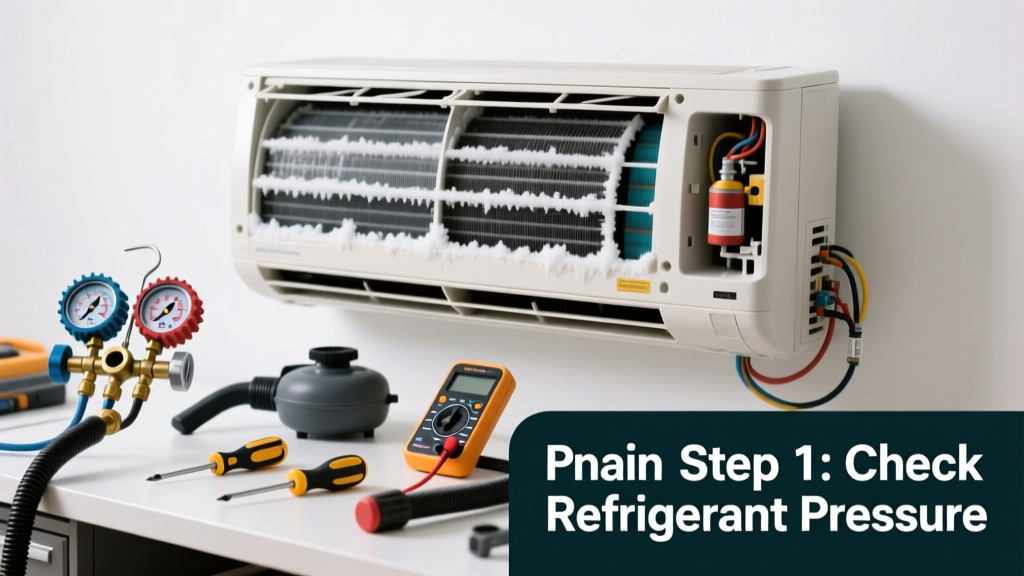
- Frozen evaporator coil caused by restricted airflow or low refrigerant
Tools & Materials Needed
| Item | Purpose | Estimated Cost |
|---|---|---|
| Fin comb | Straightens bent condenser fins to restore airflow and heat exchange | $8–$15 |
| Digital multimeter | Tests voltage at disconnect box and indoor unit terminals | $25–$60 |
| Refrigerant leak detector (UV or electronic) | Identifies small R-410A leaks invisible to the naked eye | $45–$120 |
| Soft brush + vacuum with brush attachment | Cleans indoor unit blower wheel and drain pan without damaging components | $12–$28 |
Step-by-Step Fix
Work through these methods in order — most common first:
- Clean the indoor air filter and inspect the evaporator coil. Turn off power at the breaker. Remove the front panel, pull the filter, and vacuum or rinse with cool water (let dry fully). Shine a flashlight into the coil — if it’s gray or furry, use a no-rinse coil cleaner like Nu-Calgon Evap Foam and follow dwell time instructions.
- Clear debris from the outdoor unit. Shut off power. Remove leaves, grass clippings, and dirt from the condenser fan intake and coil surface. Use a fin comb to gently straighten any bent aluminum fins — crooked fins reduce efficiency by up to 30%, per ASHRAE’s 2022 Field Performance Guide.
- Check thermostat settings and wiring. Confirm mode is set to 'cool', fan is 'auto', and temperature is at least 5°F below room temp. Inspect low-voltage wires at both indoor and outdoor units for loose connections or corrosion — especially the Y (cooling) and C (common) terminals.
- Inspect for ice buildup. If the copper lines or indoor coil are frosted, turn system off for 4+ hours to thaw completely. Restart only after confirming airflow is unrestricted — persistent freezing points to refrigerant issues or blower motor failure.
When to Call a Pro
Stop and call a licensed HVAC technician if you encounter any of these:
- Voltage readings outside manufacturer specs (e.g., <208V or >250V at outdoor unit disconnect)
- Oil residue near copper line connections — a telltale sign of refrigerant leak
- Compressor humming but not starting, or clicking repeatedly
- Refrigerant pressure readings below 100 psi on suction line (R-410A) while running
"Over 60% of premature mini split compressor failures trace back to chronic low airflow or undetected refrigerant loss — not age," says James L. Rivera, lead technician at NATE-certified ClimatePro Service Group (2024).
Prevention Tips
Extend your system’s life and avoid repeat failures with these habits:
- Replace or clean the indoor filter every 30 days during peak season (every 60 in shoulder months)
- Trim shrubs and trees to maintain 24" clearance around outdoor unit on all sides
- Schedule professional coil cleaning and refrigerant charge verification annually
- Install a smart thermostat with system diagnostics — models like the Sensi Touch report coil freeze events and airflow alerts
Why does my mini split blow air but not cool?
This almost always means the refrigeration cycle isn’t engaging. First verify the thermostat is calling for cooling — check for a snowflake icon or 'COOL' display. Then inspect the outdoor unit: if the fan spins but the compressor doesn’t hum or vibrate, suspect a faulty contactor, blown capacitor, or control board issue. A multimeter reading across the contactor coil (24V AC expected) helps isolate the problem.
Can I recharge refrigerant myself?
No — and it’s illegal without EPA Section 608 certification. R-410A is a regulated refrigerant; releasing it violates Clean Air Act rules. Even 'refrigerant top-off' cans sold online lack pressure/temperature compensation and risk overcharging, which damages compressors. Always hire a certified tech who logs refrigerant weight and performs a full leak check.
How do I know if my mini split has a refrigerant leak?
Look for oily residue on copper lines, hissing sounds near fittings, or consistently dropping suction pressure (use gauges). The U.S. EPA estimates that 14% of household HVAC energy waste stems from undetected refrigerant leaks — so early detection saves both cooling performance and utility bills.
Is it normal for my mini split to cycle on and off frequently?
No — short cycling (less than 10 minutes per run) signals trouble. Common culprits include oversized unit capacity, dirty coil, failing expansion valve, or low refrigerant. Check your unit’s BTU rating against your room size using our mini split sizing calculator — oversizing is more common than undersizing in residential retrofits.
Why does my mini split work fine in heat mode but not cool?
This strongly suggests a reversing valve failure — the component that switches refrigerant flow between heating and cooling. When stuck mid-position, it can’t reverse properly. You may hear a faint 'clunk' when switching modes, or notice lukewarm air instead of cold. This requires professional diagnosis and valve replacement — don’t attempt disassembly.
Can a power surge damage my mini split’s control board?
Absolutely. Whole-home surge protectors reduce risk, but mini splits remain vulnerable — especially older models without built-in MOVs. If your unit stopped cooling after a storm or breaker trip, test low-voltage output at the indoor unit terminal block. No 24V AC? Check transformer input/output and consider replacing the control board. For long-term protection, install a dedicated whole-house surge protector.
A non-cooling mini split rarely means total system failure — more often, it’s a maintenance gap or overlooked setting. With methodical checks and the right tools, most homeowners resolve the issue before noon. But don’t ignore warning signs like oil stains, unusual noises, or repeated freezing — those point to deeper mechanical problems best handled by pros who carry refrigerant licenses and factory-trained diagnostics gear.