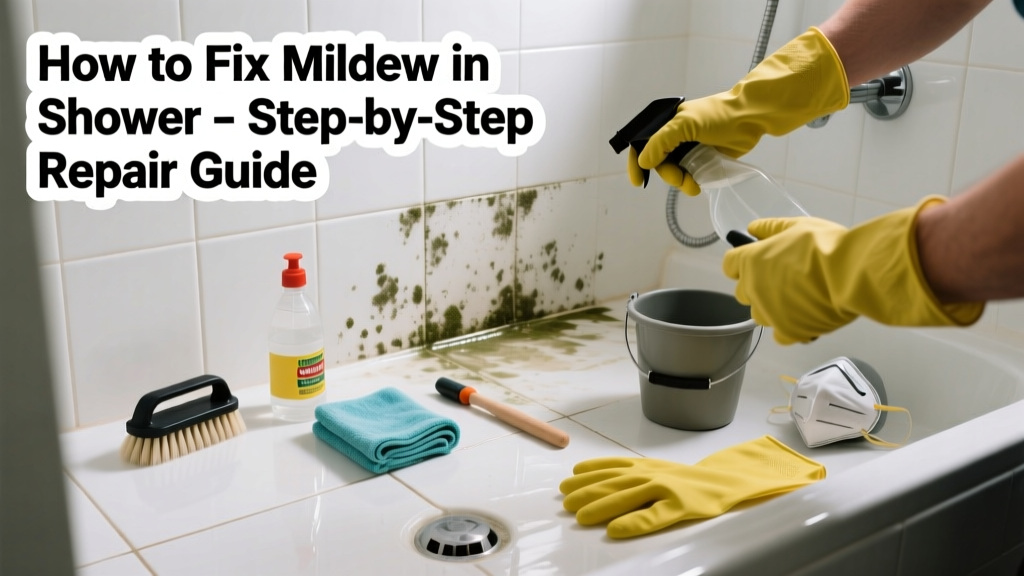
Mildew in your shower isn’t just unsightly—it’s a sign of trapped moisture and potential health risks. Left unchecked, it spreads fast across grout, caulk, and tile surfaces, especially in older bathrooms with poor airflow or cracked seals. Most cases are fixable in under two hours with common household supplies—but knowing when to stop and call help is just as critical.
Quick Diagnosis
Mildew thrives where moisture lingers. Before scrubbing, identify the root cause:
- Poor ventilation (no working exhaust fan or window)
- Caulk cracks or gaps around tub/shower edges
- Grout that’s porous, unsealed, or deteriorating
- Shower curtain liner staying damp for >24 hours
- Leaking faucet or showerhead dripping behind tile
Tools & Materials Needed
| Item | Purpose | Estimated Cost |
|---|---|---|
| White vinegar (undiluted) or EPA-registered mold cleaner | Kills surface mildew spores without harsh fumes | $3–$12 |
| Soft-bristle nylon brush (grout-specific) | Scrubbing without scratching tile or grout | $5–$10 |
| Microfiber cloths (lint-free) | Wiping residue without leaving streaks or lint | $8–$15 for pack of 6 |
| Disposable gloves + N95 mask | Protecting skin and lungs during cleaning | $4–$9 |
| Painter’s tape & plastic sheeting | Sealing off adjacent surfaces from overspray or runoff | $6–$11 |
Step-by-Step Fix
Use these methods in order—start gentle, escalate only if needed:
- Vinegar soak method: Spray undiluted white vinegar on affected areas, let sit 10 minutes, then scrub with nylon brush. Rinse thoroughly with warm water and dry with microfiber cloth.
- Baking soda paste: Mix ½ cup baking soda + 2 tbsp water into thick paste. Apply to stubborn spots, wait 15 minutes, scrub gently, rinse.
- Hydrogen peroxide (3%) spray: Lightly mist area, wait 10 minutes, wipe—not for use on natural stone or colored grout (may lighten).
- Commercial mold remover: Use only EPA-registered products like RMR-86 or Concrobium Mold Control—follow label instructions precisely and ventilate well.
When to Call a Pro
DIY stops being safe or effective when:
- Mildew covers more than 10 square feet (EPA defines this as a remediation job requiring containment)
- You see black, fuzzy growth behind tile or inside walls—sign of hidden mold infiltration
- Grout is crumbling or caulk is separating from substrate by >⅛ inch
- You smell musty odors even after cleaning, suggesting growth inside wall cavities or under flooring
- Your home has recurring mildew despite proper ventilation and cleaning (points to hidden plumbing leak)
Prevention Tips
Fixing mildew once isn’t enough—you need systems that break the moisture cycle:
- Run the bathroom exhaust fan for at least 20 minutes after every shower (use a timer switch if yours lacks one)
- Replace silicone caulk every 3–5 years—or sooner if you spot discoloration or cracking
- Wipe down walls and doors with a squeegee post-shower; hang shower curtain fully open to dry
- Seal grout annually with a penetrating sealer like Aqua Mix Sealer’s Choice Gold
- Install a hygrometer to monitor humidity—keep it below 60% (ideal: 40–50%)
Can I use bleach on this?
No—bleach doesn’t penetrate porous grout or caulk and only removes surface discoloration. According to the U.S. EPA’s Mold Remediation in Schools and Commercial Buildings (2022), bleach can actually feed mold growth on organic materials and corrode grout over time.
Is mildew the same as mold?
No. Mildew is a surface-level fungus—flat, powdery, and usually white or gray. Mold grows deeper, appears fuzzy or slimy, and can be black, green, or brown. Both indicate moisture problems, but mold poses greater respiratory risk and requires stricter remediation protocols.
How long does vinegar take to kill mildew?
Undiluted white vinegar needs at least 10 minutes of dwell time to deactivate mildew spores on non-porous surfaces. On grout or caulk, extend to 15–20 minutes—and always follow up with mechanical scrubbing to remove dead spores and biofilm.
Why does mildew keep coming back in the same spot?
Recurring mildew almost always points to an unresolved moisture source: a hairline crack in caulk, a slow drip from a worn shower arm washer, or inadequate fan CFM (your fan should move ≥50 CFM for a standard shower). Check behind fixtures and test fan output with a tissue test—if it doesn’t stick firmly, replace the unit.
Can I paint over mildew-stained grout?
Never. Painting traps moisture and accelerates deterioration. Instead, re-grout using epoxy-based grout like Spectralock Pro, which resists mildew and stains far better than cement-based options. For guidance, see our how to regrout shower guide.
Does a dehumidifier help in the bathroom?
Yes—but only if used strategically. Portable dehumidifiers work best when run for 1–2 hours post-shower. For permanent control, install a ducted, inline bathroom fan like the Panasonic WhisperGreen (110 CFM), which meets ASHRAE 62.2 standards for continuous low-speed ventilation. As HVAC contractor Mark Delaney told Journal of Home Inspection (2023): “A fan that moves air *out* beats any dehumidifier that just recirculates it.”
“Surface mildew is often the first visible clue of a deeper moisture problem—like a leaking valve seat or compromised waterproofing membrane behind tile.” — Certified Master Remodeler, National Association of the Remodeling Industry (NARI), 2023
Once you’ve cleaned, sealed, and adjusted your routine, mildew shouldn’t return within weeks. If it does, treat it as a diagnostic red flag—not just a cleaning chore. Keep a log of where and when it reappears; that pattern will point straight to the hidden source. And remember: sealing grout, replacing caulk, and running your fan aren’t luxuries—they’re the basic maintenance your shower expects every year. For related help, check out our shower leak repair and bathroom exhaust fan installation guides.