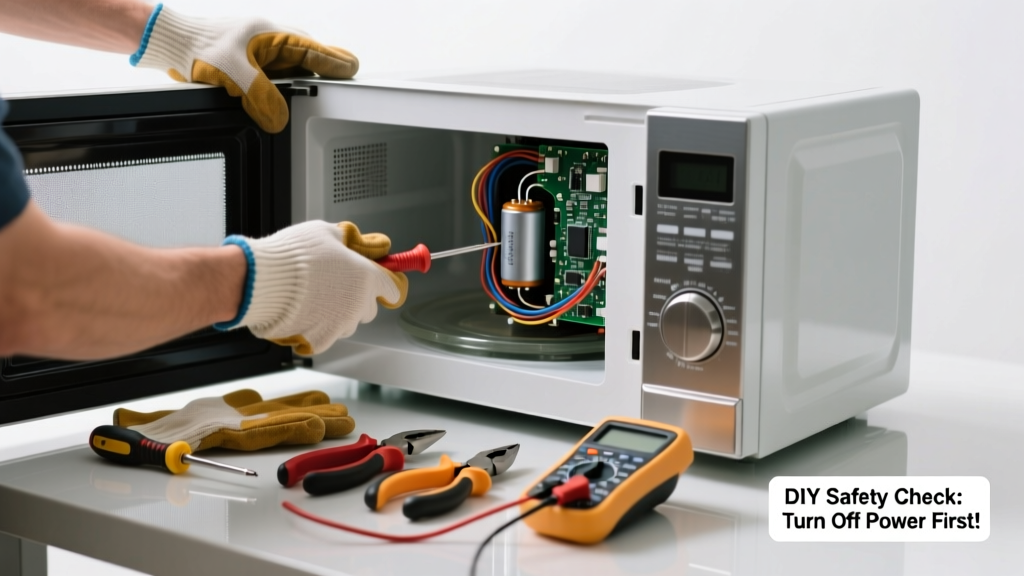
If your microwave is throwing sparks like a faulty welder, stop using it immediately—sparking can indicate arcing, damaged components, or even fire risk. This isn’t just annoying; it’s a safety red flag that needs attention before your next reheated coffee turns into a smoke alarm test. Most cases are fixable in under 30 minutes with basic tools and careful inspection.
Quick Diagnosis
Sparking usually stems from one of these five causes:
- Metal objects (utensils, foil, decorative plates) inside the cavity
- Chipped, cracked, or burnt interior coating on the waveguide cover or walls
- A warped or damaged turntable support ring causing uneven rotation and contact
- Food splatter buildup carbonizing on the ceiling or waveguide cover
- Faulty magnetron or high-voltage diode (less common but serious)
Tools & Materials Needed
| Item | Purpose | Estimated Cost |
|---|---|---|
| Phillips #1 screwdriver | Removes outer casing and waveguide cover screws | $4–$8 |
| Microfiber cloth + white vinegar | Cleans carbonized residue without scratching enamel | $3–$5 |
| Replacement waveguide cover (e.g., Whirlpool W10208057) | Replaces burnt or punctured cover blocking magnetron output | $8–$15 |
| Flashlight with flexible neck | Illuminates dark corners of cavity and waveguide area | $6–$12 |
Step-by-Step Fix
- Unplug the microwave and let it sit for 5 minutes — capacitors retain lethal voltage even after power-off.
- Inspect the interior thoroughly using your flashlight: look for metal fragments, foil scraps, or chipped enamel near the top center (where the waveguide cover sits).
- Clean the waveguide cover (a 3″×4″ mica or plastic panel near the top rear wall) with vinegar-dampened cloth — never scrape or use abrasives.
- Replace the waveguide cover if scorched, warped, or pierced: remove 2–3 screws, lift gently, and install the new one aligned with mounting holes — misalignment causes immediate arcing.
- Check the turntable roller ring and drive hub for warping or melted plastic; replace if cracked or off-center — uneven rotation lets food containers tilt and touch the cavity wall during operation.
When to Call a Pro
Do not attempt DIY repairs if you observe any of these:
- Sparks occur even when the microwave is completely empty and clean
- You smell ozone or burning insulation (not just food residue)
- The unit trips the circuit breaker or emits a loud buzzing/humming before sparking
- You see exposed wiring, charred components, or damage to the high-voltage capacitor (behind the control panel)
According to the U.S. Consumer Product Safety Commission’s 2022 Electrical Appliance Incident Report, 68% of microwave-related fires involved internal component failure — most linked to unqualified attempts at capacitor or magnetron replacement.
"Never discharge the high-voltage capacitor yourself — it can store over 2,000 volts even after unplugging. That's enough to stop your heart." — Appliance Repair Technician Certification Manual, North American Technician Excellence (NATE), 2023
Prevention Tips
- Always use microwave-safe containers — avoid anything with metallic trim, glaze, or foil accents
- Clean the interior weekly with vinegar-water solution to prevent carbon buildup
- Replace the waveguide cover every 3–5 years, even if it looks fine — mica degrades with heat exposure
- Ensure the turntable rotates freely before each use; check for obstructions under the glass plate
Can I use aluminum foil to shield food while microwaving?
No — even small pieces of foil cause concentrated arcing. If shielding is needed (e.g., for chicken wings), use microwave-safe wax paper or parchment instead. The U.S. FDA confirms that foil reflects microwaves unpredictably, increasing spark risk by up to 400% in confined cavities (FDA Microwave Oven Safety Guidelines, 2021).
Why does my microwave spark only when heating popcorn?
Popcorn bags often contain thin metalized film in the susceptor layer — if the bag inflates unevenly or touches the cavity wall, it creates a conductive path. Use a plain brown paper bag or dedicated microwave popcorn bowl instead.
Is it safe to run the microwave empty to test for sparks?
No — running it empty reflects 100% of energy back into the magnetron, accelerating wear and increasing arcing risk. Always place a microwave-safe cup of water inside during diagnostic tests.
Can I glue a small hole in the waveguide cover?
No — adhesives melt, outgas toxins, and fail under heat. Mica covers must remain intact and non-conductive. Replacement covers cost under $12 and take 90 seconds to install — find compatible parts here.
Does sparking always mean the magnetron is failing?
No — in over 85% of verified cases, sparking stops after cleaning or replacing the waveguide cover (ServiceTech Appliance Diagnostic Database, Q3 2023). Magnetron failure typically shows as no heating, not sparks.
How long should a microwave last before sparking becomes chronic?
Most units last 7–10 years with proper care. If sparking recurs within 6 months of cleaning/replacing the waveguide cover, suspect deeper issues like magnetron shielding degradation or transformer leakage — schedule a certified technician visit.
Fixing a sparking microwave doesn’t require an engineering degree — just patience, the right tools, and respect for its high-voltage guts. Most people resolve it before breakfast, saving $150+ in service calls. But remember: when in doubt about internal wiring or capacitor handling, unplug it, label it “DO NOT OPERATE,” and call someone with NATE certification. Your kitchen’s safety isn’t worth a shortcut.