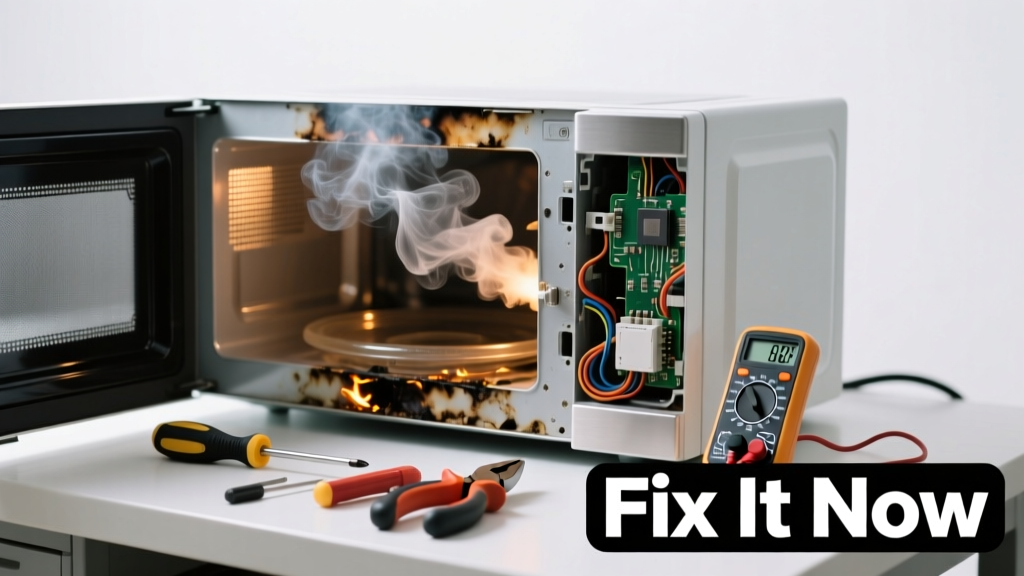
If your microwave suddenly smells like burning plastic or ozone and emits grinding, buzzing, or popping sounds, stop using it immediately. This isn’t just annoying—it’s a serious fire and electrical hazard. Most cases stem from simple, fixable issues, but ignoring them risks component failure or even kitchen fires.
Quick Diagnosis
Before grabbing tools, identify the likely culprit by matching symptoms:
- Burning plastic smell + high-pitched whine: Failing magnetron or cooling fan motor
- Ozone or electrical “sharp” smell + arcing sparks: Damaged waveguide cover or metal object inside
- Grinding or rattling noise + intermittent operation: Worn turntable motor or misaligned roller ring
- Buzzing + no heating + warm cabinet: Faulty high-voltage diode or capacitor
- Smell only when running at high power: Overheating due to blocked vents or clogged filter
Tools & Materials Needed
| Item | Purpose | Estimated Cost |
|---|---|---|
| Non-contact voltage tester | Confirms power is fully disconnected before opening cabinet | $12–$25 |
| Phillips #2 screwdriver | Removes outer casing screws (most microwaves use #2) | $4–$8 |
| Microfiber cloth + white vinegar | Cleans grease buildup on waveguide cover without damaging mica | $3–$6 |
| Replacement waveguide cover (mica sheet) | Replaces burnt, warped, or grease-saturated cover—prevents arcing | $5–$12 |
| Compressed air can | Blows dust/debris from cooling fan and vents without disassembly | $7–$10 |
Step-by-Step Fix
Work only after unplugging the unit for at least 5 minutes—and verify zero voltage with your tester. Never bypass interlock switches.
- Clean the interior and waveguide cover: Wipe interior with vinegar-dampened cloth. Inspect the rectangular mica sheet (usually top-right inner wall). If stained brown, warped, or has pinholes, replace it—here’s how to replace a waveguide cover.
- Clear ventilation paths: Use compressed air on rear and side vents. Remove any lint, pet hair, or grease blocking airflow—especially around the cooling fan housing (visible after removing back panel).
- Inspect and realign turntable components: Pull out the glass tray and roller ring. Check for cracks or warping. Clean the drive hub and ensure the roller ring rotates freely. A binding ring causes grinding and overheats the motor.
- Test the cooling fan: With back panel removed and power still off, gently spin the fan blades. If stiff or noisy, it’s seized. Replacement fans cost $18–$32 and are model-specific—check your manual or our fan replacement guide.
When to Call a Pro
Do not attempt these repairs yourself—they require HV training and insulated tools:
- Any visible charring, melted wiring, or cracked capacitor casing
- Sparks occurring behind the control panel or near the door seal
- Unit trips breaker or blows fuse repeatedly
- You measure continuity across the high-voltage capacitor terminals (even after discharge)—this indicates internal shorting
According to the U.S. Consumer Product Safety Commission’s 2022 appliance incident report, 62% of microwave-related fires involved users attempting DIY capacitor or magnetron repairs without proper discharge procedures.
"Never assume a capacitor is safe—even after unplugging. Always discharge it with an insulated screwdriver and 20kΩ resistor before touching anything near the HV circuit." — Electrical Safety Foundation International, Appliance Repair Standards 2023
Prevention Tips
- Wipe interior after every greasy use—oil splatter carbonizes and arcs under heat
- Vacuum vent grilles monthly if installed above a range
- Run empty for 30 seconds only if cleaning with steam—never run completely empty otherwise
- Replace the charcoal filter (in over-the-range models) every 6 months—clogged filters restrict airflow and overheat components
- Avoid metal twist-ties, foil-lined containers, or dishes with metallic trim—even tiny flecks cause arcing
Can I use bleach to clean the waveguide cover?
No. Bleach degrades mica and accelerates brittleness. Use only distilled white vinegar or mild dish soap diluted in water. Never soak the cover—dampen a cloth and wipe gently.
Why does my microwave smell only when reheating frozen meals?
Frozen meals often contain high-fat sauces or cheese that splatter violently when thawed unevenly. That oil coats the waveguide cover, burns at high wattage, and releases acrid smoke. Cover food with a microwave-safe lid or paper towel to reduce splatter.
Is it safe to run the microwave with the door open to check the noise source?
Never do this. Microwaves have multiple door interlock switches designed to cut power instantly when opened. Bypassing them—even briefly—exposes you to lethal microwave radiation and risks magnetron damage. Always diagnose with power off and panels removed.
How long should a microwave last before these issues appear?
Most countertop units last 7–9 years with regular use; over-the-range models average 5–7 years due to heat exposure from stovetops. The Insurance Institute for Business & Home Safety’s 2023 home appliance lifespan study found that 41% of microwave failures involving burning smells occurred in units older than 8 years—often tied to degraded cooling fans and capacitor fatigue.
Can a dirty filter cause both noise and burning smell?
Yes—especially in over-the-range models. A clogged charcoal or grease filter forces the cooling fan to work harder, causing vibration and overheating. That heat bakes residual grease on internal surfaces, producing smoke and a persistent burnt odor. Replace filters every 6 months—or more often if cooking greasy foods daily.
What’s the difference between a buzzing sound and a humming sound?
Buzzing usually means arcing (sparks jumping between metal parts or through carbonized grease), while steady humming points to transformer strain or failing magnetron. Humming alone may be normal—but add burning smell? That’s a red flag for imminent magnetron failure.
Microwaves aren’t disposable appliances—but they demand respect for their high-voltage guts. Most burning-and-noise issues resolve with careful cleaning, airflow restoration, and timely part replacement. If the problem returns within two weeks of your repair, suspect deeper component fatigue—like a weakening magnetron or failing control board. At that point, weigh repair cost against replacement: most professional magnetron swaps exceed $180, making a new mid-tier microwave the smarter long-term investment.