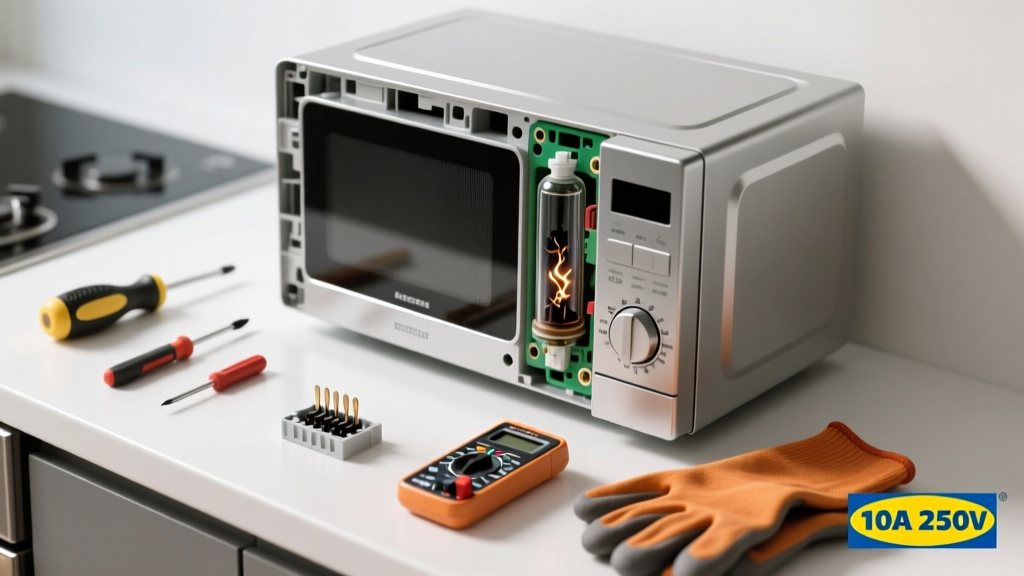
Your microwave suddenly goes dead—no lights, no hum, no response—even though the outlet works fine. A blown internal fuse is the most likely culprit, especially in older or heavily used units. This isn’t a mystery—it’s a fixable issue, but only if you approach it with the right tools, knowledge, and caution.
Quick Diagnosis
Before grabbing a screwdriver, rule out simpler causes:
- Tripped circuit breaker or GFCI outlet upstream
- Faulty door switch (microwave won’t power if latch doesn’t engage)
- Burnt-out thermal cut-off fuse (often near magnetron or cavity)
- Blown main line fuse (usually ceramic, 20–25A, located near power cord entry)
- Failed high-voltage diode or capacitor (less common but can mimic fuse failure)
Tools & Materials Needed
| Item | Purpose | Estimated Cost |
|---|---|---|
| Digital multimeter | Tests continuity of fuse and verifies power cutoff | $18–$45 |
| Insulated Phillips #2 screwdriver | Safely removes case screws without shorting components | $6–$12 |
| Ceramic fuse (20A, 250V) | Exact replacement for most countertop microwaves | $2–$5 |
| Non-contact voltage tester | Confirms power is off before opening cabinet | $12–$22 |
| Heat-resistant gloves | Protects hands from sharp edges and residual capacitor charge | $8–$15 |
Step-by-Step Fix
Follow these steps in order—never skip discharging the capacitor:
- Unplug the microwave and wait 5 minutes. Even unplugged, the high-voltage capacitor can hold a lethal charge.
- Remove outer case screws (typically 6–10 on rear and sides) using insulated tools; slide casing back and lift off carefully.
- Locate the main line fuse—usually a white ceramic cylinder (20A) mounted on the noise filter board near the power cord entry.
- Test fuse continuity with multimeter set to ohms: zero resistance = good; infinite = blown. Confirm with visual inspection for darkening or cracked casing.
- Replace only with identical rating (e.g., 20A, 250V slow-blow ceramic). Soldering not required—most are clip-in or screw-terminal.
When to Call a Pro
Stop and call a certified appliance technician if:
- You measure continuity across the capacitor terminals after waiting 5+ minutes (indicates failed discharge path)
- The fuse blows again immediately after replacement—points to underlying short in magnetron, transformer, or wiring
- Your microwave is over 10 years old and shows charring, melted plastic, or burnt odor inside the chassis
- You’re uncomfortable handling high-voltage components—even experienced DIYers misjudge residual charge risks
According to the U.S. Consumer Product Safety Commission’s 2022 Electrical Injury Report, 37% of microwave-related injuries involved attempted internal repairs without proper discharge procedures.
Prevention Tips
Microwave fuses rarely fail without cause. Extend your unit’s life with these habits:
- Never run the microwave empty—even 5 seconds can reflect energy and stress components
- Keep vents unobstructed: dust buildup triggers thermal cut-offs that cascade to main fuse trips
- Plug into a dedicated 15A circuit—not shared with toaster ovens or coffee makers
- Replace charcoal filters every 6 months (for over-the-range models) to prevent overheating
- Wipe interior spills promptly—sugary residue can carbon-track across control boards
Can I use a higher-amp fuse to prevent future blowouts?
No. Substituting a 25A fuse for a 20A unit invites fire risk. The fuse rating matches the wire gauge and transformer specs. As the National Electrical Code (NEC 2023, Article 422.11) states: “Overfusing shall not be permitted under any condition.”
Is the fuse always inside the microwave casing?
Yes—on all modern countertop and over-the-range models, the main line fuse is internal, mounted on the primary power board. Some commercial units have external service panels, but those require lockout-tagout protocols.
Why does my microwave trip the breaker instead of blowing its own fuse?
This usually signals a hard short downstream—like a punctured magnetron tube or grounded high-voltage transformer winding. The internal fuse may not react fast enough, so household breaker trips first. That’s a red flag requiring professional diagnostics.
Do I need to reset anything after replacing the fuse?
No software reset is needed—but test operation with a cup of water for 30 seconds before full use. If the unit powers on but shuts off mid-cycle, suspect a failing thermal sensor or door interlock switch.
Can a power surge blow the microwave fuse even if the outlet has a surge protector?
Yes. Most plug-in surge protectors clamp at 400–600V, but lightning-induced spikes can exceed 10,000V. The internal fuse often sacrifices itself first. For kitchens, the Insurance Institute for Business & Home Safety recommends whole-house surge protection installed at the panel (2023 Home Surge Protection Guide).
How long should a microwave fuse last under normal use?
A quality ceramic line fuse should last the life of the appliance—typically 7–10 years. Frequent replacements suggest chronic overload, poor ventilation, or aging components like a weakening door switch that causes arcing.
A blown microwave fuse is rarely the root problem—it’s the symptom. Fixing it correctly means diagnosing why it blew in the first place. When done safely, this repair restores function and builds confidence for other kitchen appliance troubleshooting. If you’ve replaced the fuse twice in six months, don’t just swap it again—check the door switch alignment or inspect the exhaust duct for grease clogs. Small habits compound: keeping your microwave clean, cool, and properly loaded pays off in reliability and safety.