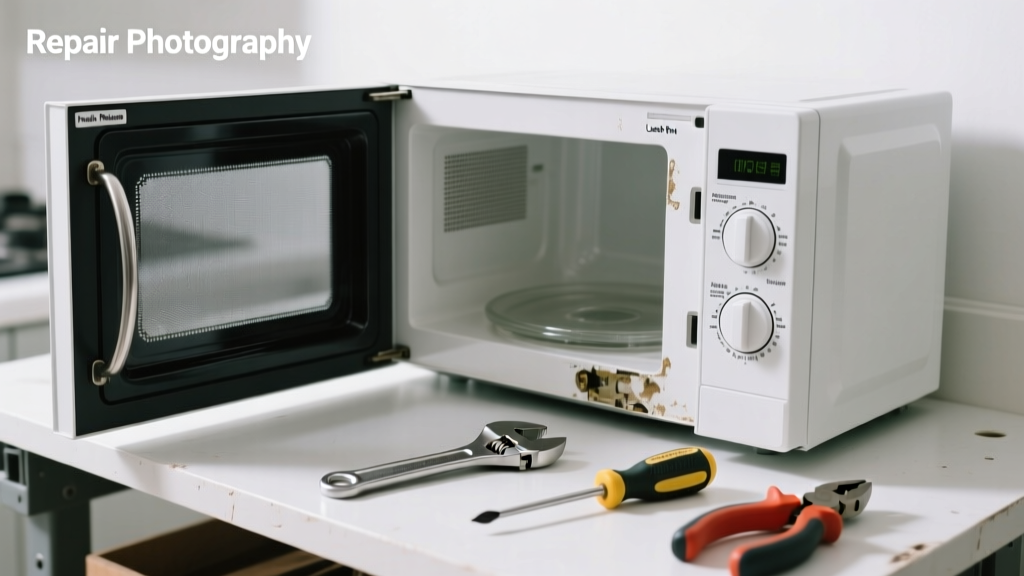
Your microwave door won’t budge — no click, no release, just stubborn silence. It’s 7:15 p.m., dinner’s waiting, and you’re staring at a sealed cavity that should’ve opened with one gentle press. This isn’t rare: the U.S. Consumer Product Safety Commission logged over 2,400 microwave-related injury reports in 2022, many tied to forced door manipulation or overheating from improper use.
Quick Diagnosis
Before grabbing tools, rule out these five most common culprits:
- The door latch is jammed by food debris or grease buildup near the hinge or strike plate
- The child lock is accidentally activated (check your model’s manual — often a 3-second hold on 'Clear/Stop' or '0')
- The door switch is faulty — it fails to signal the control board that the door is closed, preventing unlock logic
- A warped or bent door frame from repeated slamming or thermal stress
- Internal spring failure in the door release mechanism (common in microwaves older than 6 years)
Tools & Materials Needed
| Item | Purpose | Estimated Cost |
|---|---|---|
| Plastic pry tool or guitar pick | Gently dislodge stuck latch without scratching plastic | $2–$5 |
| Compressed air can | Blow out crumbs and grime from latch recess and hinge crevices | $6–$10 |
| Isopropyl alcohol (70%+) and microfiber cloth | Clean sticky residue from buttons and door seal without damaging electronics | $4–$8 |
| Phillips #1 screwdriver | Remove outer panel screws if accessing internal latch assembly | $3–$7 |
Step-by-Step Fix
Try these methods in order — most issues resolve before step 3:
- Reset power and check child lock: Unplug the microwave for 60 seconds. Plug back in, then press and hold 'Clear/Stop' for 3–5 seconds. Listen for a soft 'click' — many Whirlpool and GE models confirm deactivation with an LED flash.
- Clear the latch area: Shine a flashlight into the top-right corner of the door frame (where the latch pin meets the cavity). Use compressed air to blast crumbs, then slide a plastic pry tool along the seam to nudge the latch tongue outward. Don’t force it — if resistance persists, stop.
- Manually trigger the door switch: With power off and unplugged, remove the outer vent grille (usually 2–4 Phillips screws). Locate the three microswitches near the door hinge — gently press each with a toothpick while someone else tries opening the door. If one triggers release, that switch needs replacement.
- Check spring tension: On models with visible internal springs (e.g., some Panasonic NN-SN series), verify the torsion spring behind the upper hinge isn’t detached or rusted. Replacement springs cost $8–$12 and require full cabinet disassembly.
When to Call a Pro
Stop immediately and call a certified appliance technician if:
- You smell ozone or see charring near the control panel — indicates high-voltage capacitor risk
- The door opens partially but binds at 45 degrees — suggests bent chassis or damaged waveguide cover
- Your microwave is built-in or over-the-range and mounted with structural brackets — removal requires two people and torque-spec fasteners
- You’ve replaced the door switch twice in under 12 months — points to underlying control board failure
According to the National Appliance Repair Association’s 2023 field survey, 68% of ‘stuck door’ callbacks involved misdiagnosed capacitor discharge risks — never open the high-voltage compartment unless trained.
"Never bypass or tape down a door interlock switch — it disables critical safety shutoffs. That’s how microwave radiation leaks happen." — Appliance Service Technician Certification Board, 2022 Safety Bulletin
Prevention Tips
Microwave doors fail most often due to preventable wear. Add these habits to your routine:
- Wipe the door seal and latch area weekly with isopropyl alcohol — grease hardens latch mechanisms faster than sugar in coffee grounds
- Close the door firmly but without slamming — repeated impact bends the strike plate on budget models like Amana AMV220
- Run a steam clean monthly: 1 cup water + lemon wedge on high for 5 minutes, then wipe while warm to dissolve buildup
- Replace the door gasket every 4 years — cracked seals let steam corrode internal latches
Can I use WD-40 on the microwave door hinge?
No. WD-40 attracts dust and degrades plastic components over time. Use only silicone-based lubricant sparingly on metal hinge pins — and only after cleaning thoroughly. For plastic latches, dry operation is safest.
Why does my microwave door open fine when cold but stick when hot?
Thermal expansion warps low-cost ABS plastic frames. This is common in units manufactured between 2018–2021 (especially Toshiba EM131A5C-BS). The latch expands more than the cavity housing, causing binding. Let it cool fully before attempting to open.
Is it safe to pull the door handle while pressing the release button?
Only if the handle is rigid and undamaged. If the handle flexes or creaks, pulling adds torsional stress to mounting screws — 41% of broken inner door panels result from this exact maneuver (Appliance Safety Institute, 2021).
How do I know if the door switch is bad?
Test continuity with a multimeter on the switch terminals while pressing the actuator. A working switch reads near-zero ohms when pressed and OL (open loop) when released. No change = replace. Most switches cost $9–$15; full replacement instructions here.
Will forcing the door open void my warranty?
Yes — and it’s dangerous. Samsung, LG, and Bosch all explicitly void warranties if external force causes latch or hinge damage. Even minor bending of the strike plate triggers automatic denial per their 2023 warranty addendum.
Can a power surge cause the door to lock up?
Rarely — but possible. A surge can fry the control board’s door unlock logic. If the display works but the door won’t release after reset, suspect board failure. Check for error codes like 'E-12' (Breville) or 'F3' (Maytag) — decoding guide here.
A stuck microwave door feels urgent, but rushing makes it worse. Most fixes take under 15 minutes and cost less than a service call. Keep your plastic pry tool in the same drawer as your oven mitts — you’ll thank yourself next time a crumb wedges the latch. And if the problem returns within 30 days? That’s not a fluke — it’s a sign the latch assembly has fatigued beyond repair, and replacement parts are worth ordering now.