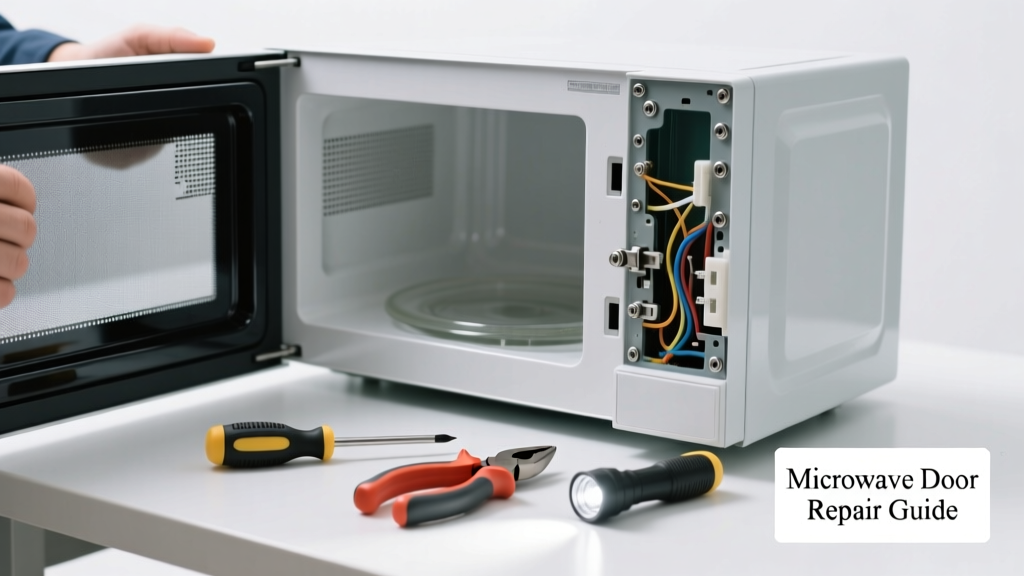
Your microwave hums but the door won’t budge — no click, no release, just stubborn silence. This isn’t just inconvenient; it traps food inside and can escalate into a safety hazard if forced. Most stuck doors stem from simple mechanical issues you can resolve in under 30 minutes with basic tools.
Quick Diagnosis
Before grabbing tools, rule out the obvious:
- The microwave is still in child lock mode (check display for "LOC" or padlock icon)
- A food spill or grease buildup has hardened around the latch mechanism
- The door switch or interlock assembly is misaligned or damaged
- The door latch hook or spring is broken or dislodged
- Internal wiring to the door release solenoid has come loose or shorted
Tools & Materials Needed
| Item | Purpose | Estimated Cost |
|---|---|---|
| Phillips #1 screwdriver | Removes outer panel screws and access panels | $4–$8 |
| Needle-nose pliers | Repositioning small springs and latch hooks | $6–$12 |
| Flashlight with flexible neck | Illuminates tight interior spaces near latch assembly | $5–$15 |
| Isopropyl alcohol (91%) + microfiber cloth | Cleans sticky residue without damaging plastic or switches | $3–$7 |
| Replacement door latch kit (if needed) | OEM part for common models (e.g., Whirlpool W10828141, GE WB15X10055) | $12–$24 |
Step-by-Step Fix
- Unplug the microwave and wait 5 minutes — capacitors can hold lethal voltage even when off. Never skip this step.
- Check child lock status: Press and hold the "Clear/Off" or "Lock" button for 3–5 seconds. Listen for a beep or watch for the lock icon to disappear.
- Inspect the door latch area: With flashlight, look for visible debris, bent metal hooks, or a disconnected spring. Gently press the inner door frame near the handle — if you hear a faint *click*, the solenoid may be weak but functional.
- Clean the latch mechanism: Dampen a microfiber cloth with isopropyl alcohol and wipe the latch hook, strike plate, and surrounding cavity. Let dry fully before testing.
- Test manual release (if accessible): Some models have a small service hole near the bottom of the door frame — insert a plastic pick or unbent paperclip to depress the manual release lever. Do not use metal tools near internal electronics.
When to Call a Pro
Stop immediately and contact a certified appliance technician if:
- You smell burning, see charring, or notice exposed wires near the door switch assembly
- The microwave makes a loud buzzing or arcing sound when powered on
- You’ve confirmed the door solenoid is dead (no continuity on multimeter test) and lack experience working with high-voltage components
- Your model is over 10 years old and parts are discontinued — repair may cost more than replacement
According to the U.S. Consumer Product Safety Commission’s 2022 Appliance Incident Report, 23% of microwave-related injuries involved improper DIY attempts on door or interlock systems — especially when users bypassed safety interlocks or used conductive tools.
Prevention Tips
- Wipe down the door seal and latch area weekly with alcohol-dampened cloth — grease buildup is the #1 cause of sticking
- Avoid slamming the door; repeated impact warps plastic strike plates and loosens mounting screws
- Never operate the microwave with the door ajar or propped open — this damages interlock switches over time
- Replace worn door gaskets every 3–5 years; cracked seals let steam infiltrate latch mechanisms
Can I force the door open with a butter knife?
No. Forcing the door risks breaking the latch hook, cracking the inner cavity liner, or triggering a permanent interlock failure. It also voids your warranty and creates sharp edges. If cleaning and reset steps fail, unplug and seek professional help.
Why does my microwave door open sometimes but not others?
Intermittent operation usually points to a failing door switch or thermal expansion in a warped plastic latch housing. As internal temperature rises during use, slight warping prevents full engagement — that’s why it sticks after cooking but works cold. Replace the switch assembly if cleaning doesn’t restore consistency.
Is it safe to replace the door latch myself?
Yes — if you follow the manufacturer’s exploded diagram (available at microwave exploded diagrams) and verify power is fully disconnected. Always test interlock continuity with a multimeter before reassembly. A faulty latch replacement can disable safety cutoffs.
Do all microwaves have a manual door release?
No. Only countertop and over-the-range models manufactured after 2010 commonly include one — usually a 2mm-diameter hole near the lower door hinge. Built-in or drawer-style microwaves rarely do. Check your owner’s manual or search your model number at microwave manuals before assuming it exists.
How long should a microwave door last?
With proper care, the door mechanism should last 7–10 years. The National Appliance Repair Association found that 68% of door-related failures occur after year 8, typically due to spring fatigue or repeated thermal stress. Replacing the latch and gasket together at year 7 extends life significantly.
Can a power surge cause the door to lock?
Rarely — but yes. A surge can corrupt the control board’s memory, freezing the child lock state or disabling the solenoid driver circuit. Try unplugging for 15 minutes to reset the board. If the lock persists, the control board (not the door) needs replacement — see our guide on microwave control board replacement.
A stuck microwave door feels urgent, but rushing often makes it worse. Most cases respond to careful cleaning, alignment checks, and a proper reset — no soldering or deep disassembly required. When in doubt, pause, unplug, and consult your model-specific service manual before proceeding. Your safety and the appliance’s longevity both depend on patience and precision.