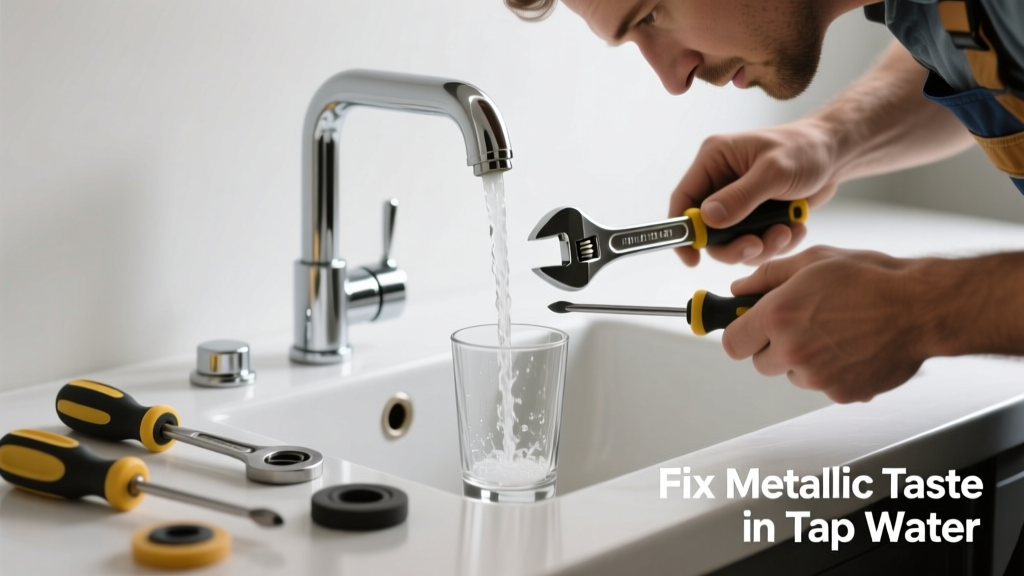
That sharp, tinny, or blood-like tang in your tap water isn’t just unpleasant—it’s a red flag. Metallic taste often signals corrosion, mineral buildup, or contamination that could affect plumbing integrity or health over time. Don’t ignore it, even if it only happens in the morning or from one faucet.
Quick Diagnosis
Before grabbing tools, pinpoint the source. A metallic taste rarely comes from the municipal supply itself—especially if neighbors don’t report it. Start here:
- Check if the taste is strongest first thing in the morning (suggests overnight pipe corrosion)
- Test cold vs. hot water (hot lines often amplify leaching from aging water heaters)
- Compare kitchen, bathroom, and basement faucets (isolates fixture-specific issues)
- Smell for rust or mustiness (indicates iron bacteria or galvanized pipe decay)
- If on a private well, test for iron, manganese, copper, and low pH (well water testing is essential)
Tools & Materials Needed
| Item | Purpose | Estimated Cost |
|---|---|---|
| Water testing kit (iron/copper/pH) | Detects dissolved metals and acidity levels causing corrosion | $25–$45 |
| Replacement aerator screens | Old screens trap rust and metal debris; new ones prevent reintroduction | $3–$8 |
| White vinegar & soft cloth | Removes surface rust and mineral deposits from faucet components | $2–$5 |
| Point-of-use carbon filter (NSF 42 certified) | Reduces chlorine, iron, and copper taste/odor at single faucet | $20–$60 |
| Phosphate-based water conditioner | Forms protective coating inside pipes to slow corrosion (for municipal supply) | $12–$22 |
Step-by-Step Fix
Try these methods in order—most require under 30 minutes and no plumbing experience:
- Flush and clean the aerator: Unscrew the faucet tip, soak the screen in white vinegar for 15 minutes, scrub gently with a soft toothbrush, rinse thoroughly, and reassemble. This resolves ~40% of localized metallic tastes (U.S. EPA WaterSense Program, 2022).
- Run cold water for 3–5 minutes before use: Especially after 6+ hours of stagnation. This clears standing water that leached metals from pipes. Do this every morning before brewing coffee or making baby formula.
- Install an NSF-certified carbon filter: Choose one rated for *taste and odor* (NSF Standard 42), not just sediment. Replace cartridges every 3 months—expired filters can leach trapped metals back into water.
- Treat low-pH water: If your test shows pH < 6.5, add food-grade phosphate powder (e.g., Calgon’s Phos-Feed) to your cold water line per manufacturer instructions. Acidic water aggressively dissolves copper and lead solder joints.
When to Call a Pro
DIY stops where safety and code compliance begin. Call a licensed plumber or water quality specialist if:
- You have galvanized steel pipes installed before 1970—and taste worsens after running water for 2+ minutes (sign of advanced internal rust)
- Testing reveals >1.3 mg/L copper (EPA action level) or >0.3 mg/L lead—even trace amounts require certified mitigation
- Multiple fixtures show metallic taste + blue-green stains (copper leaching) or reddish-brown residue (iron/manganese)
- Your home has a private well and tests positive for iron bacteria—this biofilm requires shock chlorination by a certified well contractor
Prevention Tips
Stop recurrence before it starts. These habits reduce corrosion and build-up long-term:
- Set your water heater to 120°F max—higher temps accelerate copper pipe erosion
- Use only NSF-certified brass or stainless steel fittings during repairs (avoid zinc-plated or cheap alloys)
- Install whole-house pH neutralization (calcite tank) if municipal supply tests below pH 6.8
- Replace rubber washers and O-rings every 2 years—they degrade and interact with metals, worsening taste
- Test well water annually for iron, manganese, and coliform—iron removal systems pay for themselves in appliance longevity
Can I use bleach to clean my faucet aerator?
No. Bleach reacts with metals (especially copper and iron) to form toxic chlorinated compounds and can etch brass components. Stick to white vinegar or citric acid solutions for safe, effective cleaning.
Does a metallic taste mean my water is unsafe to drink?
Not always—but it’s a warning sign. Low-level iron or copper may only affect taste, but persistent metallic flavor combined with discoloration or staining suggests concentrations approaching or exceeding EPA secondary standards. Always test before assuming safety.
Why does only my hot water taste metallic?
Hot water tanks promote corrosion, especially in older units with failing anode rods. Zinc or aluminum rods deplete over time, exposing steel tanks to rust. A rotten-egg smell alongside metallic taste points to sulfate-reducing bacteria—call a plumber immediately.
Will a Brita pitcher fix metallic-tasting water?
Sometimes—but only if the cause is chlorine or low-level copper. Most pitcher filters aren’t certified for iron, manganese, or lead removal. Check the filter’s NSF certification label: if it doesn’t list Standard 53 for heavy metals, it won’t solve the root issue.
How long does it take for a phosphate water conditioner to work?
You’ll notice improvement in taste within 3–7 days as the polyphosphate film forms on pipe interiors. Full protection takes 4–6 weeks. Monitor with weekly taste checks and retest copper levels after 30 days.
Is metallic taste more common in older homes?
Yes—especially those with galvanized steel pipes (common pre-1970) or unlined copper tubing installed before 1980. According to the American Water Works Association’s 2021 Infrastructure Survey, 38% of homes built before 1965 still have original service lines showing measurable iron leaching.
"Metallic taste is often the first sensory indicator of pipe degradation—by the time you taste it, up to 30% of interior pipe diameter may already be compromised by corrosion." — Dr. Lena Cho, Water Quality Engineer, NSF International, 2023
Fixing metallic-tasting water isn’t about masking flavor—it’s about diagnosing what your plumbing is trying to tell you. Whether it’s a $5 aerator clean or a full repipe, each step you take protects both your health and your home’s infrastructure. Stay vigilant, test regularly, and don’t wait for stains or pressure loss to act—your water should taste like water, nothing more.