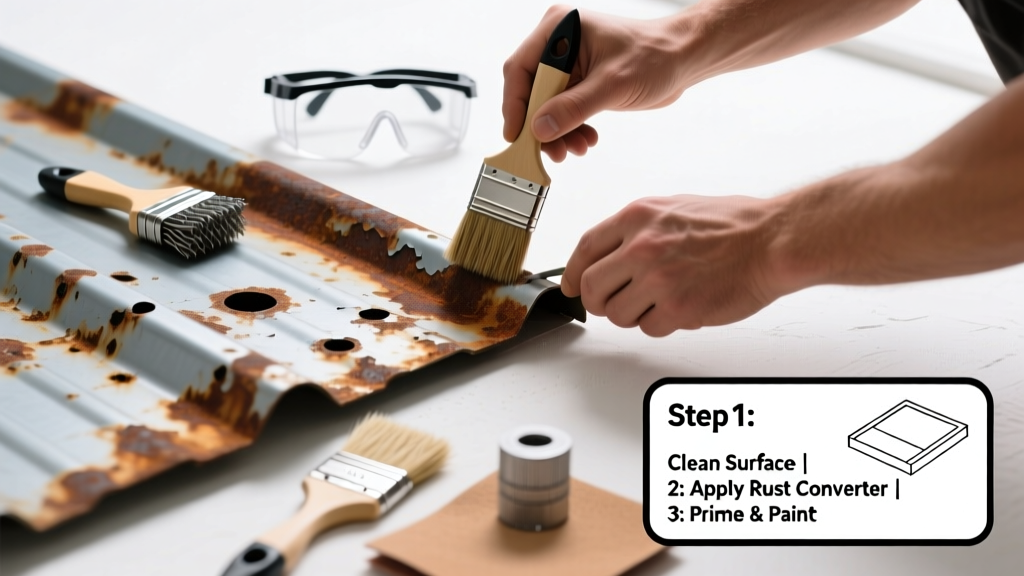
Rust on a metal roof isn’t just ugly—it’s a warning sign that corrosion is compromising structural integrity. Left untreated, even small rust spots can spread rapidly, especially in coastal or high-humidity areas. The good news? Most surface rust is fixable in a weekend with the right prep and materials.
Quick Diagnosis
Rust rarely appears without cause. Spotting the root issue helps prevent recurrence:
- Scratches or chips in factory-applied coating from hail, foot traffic, or tool drops
- Prolonged water pooling due to poor pitch or clogged gutters
- Galvanic corrosion where dissimilar metals (e.g., aluminum flashing + steel screws) contact
- Acid rain exposure or airborne salt near oceans or highways
- Older roofs (15+ years) with degraded zinc or aluminum coatings
Tools & Materials Needed
| Item | Purpose | Estimated Cost |
|---|---|---|
| Wire brush (stiff-bristle or rotary) | Removes loose rust and scale without damaging base metal | $8–$25 |
| Naval jelly or phosphoric acid gel | Converts remaining rust into stable black iron phosphate layer | $12–$18 |
| Acrylic elastomeric roof coating (metal-rated) | Seals treated area and bridges minor seams; UV- and thermal-cycle resistant | $35–$65 per gallon |
| 3M Scotch-Brite pads (non-metallic) | Final smoothing without scratching or embedding metal particles | $4–$9 |
| Roof-safe ladder anchors & harness | OSHA-compliant fall protection—non-negotiable for steep or slippery surfaces | $45–$120 |
Step-by-Step Fix
Work only in dry, 50–85°F weather with low humidity. Never coat over damp metal or active rust.
- Clean and assess: Use a soft broom to remove debris, then inspect for pitting depth. If a screwdriver tip penetrates the metal, skip to When to Call a Pro.
- Scrape and abrade: With a wire brush or angle grinder fitted with a stainless-steel cup brush, remove all flaking rust down to bare, shiny metal. Wipe with mineral spirits to remove oil residue.
- Neutralize residual rust: Apply naval jelly per label instructions (typically 10–20 min dwell time). Rinse thoroughly with low-pressure water and let dry 24 hours.
- Prime and seal: Brush on one coat of rust-inhibiting metal primer (e.g., Rust-Oleum Stops Rust), then follow with two coats of acrylic elastomeric roof coating—overlapping 2 inches onto sound surrounding metal.
When to Call a Pro
DIY rust repair fails fast if the damage exceeds surface-level issues. Call a licensed roofing contractor if you see:
- Rust penetrating deeper than 0.015 inches (use a digital caliper or compare to a standard paperclip wire)
- Corrosion at fastener heads or seams where water infiltration is likely
- Multiple rust spots across more than 10% of the roof surface
- Any evidence of substrate rot beneath standing-seam panels or underlayment
According to the Insurance Institute for Business & Home Safety's 2023 report, 68% of premature metal roof failures stem from untreated corrosion at panel overlaps or flashings—areas best handled by certified installers.
Prevention Tips
Rust prevention starts before rust appears. Integrate these habits into your annual roof maintenance:
- Clean gutters and downspouts twice yearly to prevent water backup and ponding
- Inspect fasteners annually; replace corroded screws with stainless-steel or coated equivalents
- Apply a fresh topcoat of elastomeric sealant every 5–7 years on high-exposure zones (ridges, eaves, valleys)
- Install zinc or magnesium anode strips along ridges in coastal areas to slow galvanic corrosion
Can I use bleach on this?
No. Bleach accelerates corrosion on ferrous and non-ferrous metals alike. It breaks down protective oxide layers and leaves chloride residues that attract moisture. Stick to phosphoric acid-based rust converters—they chemically stabilize rust instead of just whitening it.
Will painting over rust stop it?
Only temporarily—and often dangerously. Paint applied over active rust traps moisture underneath, speeding up delamination and hidden decay. The U.S. EPA estimates that 14% of household water usage is from leaks caused by undetected corrosion beneath cosmetic coatings.
How long does the fix last?
A properly executed repair lasts 7–12 years depending on climate and coating quality. Elastomeric coatings with 100% acrylic resins outperform standard paints because they expand/contract with metal during thermal cycling—reducing micro-cracking.
Do I need to replace the whole panel?
Not usually. Unless rust has created holes larger than ¼ inch or extends beyond 3 inches from an edge or fastener, localized repair is structurally sound. Full-panel replacement is warranted only when corrosion bridges multiple seams or compromises load-bearing ribs.
Is rust on aluminum roofs normal?
Aluminum doesn’t rust (rust = iron oxide), but it does corrode—often as white powdery oxidation or galvanic pitting near steel components. Treat it similarly: clean, neutralize with aluminum-specific cleaner (e.g., Aluma-Brite), then seal with aluminum-compatible coating.
Can pressure washing make it worse?
Yes—if done incorrectly. High-pressure streams (>1,500 PSI) force water under coatings and into seams, accelerating hidden corrosion. Use a garden hose with a spray nozzle or low-pressure (<500 PSI) setting—and always rinse downhill, never upward.
A well-maintained metal roof can last 40–70 years, but only if corrosion is caught early and treated correctly—not masked. Revisit treated areas each spring, and keep a log of repairs to spot patterns. For deeper concerns, explore our metal roof inspection checklist or learn how to detect hidden roof leaks before they become costly problems.