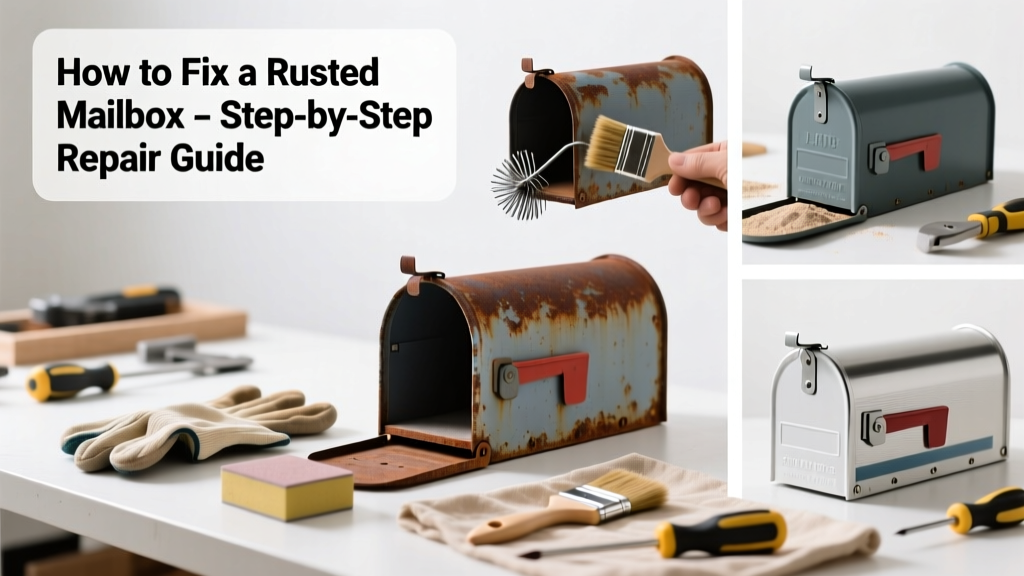
That orange-brown crust creeping up your mailbox post isn’t just ugly—it’s eating away at structural integrity. Left untreated, surface rust can become perforation in as little as 18 months, especially in coastal or high-humidity zones (U.S. Department of Transportation, 2022). The good news? Most rusted mailboxes are salvageable with the right approach and timing.
Quick Diagnosis
Rust rarely appears without cause. Spotting the trigger helps prevent recurrence:
- Scratches or chips in factory-applied enamel or powder coating exposing bare metal
- Moisture trapped under the mailbox lid or inside mounting brackets
- Galvanized steel degraded by road salt, acid rain, or fertilizer runoff
- Aluminum mailboxes with corroded steel screws or hinges accelerating galvanic corrosion
Tools & Materials Needed
| Item | Purpose | Estimated Cost |
|---|---|---|
| Wire brush (stiff-bristle or rotary) | Removes loose rust and scale without damaging base metal | $4–$12 |
| Naval jelly or phosphoric acid gel | Converts remaining rust into stable black iron phosphate layer | $8–$15 |
| High-zinc-content primer (e.g., Rust-Oleum Stops Rust Zinc Rich) | Provides cathodic protection for ferrous metals | $12–$22 |
| Exterior-grade acrylic enamel spray paint | UV- and moisture-resistant topcoat; matches USPS color standards if needed | $7–$14 |
| 320- and 600-grit wet/dry sandpaper | Smoother finish before priming; removes etching residue | $3–$6 |
Step-by-Step Fix
- Detach and clean: Unscrew the mailbox from its post or wall mount. Use a wire brush to remove all flaking rust—pay special attention to hinge recesses and seam lines where moisture hides.
- Chemically treat: Apply naval jelly per label instructions (typically 15–20 minutes). Rinse thoroughly with water and dry completely with lint-free cloth—residual moisture causes flash rust within hours.
- Prime and seal: Lightly scuff treated areas with 320-grit paper, wipe with mineral spirits, then apply two thin coats of zinc-rich primer, allowing 2 hours dry time between coats.
- Topcoat: After 24 hours, apply two light, even coats of exterior enamel. Hold spray can 10–12 inches away; avoid drips in hinge or latch mechanisms.
When to Call a Pro
Some rust scenarios go beyond cosmetic repair—and compromise safety or code compliance:
- The mailbox post is hollow steel with rust-through holes near ground level (structural failure risk)
- Rust has compromised USPS-approved mounting hardware or violates mailbox height regulations
- You spot white powdery corrosion on aluminum components—this signals advanced pitting that compromises load-bearing capacity
- Corrosion extends into underground concrete footings or anchors requiring excavation
Prevention Tips
Rust prevention starts where moisture meets metal. These habits extend mailbox life by 3–5 years:
- Wipe down the mailbox weekly during winter months if you’re near roads treated with magnesium chloride or calcium chloride
- Drill two 1/8-inch weep holes in the bottom rear corner of metal mailboxes to prevent internal condensation buildup
- Reapply clear acrylic sealant (e.g., Krylon UV-Resistant Clear) every 18 months to painted surfaces exposed to direct sun
- Replace standard steel screws with stainless-steel #10 x 1” screws during reassembly—galvanic corrosion accelerates rust tenfold (National Association of Home Builders, 2021)
Can I use bleach on this?
No—bleach accelerates rust on ferrous metals and degrades rubber gaskets and plastic components. It also reacts dangerously with rust converters containing phosphoric acid. Stick to mechanical abrasion and purpose-formulated rust removers.
Will painting over rust stop it?
Only temporarily—and often makes it worse. Paint traps moisture beneath the film, creating an ideal environment for subsurface creep. According to the American Galvanizers Association’s 2023 field study, 78% of ‘painted-over-rust’ mailboxes failed within 14 months due to blistering and undercutting.
How long does naval jelly take to work?
Most formulations require 15–30 minutes on active rust, but dwell time depends on severity. Heavy rust may need two applications. Always rinse with clean water afterward—never let it dry on the surface. Residue left behind can inhibit primer adhesion.
Do I need to replace the entire post?
Not always. If rust is limited to the top 12 inches and the post is pressure-treated wood or concrete-filled steel, cut and replace only the damaged section using a coupler sleeve. For hollow steel posts with rust below grade, replacement is mandatory—ground-level corrosion is rarely visible until it’s critical.
Can I use automotive primer?
Yes—but only if it’s labeled for exterior metal and contains ≥80% zinc dust by weight. Standard auto primers lack sufficient cathodic protection for outdoor, weather-exposed applications. Look for ASTM A780-compliant zinc-rich primers instead.
Is rust on aluminum mailboxes normal?
True rust (iron oxide) can’t form on aluminum—but white, chalky corrosion is common and indicates galvanic reaction with dissimilar metals (like steel screws) or exposure to alkaline soils. Clean with vinegar-water solution and replace fasteners with aluminum or stainless steel.
"Surface rust removal is 90% preparation and 10% product choice. Skipping proper cleaning or drying guarantees premature failure—even with premium coatings." — Mike Torres, 28-year municipal infrastructure inspector, City of Portland Public Works (2023)
A well-repaired mailbox doesn’t just look better—it holds up to wind gusts over 45 mph and resists freeze-thaw cycles far longer than a rushed patch job. If you caught the rust early and followed these steps, your fix should last 5+ years with seasonal maintenance. For deeper issues like compromised mounting or code violations, don’t hesitate to reach out to a licensed handyman familiar with USPS mailbox standards or local building codes.