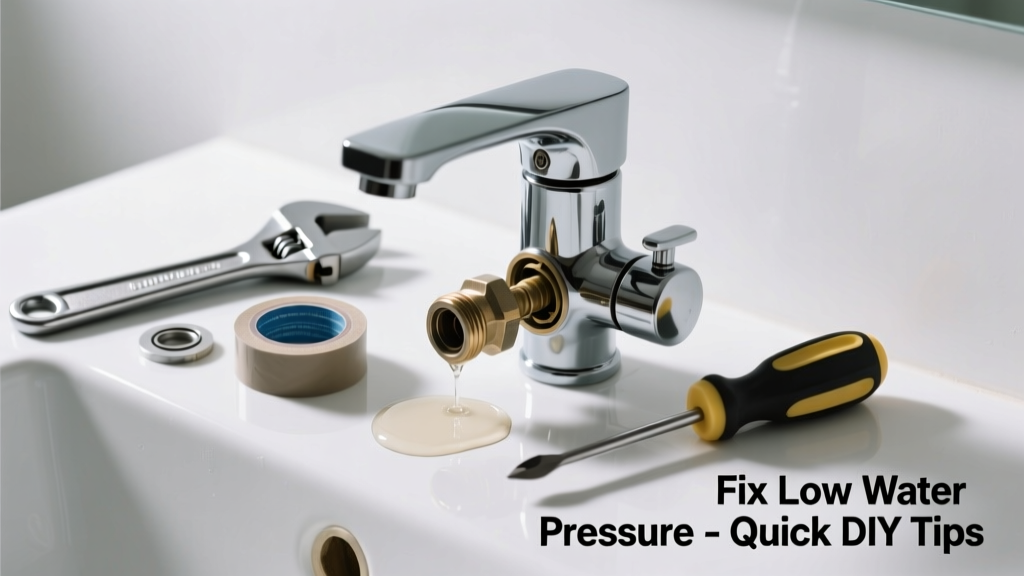
Waking up to a weak shower stream or a sink that trickles instead of flows is frustrating—and it’s rarely just an annoyance. Low water pressure in the bathroom often signals a clog, failing fixture, or even early pipe corrosion. The good news? Most causes are simple to identify and fix in under an hour with basic tools.
Quick Diagnosis
Before grabbing tools, rule out obvious culprits. Low pressure isolated to one fixture usually points to localized issues—not your main supply line.
- Aerators or showerheads clogged with mineral deposits (most common cause)
- Partially closed shutoff valves under sink or behind toilet
- Corroded or kinked supply lines (especially older braided stainless steel or rubber hoses)
- Faulty pressure-balancing valve in thermostatic shower systems
- Leak elsewhere in the house reducing overall system pressure
Tools & Materials Needed
| Item | Purpose | Estimated Cost |
|---|---|---|
| Needle-nose pliers | Grip and remove stubborn aerator screens or showerhead nuts | $8–$15 |
| White vinegar & small container | Dissolves calcium and lime scale buildup in fixtures | $3–$5 |
| Old toothbrush | Scrubbing debris from fine mesh screens and nozzles | $1–$3 |
| Adjustable wrench | Tighten or replace supply lines without stripping fittings | $12–$22 |
| Replacement aerator or showerhead | Modern low-flow models with self-cleaning nozzles (e.g., Moen EcoPerformance) | $10–$45 |
Step-by-Step Fix
Work methodically—from easiest to most involved. Always shut off the local shutoff valve first (usually under the sink or behind the shower access panel).
- Clean the aerator or showerhead: Unscrew the aerator (use pliers wrapped in tape to avoid scratches), soak in white vinegar for 30 minutes, scrub with a toothbrush, rinse thoroughly, and reinstall.
- Check and open shutoff valves: Confirm both hot and cold valves are fully open—turn counterclockwise until they stop. A partially closed valve cuts flow by up to 70% (American Society of Plumbing Engineers, 2022).
- Inspect supply lines: Look for kinks, bulges, or corrosion on flexible supply hoses. Replace any hose over 5 years old—rubber degrades; braided stainless can fail internally without visible signs.
- Test pressure at another fixture: If kitchen sink pressure is strong but bathroom is weak, the issue is confined to that branch. If all fixtures are low, check your home’s main pressure regulator or contact your municipal water provider.
When to Call a Pro
Some scenarios require licensed expertise—especially when safety or code compliance is involved.
- Pressure drops only when multiple fixtures run simultaneously (suggests undersized piping or failing pressure regulator)
- You hear banging pipes (water hammer) or notice discolored water alongside low pressure
- Shower valve requires removal—older cartridge-style valves often need specialty tools and calibration
- Your home has galvanized steel pipes installed before 1970; internal rust buildup can’t be cleaned and must be replaced
"Over 60% of low-pressure complaints in homes built before 1990 stem from corroded galvanized supply lines—not clogs or fixtures." — Plumbing Code Handbook, International Association of Plumbing and Mechanical Officials (IAPMO), 2021
Prevention Tips
Mineral buildup and wear happen gradually—so does prevention.
- Soak aerators and showerheads in vinegar every 6 months
- Install a whole-house water softener if your area has hard water (>7 gpg hardness)
- Replace rubber supply lines every 5 years—even if they look fine
- Use a pressure gauge to test home water pressure annually; ideal range is 40–80 psi (U.S. EPA recommends 60 psi for efficiency and fixture longevity)
Why is my shower pressure low but sink pressure fine?
This almost always means the showerhead or its internal flow restrictor is clogged—or the shower valve’s hot/cold balancing cartridge is worn. Try removing the showerhead and testing flow directly from the pipe. If pressure returns, replace the head. If not, the valve needs servicing.
Can I increase water pressure without replacing pipes?
Yes—if the issue is localized and not due to pipe diameter or corrosion. Installing a high-efficiency showerhead like the Waterpik EcoFlow or cleaning aerators restores perceived pressure. But never install a booster pump without consulting a plumber—over-pressurizing can burst aging fittings.
Does low water pressure mean I have a leak?
Not necessarily—but it’s a red flag. According to the U.S. EPA, 14% of household water usage is from leaks, many of which reduce pressure before becoming visible. Check your water meter while all fixtures are off; if the dial moves, you likely have a hidden leak—start with supply lines and slab connections.
Will a water softener fix low pressure?
It won’t fix existing clogs, but it prevents future scale buildup in fixtures and valves. Homes with >10 grains per gallon (gpg) hardness see aerator clogs 3x faster than soft-water areas (Water Quality Association, 2023). Pair softening with routine cleaning for best results.
How do I know if my pressure regulator is bad?
Signs include sudden pressure loss across all fixtures, fluctuating pressure, or hissing sounds near the main shutoff. Test with a gauge: attach it to an outdoor spigot and compare readings over 24 hours. A drop of more than 10 psi between tests suggests regulator failure—replace it with a certified 60-psi model.
Can I clean a shower cartridge myself?
Some cartridges (like Delta’s RP19804) can be removed, soaked in vinegar, and reinstalled—but others (e.g., Moen 1222) are sealed units. Forcing disassembly risks breaking ceramic discs. When in doubt, order the OEM replacement kit—it includes new O-rings and lubricant, and costs less than a service call. See our guide on how to replace a shower cartridge.
Low water pressure in the bathroom isn’t something you have to live with—and it’s rarely a sign of major plumbing failure. Most fixes take under 30 minutes, cost less than $20, and restore full function. Keep vinegar and pliers handy, check valves regularly, and don’t ignore early signs like uneven spray patterns or delayed flow. Small habits now prevent bigger headaches—and higher water bills—down the line.