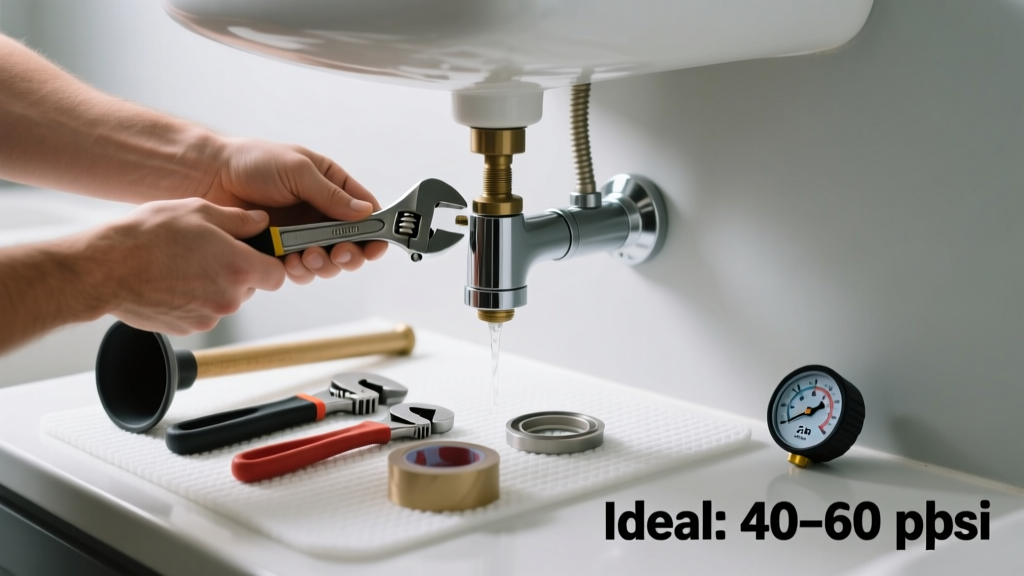
Waking up to a weak shower stream or a faucet that dribbles instead of flows is more than annoying—it’s a sign something’s off in your plumbing system. Low water pressure affects daily routines, appliance efficiency, and even home value. The good news? Most causes are simple to identify and fix yourself—often in under an hour.
Quick Diagnosis
Before grabbing tools, rule out obvious culprits. Low pressure rarely means one single issue—it’s usually layered. Start here:
- Check if the problem affects all fixtures—or just one (e.g., only the kitchen sink)
- Test cold and hot water separately (a failing water heater or mixing valve may skew hot-side flow)
- Observe timing: Does pressure drop only during peak use (morning showers + dishwasher)? That points to supply or pipe sizing issues.
- Look for visible leaks, discolored water, or sediment in aerators—clues to corrosion or mineral buildup.
Tools & Materials Needed
| Item | Purpose | Estimated Cost |
|---|---|---|
| Adjustable wrench | Tightens or loosens compression fittings and shut-off valves without stripping threads | $12–$25 |
| Phillips & flathead screwdrivers | Remove faucet handles, aerator housings, and valve cartridges | $8–$15 |
| Vinegar (white, 5% acetic acid) | Dissolves calcium, lime, and rust deposits in aerators and showerheads | $3–$5 |
| Replacement aerators (0.5–1.5 GPM) | Modern low-flow units improve pressure perception while conserving water | $4–$12 each |
| Water pressure gauge (0–160 PSI) | Measures static and dynamic pressure at your main line—critical for diagnosing supply issues | $18–$32 |
Step-by-Step Fix
Work from simplest to most involved. Most homeowners resolve >70% of low-pressure cases using just the first two steps:
- Clean or replace aerators and showerheads. Unscrew the tip of any affected faucet or shower arm. Soak metal parts in vinegar for 30 minutes, scrub with an old toothbrush, rinse, and reassemble. Replace plastic aerators older than 3 years—they degrade and trap debris.
- Check and adjust the main shut-off valve. Locate your home’s main water shutoff (usually near the water meter or basement wall). Ensure the handle is fully open—not halfway. A partially closed valve cuts flow dramatically. If the valve is stiff or corroded, don’t force it—call a pro.
- Test pressure at the hose bib. Screw a water pressure gauge onto an outdoor spigot. Turn it on fully and record the reading. According to the U.S. EPA, residential systems should deliver 40–80 PSI. Below 40 PSI indicates supply or regulator issues; above 80 PSI risks pipe damage and fixture failure.
- Inspect the pressure-reducing valve (PRV). If your home has one (common in homes fed by municipal lines over 80 PSI), it may be stuck or worn. PRVs last 7–12 years. A hissing sound or fluctuating pressure often signals failure. Replacement requires shutting off main water and draining lines—best left to licensed plumbers unless you’re experienced.
When to Call a Pro
Some issues aren’t DIY-safe—and delaying professional help can worsen damage or violate local codes:
- Your home has galvanized steel pipes installed before 1975 (internal rust buildup is irreversible and hazardous to cut into)
- Pressure drops significantly when multiple fixtures run simultaneously—even after cleaning aerators and checking the main valve
- You detect sulfur smells, brown water, or particles—signs of failing well components or municipal supply contamination
- The pressure gauge reads below 30 PSI at the hose bib with no obvious cause (e.g., frozen line, utility work)
"Over 60% of low-pressure complaints in homes built before 1990 stem from undersized or corroded supply piping—not clogged fixtures," says John R. Lavelle, Master Plumber and co-author of Residential Plumbing Systems Handbook (2022).
Prevention Tips
Maintaining consistent pressure starts with routine care—not crisis response:
- Replace faucet aerators every 2 years—especially in hard-water areas (test water hardness with a $5 test strip from hardware stores)
- Install a whole-house sediment filter where water enters your home (replaces every 6 months)
- Drain your water heater annually to remove mineral sludge that restricts hot-water flow
- Keep tree roots away from underground supply lines—map their location and prune aggressively every 3 years
Can I increase water pressure by removing the flow restrictor?
Yes—but not recommended. Most modern showerheads and faucets include federally mandated flow restrictors (2.5 GPM max for showers, 1.5 GPM for lavatories). Removing them violates plumbing code in 42 states and voids warranties. Worse, it strains aging pipes and increases water-heating costs by up to 18%, per the American Council for an Energy-Efficient Economy’s 2023 report.
Why does my water pressure drop only in winter?
Frost penetration can partially freeze supply lines—even those buried below grade in marginal climates. Check for frost heave near your meter box or foundation entry point. Insulate exposed pipes with foam sleeves rated for sub-zero temps, and keep cabinet doors open under sinks during cold snaps to allow warm air circulation.
Will a water softener fix low pressure?
Not directly—but it prevents future buildup. Softeners remove calcium and magnesium ions that form scale inside pipes and fixtures. If your home has hard water (>7 grains per gallon), installing a softener reduces long-term flow loss by up to 40%, according to the Water Quality Association’s 2021 field study. Pair it with annual flushes of your water heater and aerators.
Can a failing water pump cause low pressure?
Absolutely—if you’re on a private well. A worn impeller, clogged foot valve, or failing pressure switch will reduce output and cause cycling. Test your well’s pressure tank: tap the top—it should sound hollow. A dull thud means the bladder is ruptured. Replacement requires depressurizing the tank and verifying electrical safety—see our well pump troubleshooting guide.
Do I need a booster pump?
Only as a last resort—and only after confirming supply pressure is adequate but distribution is insufficient. Booster pumps cost $400–$1,200 installed and require permits in most jurisdictions. They’re appropriate for homes on hilltops, multi-story buildings over 3 stories, or properties with long, narrow supply lines. Before buying, consult a licensed plumber about permit requirements and verify your electrical panel can handle the 15-amp load.
What’s the difference between low pressure and low flow?
Crucial distinction: Low pressure means weak force behind the water (measured in PSI); low flow means reduced volume (GPM). You can have high pressure but low flow due to narrow pipes or clogs. Conversely, low pressure with decent flow suggests a regulator or municipal supply issue. Always measure both—use a bucket-and-timer test for flow (1-gallon bucket filled in 12 seconds = ~5 GPM) and a gauge for pressure.
Fixing low water pressure isn’t about brute force—it’s about precision diagnosis and targeted action. Most cases respond to simple maintenance, but knowing when to stop and call in expertise protects your home’s integrity and your safety. Keep your pressure gauge handy, track seasonal changes, and treat your plumbing like the hidden infrastructure it is: essential, invisible, and worth caring for.