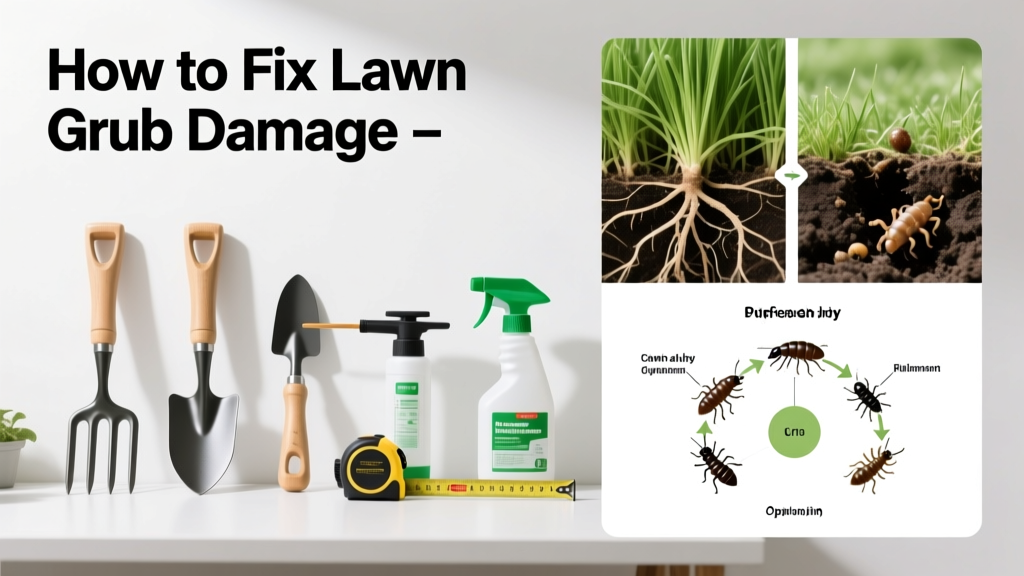
If your lawn has spongy patches, brown dead spots that peel up like carpet, or attracts skunks and birds digging at night, you’re likely dealing with a grub infestation — not drought or disease. Grubs (the larval stage of beetles like Japanese and June beetles) feed on grassroots, severing the connection between soil and turf. Left untreated, they can destroy 30–50% of a lawn in a single season.
Quick Diagnosis
Before jumping into repairs, confirm grubs are the culprit — not fungal disease, compaction, or improper mowing. Check these signs:
- Spongy, loose turf that lifts easily like carpet
- Brown patches that don’t green up after rain or watering
- Skunks, raccoons, or birds repeatedly digging in the same areas
- Visible C-shaped, creamy-white larvae with brown heads and six legs near the soil surface (dig 1 sq. ft., 2–4 inches deep)
- More than 6–10 grubs per square foot = actionable infestation (according to the University of Minnesota Extension’s 2022 turf guidelines)
Tools & Materials Needed
| Item | Purpose | Estimated Cost |
|---|---|---|
| Soil probe or garden trowel | For sampling soil and checking grub density | $8–$15 |
| Rotary spreader | Even application of insecticide or beneficial nematodes | $35–$75 |
| Core aerator (rental) | Relieves compaction and improves root recovery post-treatment | $70–$120/day |
| Scotts GrubEx or Bayer Advanced 700730 | Preventative or curative granular insecticide (imidacloprid or chlorantraniliprole) | $25–$42 |
| Beneficial nematodes (Heterorhabditis bacteriophora) | Natural, non-toxic grub control — must be applied cool, moist, and at dusk | $20–$35 per million |
Step-by-Step Fix
- Treat the infestation first: Apply a curative insecticide (e.g., carbaryl or trichlorfon) within 7 days of confirming >6 grubs/sq. ft. Water in with 0.5 inch immediately after application — grubs must be active and near the surface.
- Aerate the damaged zones: Use a core aerator to relieve compaction and allow oxygen, water, and nutrients to reach recovering roots. Do this 3–5 days after treatment, when soil is slightly moist but not muddy.
- Overseed bare or thin patches: Use a high-quality Kentucky bluegrass/perennial ryegrass blend (like shade-tolerant seed if under trees). Spread at 6–8 lbs/1,000 sq. ft., then lightly rake and cover with ¼-inch compost or peat moss.
- Maintain moisture carefully: Keep seeded areas damp (not soaked) for 14–21 days. Avoid foot traffic. Mow only after new grass reaches 3 inches tall, and set blades to 2.5–3 inches to encourage root depth.
When to Call a Pro
DIY works for isolated patches under 500 sq. ft. and grub counts under 15 per square foot. But call a licensed pest management professional if:
- You find >20 grubs per square foot across more than 30% of your lawn
- Grubs return two seasons in a row despite proper timing and product use
- Your property borders wooded areas or golf courses — recurring migration may require coordinated treatment
- You suspect secondary issues like Pythium blight or thatch buildup over ½ inch (requires soil testing)
Prevention Tips
Grubs thrive in thick, overwatered lawns with shallow roots. Prevention starts long before damage appears:
- Water deeply but infrequently: 1–1.5 inches per week, delivered in 1–2 sessions
- Mow at 2.5–3.5 inches to shade soil and deter egg-laying adult beetles
- Apply preventative grub control (e.g., chlorantraniliprole) in early June — before eggs hatch — especially if you’ve had issues in prior years
- Encourage natural predators: plant native perennials to attract parasitic wasps; avoid broad-spectrum insecticides that kill beneficial insects
- Test soil pH annually — grubs prefer neutral to slightly alkaline soils (pH 6.5–7.5); adjust with sulfur if above 7.0
Can I use bleach on grub-damaged areas?
No. Bleach kills all soil microbes, beneficial fungi, and future seed viability. It also creates toxic runoff that harms nearby plants and pollinators. Stick to targeted insecticides or nematodes instead.
Will my grass grow back on its own after grub damage?
Partially — if grub pressure was light (<5 grubs/sq. ft.) and soil moisture was consistent, healthy rhizomatous grasses like Kentucky bluegrass may recover in 4–6 weeks. But most severely damaged areas (especially those with Bermuda or zoysia) need overseeding — roots are gone, not dormant.
How long does it take for grub treatments to work?
Curative insecticides like carbaryl show results in 3–7 days; nematodes take 7–14 days as they infect and reproduce inside grubs. Preventatives like chlorantraniliprole stop grubs before they hatch — so you won’t see dead grubs, just no damage next season.
Is it safe to treat grubs if I have pets or kids?
Yes — if you follow label instructions precisely. Chlorantraniliprole (found in Acelepryn and Scotts GrubEx) is EPA-rated low-risk for mammals. Keep pets and children off treated areas until granules are watered in and the lawn dries (usually 2–4 hours). Never apply on windy days or before heavy rain.
Do I need to dethatch before treating grubs?
Only if thatch exceeds ½ inch — measure by cutting a small plug. Thick thatch blocks insecticide penetration and shelters grubs. Dethatch in early fall or spring, then wait 7–10 days before applying grub control to avoid stressing recovering turf.
Can I overseed and treat grubs at the same time?
No — most curative insecticides (carbaryl, trichlorfon) are phytotoxic to germinating seeds. Wait until new grass is mowed 2–3 times (about 4–6 weeks) before applying. For simultaneous action, use nematodes — they’re safe for seedlings and soil life.
"Grub damage is often misdiagnosed as drought stress — but the giveaway is how easily the turf rolls back. If you can lift a 2x2 foot section like a rug, odds are >90% you’re looking at grub feeding." — Dr. Eric Watkins, Turfgrass Specialist, University of Minnesota Extension, 2023
Fixing grub damage isn’t just about killing larvae — it’s rebuilding soil health, adjusting cultural habits, and timing interventions to match the beetle lifecycle. A repaired lawn that’s been properly aerated, overseeded, and watered will resist future infestations far better than one patched with quick fixes. And if you spot skunk tracks or spongy patches next June, grab your trowel first — not the hose.