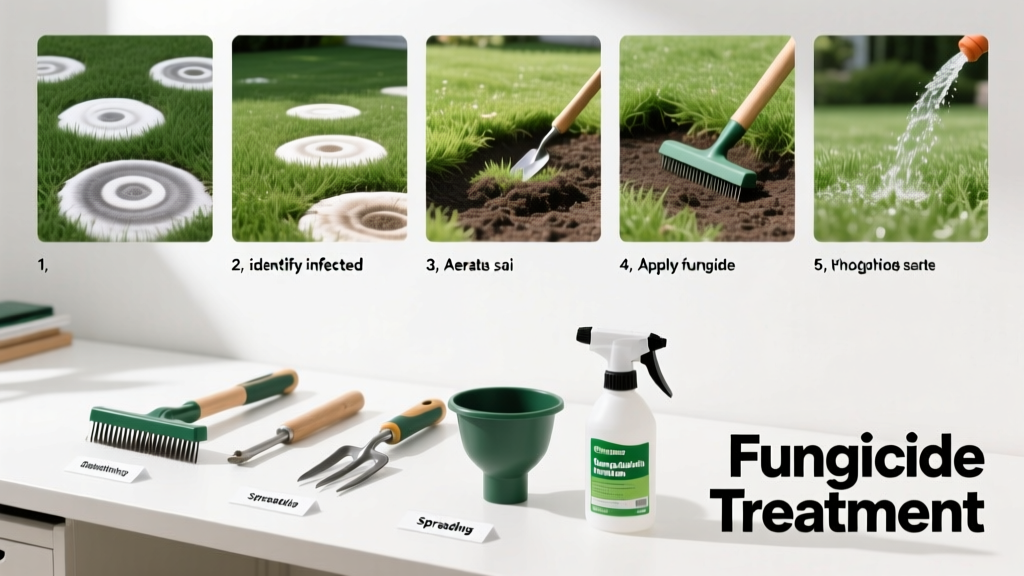
That patch of grayish fuzz or orange rust spreading across your lawn isn’t just unsightly—it’s a sign your turf is under fungal attack. Left untreated, common lawn fungi like brown patch, dollar spot, or rust can kill grass roots and invite weeds. The good news? Most cases respond well to targeted, low-cost fixes—if you act before the infection spreads beyond 3–4 square feet.
Quick Diagnosis
Lawn fungus rarely appears without warning. Here are the most common triggers:
- Overwatering—especially in the evening, which leaves grass wet overnight
- Poor air circulation from dense shrubbery or compacted soil
- Excess thatch buildup (more than ½ inch thick)
- Nitrogen imbalance—too much fast-release fertilizer in hot, humid weather
- Shade combined with high humidity, creating ideal conditions for fungi like Pythium blight
Tools & Materials Needed
| Item | Purpose | Estimated Cost |
|---|---|---|
| Soil probe or aerator | Relieves compaction and improves drainage to reduce fungal habitat | $25–$60 |
| Thatch rake or dethatcher | Removes decaying organic layer where fungi thrive | $18–$45 |
| Copper-based fungicide (e.g., Bonide Liquid Copper Fungicide) | Organic, broad-spectrum control for rust, powdery mildew, and leaf spot | $12–$22 |
| Spreader (drop or broadcast) | Ensures even application of granular fungicides or slow-release nitrogen | $20–$85 |
| Moisture meter | Verifies soil isn’t staying saturated below surface—critical for diagnosis | $15–$35 |
Step-by-Step Fix
Start with the least invasive method and escalate only if symptoms persist after 7–10 days:
- Aerate and dethatch: Core-aerate in early fall or spring when soil is moist but not soggy. Follow immediately with vertical mowing to remove ¼–½ inch of thatch.
- Adjust watering schedule: Water deeply (½–¾ inch) only once every 2–3 days—and always before 10 a.m. Use a moisture meter to confirm top 2 inches dry out between sessions.
- Apply targeted fungicide: For active spots, spray copper-based fungicide at label rates every 7 days for three applications. Avoid spraying during rain or high heat (>85°F).
- Modify mowing habits: Raise mower height to 3–3.5 inches; never remove more than one-third of blade length. Disinfect blades with 70% isopropyl alcohol after each use.
When to Call a Pro
DIY stops working—and risks worsening the problem—when:
- Fungal patches cover more than 25% of your lawn area
- You’ve applied two full fungicide regimens with no improvement after 21 days
- Grass is dying in irregular streaks or rings despite proper irrigation and mowing
- Soil testing reveals pH below 5.5 or above 7.2, requiring lime or sulfur amendments you’re unprepared to calibrate
According to the University of Florida IFAS Extension’s 2022 Turfgrass Pathology Report, nearly 68% of severe lawn fungus cases involved misdiagnosed soil compaction or irrigation errors—not pathogen resistance—making professional assessment critical before investing in systemic fungicides.
Prevention Tips
Long-term health beats reactive treatment. Build resilience into your routine:
- Mow weekly during peak growth (spring/fall), alternating direction to prevent grain and compaction
- Apply slow-release nitrogen (e.g., Milorganite) in split doses: ½ lb N per 1,000 sq ft in early May and again in early September
- Plant disease-resistant grass cultivars—like ‘Bella’ bluegrass or ‘Titan’ tall fescue—in high-risk zones
- Install rain sensors on irrigation controllers to prevent unnecessary watering during wet spells
Can I use bleach on this?
No—bleach kills beneficial soil microbes, disrupts pH, and damages grass crowns. It may appear to whiten affected areas temporarily, but it worsens long-term soil health and increases recurrence risk. Stick to EPA-registered fungicides or cultural controls.
Will grass grow back after fungus?
Yes—if root systems remain intact. Most common fungi (e.g., red thread, dollar spot) only infect leaf tissue. Once conditions improve and fungicide halts spread, new tillers emerge within 2–3 weeks. If bare patches exceed 2 inches in diameter, overseed with matching cultivar after dethatching.
Is lawn fungus dangerous to pets or kids?
Most turf fungi pose no direct toxicity, but ingestion of heavily infected clippings may cause mild GI upset. More concerningly, some fungi (like Aspergillus spp.) produce airborne spores linked to respiratory irritation in sensitive individuals. Keep children and pets off actively infected areas until after two fungicide applications and 48 hours of dry weather.
Can I treat fungus in summer?
You can—but avoid contact fungicides like chlorothalonil above 85°F (risk of phytotoxicity). Instead, use systemic options like propiconazole only in early morning or late evening, and never on drought-stressed grass. Better yet: focus on cultural fixes (aeration, reduced watering) until temps drop below 80°F consistently.
Do I need to bag clippings during an outbreak?
Yes—bag and discard (do not compost) infected clippings for at least three mowings after visible signs disappear. Fungal spores survive on plant debris and can reinfect turf when reintroduced via mulching.
How long does fungicide take to work?
Visible improvement usually begins in 5–7 days with contact fungicides (copper, sulfur); systemics may take 10–14 days. Full recovery—including green regrowth in damaged zones—takes 3–6 weeks depending on grass type and season. Monitor closely: if lesions expand after 7 days, re-evaluate irrigation and shade issues before reapplying.
Fixing lawn fungus isn’t about eradicating every spore—it’s about shifting the environment so your grass outcompetes pathogens naturally. Aeration, smart watering, and consistent mowing do more long-term good than any bottle of fungicide. For persistent trouble spots, check our guide on soil compaction repair or explore lawn aeration timing tips to lock in lasting results.