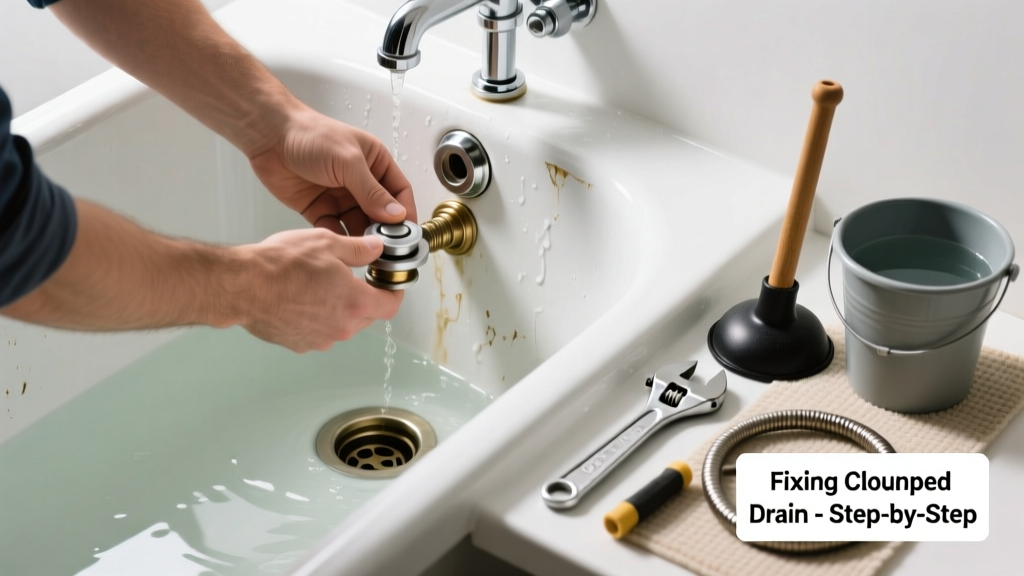
Your laundry tub gurgles, backs up, or drains slower than molasses in January — and now your rinse cycle leaves standing water. That’s not just inconvenient; it’s a sign of trapped lint, soap scum, or worse: a partial blockage that could overflow during heavy use. Don’t wait for a flood to act — most clogs are fixable in under an hour with basic tools.
Quick Diagnosis
Before grabbing tools, rule out the obvious. A laundry tub that won’t drain properly usually stems from one (or more) of these culprits:
- Lint and fabric fibers caught in the p-trap or standpipe
- Soap scum and detergent residue building up inside PVC piping
- A collapsed or kinked flexible hose behind the tub
- Tree roots or sediment intrusion if connected to older cast-iron or clay sewer lines
- Improper slope — if the drain pipe drops less than 1/4 inch per foot, water pools instead of flowing.
Tools & Materials Needed
| Item | Purpose | Estimated Cost |
|---|---|---|
| Plumber’s snake (1/4" x 25 ft) | Reaches deep into 1.5"–2" laundry drain pipes to break up compacted lint and debris | $12–$20 |
| Rubber cup plunger | Creates suction/seal on wide-tub openings better than standard sink plungers | $8–$15 |
| Needle-nose pliers | Grabs hair, string, or mesh filter remnants stuck near the drain opening | $6–$12 |
| White vinegar + baking soda | Natural reaction dissolves mild soap scum without corroding pipes | $3–$5 |
| Shop vacuum (wet/dry) | Generates stronger suction than plunging for stubborn air-locked clogs | $40–$90 (rental: $15/day) |
Step-by-Step Fix
Start simple and escalate only if needed. Most laundry tub clogs respond to Method 1 or 2.
- Boiling water + vinegar soak: Pour ½ gallon boiling water down the drain, wait 2 minutes, then add ½ cup baking soda followed by 1 cup white vinegar. Cover with a plug or rag for 10 minutes. Flush with another ½ gallon hot water.
- Plunge with seal: Fill the tub with 3–4 inches of water. Use a large-cup plunger (not a sink cup) — press firmly to seal the drain opening, then pump vigorously for 20 seconds. Repeat 2–3 times. You’ll hear a pop or see water drop when the clog releases.
- Snake the p-trap: Place a bucket under the trap. Loosen slip nuts with pliers, remove the trap, and clear visible lint with fingers or pliers. Reassemble tightly. If no clog appears, feed a ¼" snake past the trap into the wall pipe — crank slowly while pushing 2–3 feet in. Retract while rotating to hook debris.
- Vacuum-assisted suction: Set wet/dry vac to 'liquid' mode. Seal the vac hose over the drain with a wet rag. Turn on for 30 seconds. Often pulls out lodged socks or braided wire filters missed by snaking.
When to Call a Pro
Stop DIY if you encounter any of these red flags:
- Water backs up into other fixtures (sink, floor drain, or toilet) — indicates a main line blockage
- You smell raw sewage or see black water — possible sewer line break or vent stack issue
- The tub drains fine after snaking but clogs again within 48 hours — suggests root intrusion or pipe collapse
- You’ve cleared the trap and snaked 10+ feet with no resistance or debris — the line may be misaligned or disconnected behind the wall
According to the Insurance Institute for Business & Home Safety's 2023 report, 68% of emergency plumbing calls related to laundry areas stem from ignored recurring clogs — not sudden failures.
Prevention Tips
Laundry tubs handle heavier loads than sinks — and they get abused daily. Keep them flowing freely with these habits:
- Install a fine-mesh drain strainer and clean it after every 3 loads
- Run hot water for 60 seconds after each use to flush residual soap and lint
- Avoid powdered detergents — they leave more undissolved residue than liquids or pods (U.S. EPA WaterSense, 2022)
- Once monthly, pour 1 cup vinegar down the drain, wait 15 minutes, then flush with hot water
- Inspect the standpipe height — it should extend at least 30 inches above the trap to prevent siphoning
Can I use bleach on this?
No. Bleach reacts with built-up organic matter (like lint and hair) to form a thick, cement-like sludge that worsens clogs. It also degrades rubber gaskets and PVC pipe seals over time. Stick to vinegar-baking soda or enzymatic cleaners like Green Gobbler for organic buildup.
Why does my laundry tub gurgle when the washing machine drains?
Gurgling signals trapped air trying to escape — usually due to a blocked or undersized vent pipe. The washing machine’s rapid discharge creates negative pressure; without proper venting, air gets pulled through your tub’s drain, causing noise and slow drainage. Check roof vents for bird nests or ice dams first.
Is a drum-style washer more likely to clog the tub?
Yes — high-efficiency (HE) washers use less water and more agitation, which suspends more lint and microfibers. They also spin faster, ejecting finer particles into the drain. Pair HE machines with a 3-inch standpipe and a secondary lint trap to reduce strain on the tub drain.
What’s the difference between a laundry tub trap and a kitchen sink trap?
Laundry tubs require a deeper, 2-inch-diameter p-trap (vs. 1.5-inch for sinks) to handle higher flow volumes. Many older homes use shallow S-traps — illegal since 1985 — which siphon dry and allow sewer gases to enter. Always verify your trap is a code-compliant p-trap with a 2" minimum diameter and proper venting.
How do I know if the clog is in the wall vs. the trap?
If water drains slowly but doesn’t back up when you run the faucet *alone*, the clog is likely downstream — past the trap. If it backs up instantly even with minimal water, the trap or drain arm is blocked. Confirm by removing the trap: if water flows freely from the wall pipe, the clog is in the trap. If it drips or stops, the clog is deeper.
Can a clogged laundry tub cause mold behind the wall?
Absolutely. Standing water in a slow-draining tub increases humidity and leaks past seals over time. The CDC reports that indoor mold growth often begins within 24–48 hours of persistent moisture exposure — especially in enclosed wall cavities behind laundry areas. If you notice musty odors or discoloration near the tub’s back panel, inspect for leaks *before* the clog clears.
A working laundry tub shouldn’t be a guessing game. With consistent maintenance and the right tools on hand, you’ll spend less time troubleshooting and more time getting clothes clean — without risking water damage or costly service calls. Keep that snake in your utility closet, not the garage, and check the strainer weekly. Small habits compound fast when it comes to drain health.