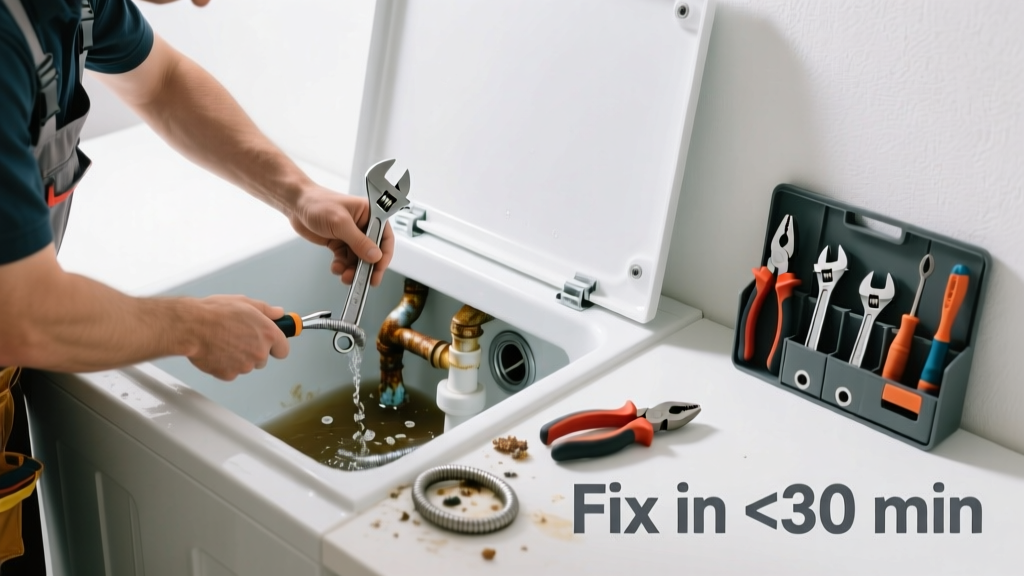
If your laundry tub is gurgling, clanging, or emitting a high-pitched whistle every time water drains, it’s not just annoying—it’s a red flag. That noise usually means air trapped in the drain line, partial blockage, or failing trap seals—and ignoring it can lead to slow drainage, overflow, or even sewer gas leaks.
Quick Diagnosis
Before grabbing tools, identify the sound and timing:
- Gurgling or bubbling — Air escaping past a partial clog or vent obstruction
- Metallic banging or clanking — Loose washer hose coupling, dislodged P-trap, or debris rattling in vertical pipe
- High-pitched whistling — Restricted airflow due to blocked vent or narrow-diameter pipe
- Thumping or vibrating — Water hammer from sudden valve closure or improperly secured supply lines
Tools & Materials Needed
| Item | Purpose | Estimated Cost |
|---|---|---|
| Plumber’s snake (1/4" x 25 ft) | Cleans hair, lint, and soap scum deep in 1.5"–2" drain lines | $12–$18 |
| Adjustable wrench | Tightens loose P-trap nuts and hose connections without stripping threads | $14–$22 |
| Wet/dry vacuum (with drain attachment) | Creates strong suction to dislodge partial clogs that snakes miss | $65–$120 (rental: $25/day) |
| White vinegar + baking soda | Natural reaction breaks down organic buildup; safer than caustic cleaners near rubber seals | $5–$8 |
| Flashlight + mirror | Inspects hidden areas behind tub and under floor access panels | $8–$15 |
Step-by-Step Fix
Start with the safest, most accessible method first—and escalate only if needed:
- Check and tighten the P-trap: Shut off water, place bucket underneath, loosen slip nuts with wrench, inspect for cracks or debris, reassemble hand-tight plus ¼ turn with wrench. A loose trap causes gurgling and sewer odor.
- Snake the drain line: Feed auger past the trap into the wall pipe. Crank slowly while pushing—stop at resistance, rotate 5–10 sec, then pull out. Repeat until no more gunk emerges. According to the U.S. EPA, 14% of household water usage is lost to leaks and inefficient drainage—many caused by neglected traps and minor clogs.
- Vacuum the vent stack: Access roof vent (if safe), cover opening with wet/dry vac hose sealed with duct tape, run for 60 seconds. A blocked vent forces air through the trap—causing gurgles and siphoning.
- Flush with vinegar and baking soda: Pour ½ cup baking soda, wait 2 min, add 1 cup white vinegar, cover drain for 10 min, then flush with 4 cups boiling water. Avoid bleach—it degrades rubber washers and reacts dangerously with ammonia residues from detergent.
When to Call a Pro
DIY stops where safety or code compliance begins:
- You hear persistent gurgling from multiple fixtures (e.g., kitchen sink + laundry tub)—this points to main vent or sewer line issues
- Water backs up into the tub when flushing the toilet—sign of a collapsed or root-infiltrated main drain
- You detect rotten egg smell (hydrogen sulfide) after unclogging—could indicate sewer gas entering via failed vent or cracked pipe
- Your home has cast iron drain pipes older than 1970: corrosion may cause pinhole leaks or structural weakness during snaking
Prevention Tips
Stop the cycle before it starts:
- Install a fine-mesh strainer over the drain and clean it weekly—lint and pet hair are top culprits in laundry tub clogs
- Run hot water for 60 seconds after each load to flush residual soap scum
- Every 3 months, pour ¼ cup enzyme-based drain cleaner (like Bio-Clean) to digest organic buildup without harming pipes
- Secure all supply hoses with stainless steel clamps—not plastic ties—to prevent vibration-induced noise
Can I use bleach on this?
No. Bleach corrodes rubber gaskets in P-traps and washer hoses, accelerates metal pipe oxidation, and reacts violently with urine or ammonia-based detergents—creating toxic chloramine gas. Stick to vinegar, baking soda, or enzymatic cleaners instead.
Why does my tub gurgle only when the washing machine drains?
The washing machine’s high-volume discharge overwhelms a marginal vent or partially blocked drain. It forces air backward through your tub’s trap—making it bubble like a straw in a soda. This is almost always a vent issue, not a clog.
Is the noise coming from the wall or the tub itself?
Place your ear against the wall behind the tub while running water. If sound intensifies there, it’s likely a vent or branch line issue. If it’s loudest at the drain flange or faucet base, focus on the trap or supply lines—especially if you hear metallic pings.
Will a plunger work on a laundry tub?
Rarely. Standard plungers lack seal depth for large, shallow laundry tubs. Use a drain snake or wet/dry vacuum instead. If you try plunging, seal the overflow with a wet rag first—but expect limited success on anything beyond surface debris.
How do I know if the vent pipe is blocked?
Climb onto your roof (safely) and shine a flashlight down the vent opening. Look for bird nests, leaves, or mortar debris. You can also run water in the tub while holding your hand over the vent—if you feel strong suction or hear a ‘pop’ when removing your hand, airflow is restricted.
What’s the average cost to hire a plumber for this?
According to HomeAdvisor’s 2023 Plumbing Cost Report, diagnosing and clearing a laundry tub drain with noise issues averages $175–$290. That includes trip fee, 1-hour labor, and basic snaking—plus $45+ per extra hour if they discover vent or main line problems.
A noisy laundry tub isn’t just background static—it’s your plumbing system sending urgent signals. Most cases resolve with a tightened trap, a quick snake pass, and a vent check. But if the gurgles persist after those steps, don’t ignore them: that sound could mean your vent is compromised or your drain is silently backing up elsewhere. Catch it early, and you’ll dodge both mess and expense—plus keep your basement dry and your air fresh.