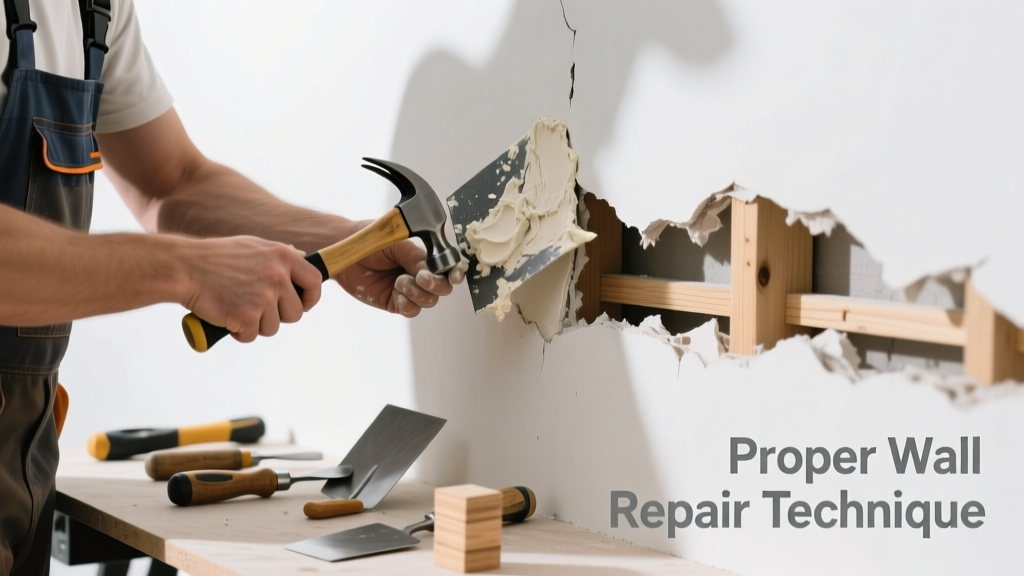
If your plaster wall sounds hollow when tapped, sags slightly, or shows bulging cracks near corners or ceilings, you’re likely dealing with loose lath — the wooden strips beneath the plaster that have pulled away from studs or deteriorated over time. This isn’t just cosmetic: unchecked movement can lead to sudden plaster collapse, especially in homes built before 1950. Ignoring it risks injury, water intrusion, and structural compromise.
Quick Diagnosis
Before grabbing tools, confirm the issue isn’t surface-level paint or skim coat failure. Tap gently with a knuckle or plastic handle across suspect areas: a dull thud means solid attachment; a hollow drumming sound signals separation. Also check for these telltale signs:
- Visible gaps between ceiling and wall where plaster bows outward
- Cracks that widen or shift when doors slam or footsteps echo upstairs
- Soft spots that flex under light pressure (never press hard — risk of collapse)
- Old nail heads popping through plaster near baseboards or window trim
- Musty odor behind outlets or switch plates — possible moisture rotting lath
Tools & Materials Needed
| Item | Purpose | Estimated Cost |
|---|---|---|
| Plaster washers (1-1/4" zinc-plated) | Anchor loose plaster to lath without cracking surface | $8–$12 |
| 16-gauge galvanized screws (1-1/4") | Secure lath to framing; corrosion-resistant for damp walls | $5–$9 |
| Stud finder with deep-scan mode | Locate wood lath and underlying studs through thick plaster | $35–$75 |
| Drill with clutch setting | Prevent overdriving screws into brittle plaster | $45–$120 |
| Utility knife & stiff putty knife | Cut access slits and scrape debris from lath joints | $4–$11 |
Step-by-Step Fix
Choose the method based on severity and location. For small, localized looseness (<2 sq ft), use plaster washers. For larger zones (e.g., entire ceiling section), screw-and-lath reattachment is safer and more durable.
- Mark and drill pilot holes: Use a stud finder to locate lath strips (typically spaced 3/8"–1/2" apart) and underlying studs. Drill 1/8" pilot holes every 6" along each lath strip, staying at least 1" from edges to avoid blowout.
- Install plaster washers: Place a washer over each hole, then drive a 1-1/4" screw until the washer just contacts the plaster surface. Stop immediately — no extra torque. The washer bridges the gap and compresses plaster back to lath.
- Reattach sagging lath: If lath itself is detached from framing, remove baseboard or trim to access the backside. Drive 2" galvanized screws through lath into studs, spacing every 8". Fill gaps behind with lime-based plaster patch, not drywall compound.
- Seal and finish: Once stabilized, fill screw holes with plaster repair compound (not spackle). Sand lightly after curing 24 hrs, then prime with oil-based primer before repainting.
When to Call a Pro
DIY works for isolated, shallow looseness — but some situations demand licensed expertise. According to the National Trust for Historic Preservation’s Preservation Brief 23 (2022), improper stabilization can worsen structural instability in pre-1930 buildings with balloon framing. Call a specialist if:
- More than 10% of a wall or ceiling area feels soft or moves visibly
- You detect active water stains, mold behind outlets, or musty odors indicating rot
- The house has knob-and-tube wiring running behind plaster — drilling risks electrocution
- Looseness coincides with foundation cracks, sloping floors, or sticking doors (signs of structural settlement)
Prevention Tips
Moisture and vibration are the top enemies of old plaster. Keep indoor humidity between 35–50% year-round using a hygrometer and dehumidifier in basements. Avoid hanging heavy mirrors or shelves directly onto plaster — always anchor into studs or use toggle bolts rated for masonry. Repair roof leaks and gutter clogs within 48 hours; the U.S. Department of Housing and Urban Development estimates that 68% of lath rot begins with undetected roof-to-wall water migration.
"Never inject adhesive into large voids — it creates uneven pressure that cracks plaster further. Mechanical fastening with washers is the only reliable field-proven method for historic substrates." — John H. Miller, Conservator, Historic New England, 2021
Can I use drywall screws instead of plaster washers?
No. Drywall screws lack the wide, low-profile head needed to distribute pressure across fragile plaster. They’ll punch through or spider-crack the surface. Plaster washers spread load over ~1.25" diameter — critical for aged, desiccated plaster. Use only zinc-plated or stainless steel washers designed for plaster restoration.
How do I know if the lath is rotted or just loose?
Remove an outlet cover and shine a flashlight into the gap behind the plaster. Rotted lath looks dark, fibrous, or crumbles when poked with a screwdriver tip. Solid lath feels firm and sounds sharp when tapped with a nail. If more than 30% of visible lath shows decay, replacement is required — not repair.
Will injecting glue fix this problem?
Not reliably — and often makes it worse. Construction adhesives like Liquid Nails shrink as they cure, pulling plaster inward and creating new cracks. They also prevent future moisture escape, trapping vapor against lath and accelerating rot. The plaster repair vs drywall replacement guide explains why mechanical fastening remains the gold standard.
Can I paint over loose plaster to hide it?
Painting masks symptoms but accelerates failure. Latex paint seals moisture in, while older plaster needs to breathe. Oil-based primer is acceptable *only after* full stabilization. Unfixed loose plaster painted over typically fails within 6–18 months — often with loud cracking noises at night.
Do I need to evacuate the room during repair?
Yes — for health and safety. Drilling into plaster releases crystalline silica dust, a known carcinogen. OSHA requires respirators (N95 minimum) and HEPA vacuum cleanup for any plaster work exceeding 1 sq ft. Seal off the room with plastic and run an air scrubber — especially if the home was built before 1978 and may contain lead-based plaster.
How long does a proper plaster washer repair last?
When installed correctly on structurally sound lath, plaster washer repairs last 25–40 years — matching the lifespan of the original plaster. A 2020 case study by the Preservation Trades Network tracked 142 repaired walls in Boston triple-deckers; 94% showed no recurrence after 28 years. Longevity drops sharply if moisture issues aren’t resolved first.
Fixing loose lath and plaster isn’t about speed — it’s about respecting how these systems were built to move, breathe, and endure. Rushing the job or skipping moisture checks invites repeat failure. Take time to map the problem zone, choose the right fasteners, and address root causes like humidity spikes or foundation shifts. When done right, your walls won’t just hold — they’ll continue telling the story of your home’s craftsmanship for decades more. For deeper structural concerns, consult a historic home inspection specialist before proceeding.