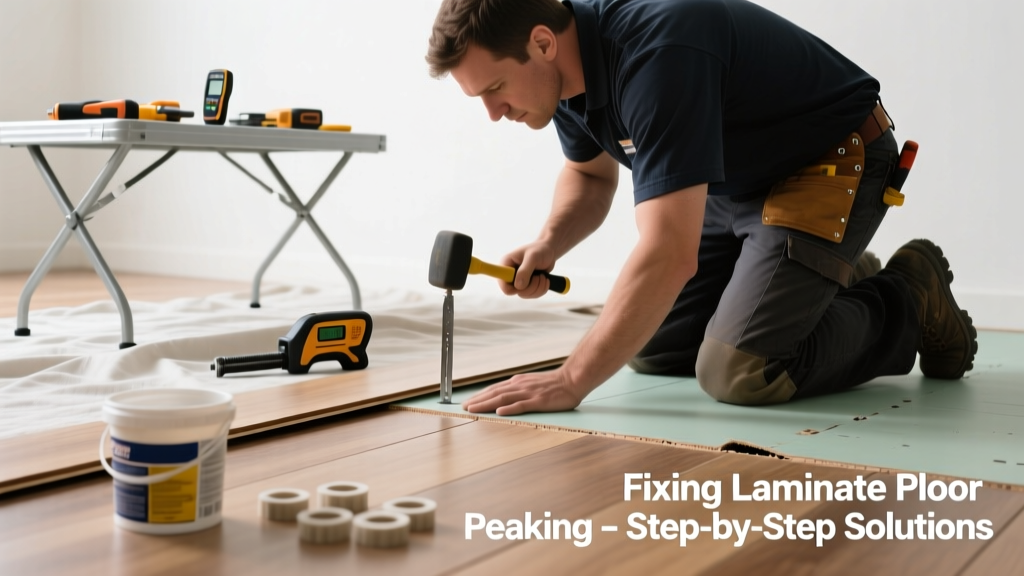
Laminate floor peaking—when planks lift at the seams, forming ridges or 'peaks'—isn’t just unsightly; it’s a sign of underlying moisture, installation error, or subfloor failure. Left unaddressed, it worsens quickly and can compromise the entire floor. Most cases are fixable in under a day if caught early.
Quick Diagnosis
Peaking rarely happens randomly. Start here to pinpoint the root cause:
- Moisture intrusion beneath the floor (e.g., leaky pipe, high humidity, no vapor barrier)
- Insufficient expansion gap (less than 3/8" around perimeter walls)
- Subfloor unevenness (>3/16" over 10 feet, per NWFA standards)
- Plank locking mechanism failure due to repeated stress or poor-quality click system
- Heavy furniture compressing adjacent planks, forcing upward buckling
Tools & Materials Needed
| Item | Purpose | Estimated Cost |
|---|---|---|
| Feeler gauge set | Measure expansion gaps accurately at wall junctions | $8–$15 |
| Moisture meter (pin-type) | Confirm subfloor and plank moisture content (safe range: <12% for concrete, <9% for wood) | $45–$120 |
| Utility knife & straightedge | Cut baseboard or quarter-round trim to reestablish gap | $5–$12 |
| Wood shims & rubber mallet | Gently coax planks back into alignment without cracking | $6–$10 |
| Dehumidifier (rental or portable) | Reduce ambient RH to ≤50% during and after repair | $25–$40/week rental |
Step-by-Step Fix
Choose the method that matches your diagnosis. Always start by removing baseboards or quarter-round trim near affected areas.
- Re-establish expansion gap: Use a utility knife and straightedge to carefully cut away drywall compound or caulk behind baseboards. Insert 3/8" spacers and reinstall trim with nail holes offset to avoid hitting floor planks.
- Relieve localized pressure: If only 1–3 planks peak, gently tap them downward using a rubber mallet and scrap wood block. Work from center toward seam—never hammer directly on locking edges.
- Replace damaged planks: For cracked or warped planks, disassemble rows back to the affected board using a pull bar and tapping block. Install replacement plank with fresh adhesive (if warranted) and verify interlock integrity before reassembling.
- Address moisture source: If moisture meter reads >14% on subfloor, locate and repair leaks, install perimeter drainage, or run a dehumidifier continuously for 72+ hours before resecuring floor.
When to Call a Pro
DIY stops where structural risk begins. Contact a certified flooring contractor if:
- You detect >1/4" height variation across 6 feet—indicating serious subfloor deflection
- Peaking occurs in multiple rooms simultaneously, suggesting whole-house humidity or foundation movement
- The floor was installed directly over radiant heat without manufacturer-approved underlayment
- You find mold growth or persistent musty odor beneath planks (requires EPA-certified remediation)
According to the National Wood Flooring Association’s 2022 Installation Guidelines, 68% of laminate floor failures stem from improper moisture management—not product defects.
"If you’re seeing peaking within 6 months of installation, it’s almost always an installation flaw—not a material issue." — Ken Haines, NWFA Certified Inspector, 2023
Prevention Tips
Long-term stability starts with smart habits:
- Maintain indoor relative humidity between 35–55% year-round using a hygrometer and HVAC controls
- Inspect expansion gaps every 6 months—especially near exterior doors and HVAC vents
- Use felt pads under all furniture legs and avoid rolling heavy appliances across laminate
- Never wet-mop laminate—use a microfiber mop barely dampened with pH-neutral cleaner
Can I sand down a peaked laminate plank?
No. Laminate has a thin wear layer (typically 0.2–0.5mm thick). Sanding removes it entirely, exposing the image layer and making the plank unusable. Replacement is the only safe option.
Will adding more glue fix peaking?
Glue is not part of standard floating laminate systems—and adding it can trap moisture, restrict natural expansion, and void warranties. Adhesive is only approved for specific commercial-grade products, per manufacturer specs.
How long does it take for peaking to stabilize after fixing moisture?
With consistent RH ≤50% and no active leaks, most planks relax within 48–72 hours. Monitor daily with a straightedge—if height difference remains >1/16" after 5 days, the plank likely sustained permanent deformation.
Can underlayment thickness cause peaking?
Yes. Using underlayment thicker than recommended (e.g., >3mm when spec calls for 2mm) increases vertical compression risk at seams. Always match underlayment thickness and density to your laminate’s locking system—check the underlayment compatibility chart.
Is peaking covered under my laminate warranty?
Rarely. Most warranties (e.g., Mohawk 25-year, Pergo Lifetime) exclude damage from improper installation, moisture exposure, or lack of expansion gaps. You’ll need installer affidavits and moisture test logs to pursue a claim—and even then, coverage is limited to material replacement, not labor.
Why does peaking happen more in winter?
Cold air holds less moisture, so indoor RH often drops below 30%. This dries out the HDF core, causing shrinkage—but if expansion gaps were undersized during summer installation, the planks have nowhere to contract, forcing upward buckling at seams.
Peaking isn’t inevitable—it’s a warning sign your floor is fighting its environment. Catch it early, respect the physics of engineered wood, and treat your laminate like the precision system it is. A few minutes with a moisture meter and feeler gauge today can prevent a full-room tear-out tomorrow.