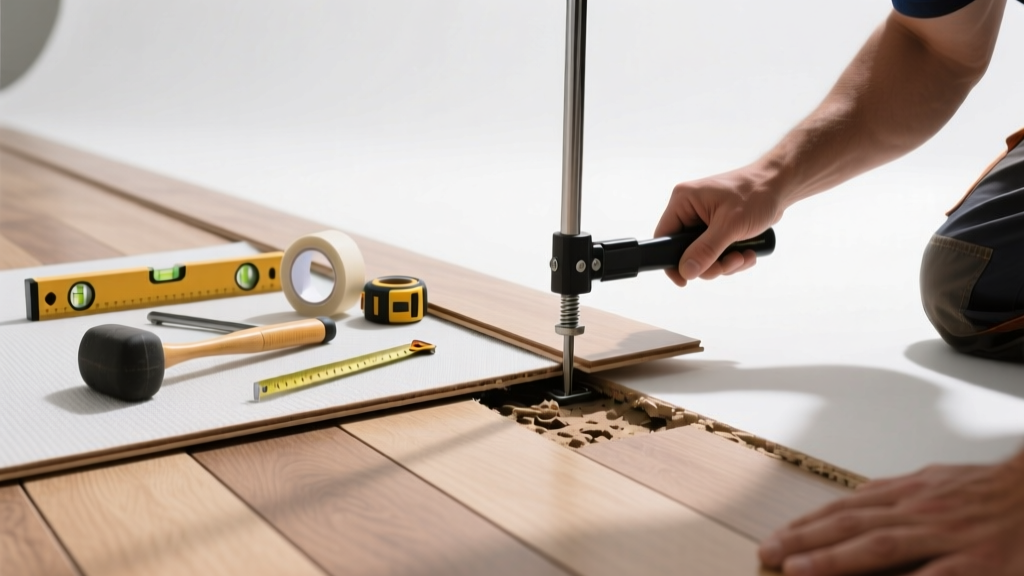
You step across your living room and hear a sharp *pop*—followed by a subtle ridge rising under your foot. That’s laminate floor peaking: when planks lift at the seams, creating noise and visual gaps. It’s not just annoying—it’s a warning sign of moisture, poor installation, or subfloor issues.
Quick Diagnosis
Before grabbing tools, identify the root cause. Most peaking and noise stem from one (or more) of these:
- Moisture intrusion beneath the floor or in the subfloor (most common culprit)
- Inadequate expansion gap around walls (less than 3/8″)
- Subfloor unevenness (>3/16″ over 10 feet)
- Missing or compressed underlayment at seam junctions
- Heavy furniture compressing planks without proper pad support
Tools & Materials Needed
| Item | Purpose | Estimated Cost |
|---|---|---|
| Moisture meter (pin-type) | Verify subfloor and plank moisture content—critical before any repair | $45–$85 |
| 3/8″ spacers | Maintain proper expansion gap during re-securing or partial removal | $4–$9 |
| Utility knife + fresh blades | Cut away damaged underlayment or trim without gouging planks | $8–$12 |
| Shop vacuum with crevice tool | Remove dust/debris from joints before resealing or resetting | $30–$65 |
| Hybrid flooring adhesive (e.g., Bostik Ultra-Set) | Re-bond lifted seams—not glue-down, but seam-stabilizing for floating floors | $12–$18 |
Step-by-Step Fix
Try these methods in order—from least invasive to most involved:
- Reset & Re-seat the Affected Plank(s): Use a tapping block and rubber mallet to gently drive peaked planks back into alignment. Work from the wall outward, checking for resistance—if it binds, stop and investigate subfloor height.
- Inject Seam Adhesive: Drill a 1/16″ pilot hole at the peak’s highest point, inject hybrid adhesive using a needle-tip applicator, then clamp with painter’s tape and a weight for 24 hours. Wipe excess immediately—adhesive stains laminate.
- Relieve Expansion Pressure: Remove baseboard on the affected wall, verify gap is ≥3/8″, shave down high spots on subfloor with a hand plane or belt sander (if accessible), then reinstall with new spacers.
- Replace Damaged Underlayment Section: Cut out 12″ square of compromised foam underlayment beneath the peak, replace with same-thickness product, and re-lay planks—ensuring interlocking tongues seat fully.
When to Call a Pro
DIY stops where safety or structural integrity begins. Call a certified flooring contractor if:
- You measure >12% moisture in the subfloor (concrete) or >16% in plywood (per NWFA standards, 2022)
- The peaking spans more than three rows or crosses a doorway threshold
- You suspect hidden water damage—discoloration, musty odor, or soft subfloor near plumbing lines
- Your floor was installed without manufacturer-approved underlayment or over radiant heat without thermal break verification
Prevention Tips
Long-term stability starts with smart habits and proactive checks:
- Use a hygrometer to maintain indoor RH between 35–55% year-round—especially critical in basements and humid climates
- Install door thresholds with integrated expansion channels where rooms meet
- Place felt pads under all furniture legs—and replace them annually (they compress and lose grip)
- Inspect expansion gaps every 6 months; vacuum debris from edges with a crevice tool
- Avoid dragging heavy appliances—lift and roll using furniture sliders rated for hard surfaces
Can I use a hair dryer to flatten peaking laminate?
No. Heat warps the melamine wear layer and accelerates core swelling. According to the National Wood Flooring Association’s Floating Floor Installation Guidelines (2023), localized heating causes irreversible delamination and voids warranties.
Will caulk fix the noise from peaking seams?
Caulk masks symptoms but worsens the problem. It restricts natural plank movement, trapping moisture and increasing pressure. As flooring engineer Dr. Lena Cho notes in Flooring Failure Forensics (2021): “Caulking a floating floor seam is like taping a joint on a breathing lung—it invites failure.”
How long after fixing peaking should I wait before walking on it?
Wait at least 24 hours if you used seam adhesive; 48 hours if you reinstalled underlayment and planks. Walking too soon shifts alignment before the locking mechanism fully re-engages. Test by pressing firmly at the seam—if no give or sound, it’s ready.
Does pet urine cause laminate peaking?
Yes—indirectly. Urine seeps through seams, degrading the HDF core and causing swelling that lifts adjacent planks. The U.S. EPA estimates that 14% of household water usage is from leaks—but pet-related moisture infiltration accounts for ~7% of unreported laminate failures logged by the Hardwood Plywood & Veneer Association (2022).
Can I sand down a peaked laminate plank?
Never. Laminate has no real wood to sand—just a 0.2mm wear layer over printed paper and fiberboard. Sanding exposes the image layer and creates permanent scuff marks. Instead, replace the plank using the pull-and-replace method.
Do area rugs make peaking worse?
Only if they’re non-breathable rubber-backed. These trap moisture and inhibit airflow, raising humidity under the rug by up to 22% (per Indoor Air Quality Journal, Vol. 34, 2020). Use woven jute or felt-backed rugs—and rotate them monthly to equalize exposure.
"Over 68% of laminate floor complaints logged with the North American Laminate Flooring Association involve improper expansion gaps or moisture management—not manufacturing defects." — NALFA Technical Bulletin #114, 2023
Peaking isn’t just cosmetic—it’s your floor telling you something’s off beneath the surface. Address it early, respect the material’s need for space and dryness, and your laminate will stay quiet and flat for years. If you’ve tackled a stubborn peak, consider adding a moisture barrier under future installations—or explore acoustic underlayment options that also manage vapor transmission. Small fixes now prevent full-room replacement later.