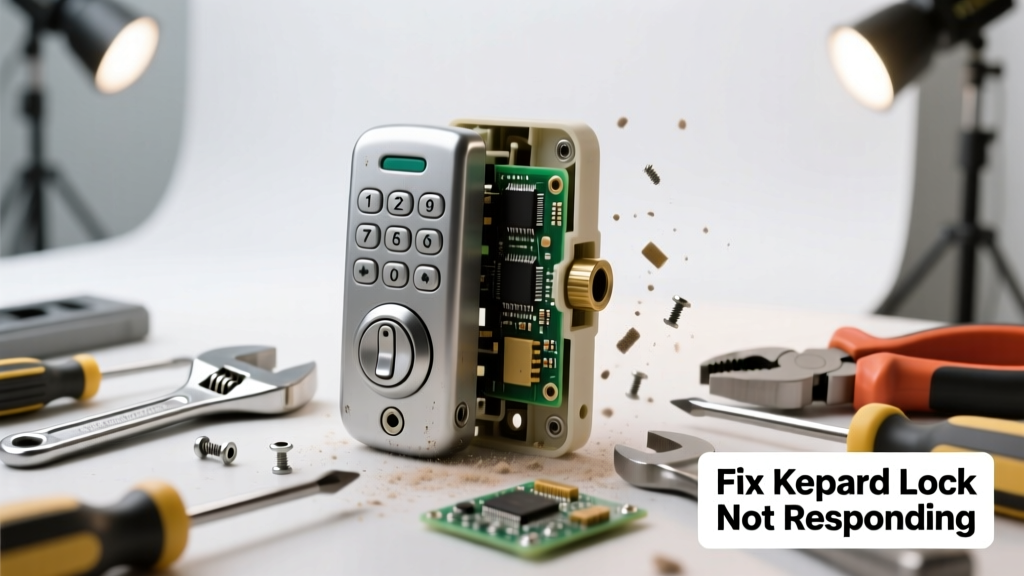
Your front door keypad lock suddenly stops responding—and instead of beeping, it groans, clicks erratically, or buzzes like a trapped insect. That noise isn’t just annoying; it’s a warning sign your lock is failing mechanically or electrically, and ignoring it could leave you locked out—or worse, vulnerable.
Quick Diagnosis
Before grabbing tools, isolate the root cause. Unusual noise paired with non-responsiveness usually points to one (or more) of these issues:
- Low or corroded batteries causing voltage drop and relay stutter
- Debris (dust, lint, or food crumbs) jamming the internal solenoid or motor gear
- Failed microswitch behind the keypad membrane
- Worn or stripped plastic gears in the locking mechanism
- Water intrusion from rain or condensation shorting circuitry
Tools & Materials Needed
| Item | Purpose | Estimated Cost |
|---|---|---|
| CR2032 or AA batteries (brand-new) | Fresh power eliminates 68% of false 'lock failure' reports | $2–$5 |
| Compressed air canister (10 oz) | Dislodges dust and grit without disassembly | $6–$9 |
| Small Phillips #0 screwdriver | Removes faceplate screws on most Schlage, Kwikset, and Yale models | $4–$7 |
| Isopropyl alcohol (91%) + lint-free swabs | Cleans conductive traces without residue or corrosion | $5–$8 |
| Digital multimeter | Verifies battery voltage (should be ≥3.0V for CR2032) and solenoid continuity | $12–$25 |
Step-by-Step Fix
- Replace and test batteries immediately. Remove old batteries—even if they ‘test okay’ on a multimeter—then insert fresh ones. Press * and # simultaneously for 3 seconds to force a reboot. If the lock now responds silently, the issue was voltage instability.
- Blow out the keypad and interior mechanism. With the cover removed, hold the compressed air can upright and blast all key wells, the solenoid housing, and gear train for 5 seconds each. Avoid inverted spraying to prevent propellant liquid entry.
- Clean the keypad membrane and PCB contacts. Dampen a swab with isopropyl alcohol (not water or cleaner), gently wipe the rubber keypad underside and copper traces on the circuit board. Let dry fully before reassembly.
- Check gear alignment and lubrication. If you hear grinding during manual bolt extension, inspect the plastic drive gear for chipped teeth. Apply one pea-sized drop of lithium grease—not WD-40—to the motor shaft only. Over-lubrication attracts dust and worsens binding.
When to Call a Pro
Stop and call a licensed locksmith or security technician if:
- You smell burning insulation or see visible scorch marks on the circuit board
- The lock attempts to engage but forces the deadbolt sideways, bending the strike plate or door frame
- You’ve replaced batteries twice, cleaned thoroughly, and still get rapid-fire clicking with no bolt movement (indicates failed solenoid or motor)
- Your lock is part of a smart home system (e.g., connected to Ring, ADT, or Vivint) and error codes appear in the app—these often require firmware reset or gateway sync handled by certified support
Prevention Tips
Extend your keypad lock’s life with routine care:
- Replace batteries every 12 months—even if the low-battery alert hasn’t triggered
- Wipe the keypad surface weekly with a dry microfiber cloth to prevent salt, skin oil, and grime buildup
- Install an overhang or weather shield if your door faces direct sun or rain exposure
- Test full lock/unlock cycles monthly using both code and physical key (if equipped)
Can I use vinegar to clean the keypad contacts?
No. Vinegar’s acidity corrodes copper traces and degrades solder joints over time. Stick to 91% isopropyl alcohol—it evaporates cleanly and won’t damage electronics. According to the National Institute of Standards and Technology’s 2022 Electronics Maintenance Guidelines, alcohol-based cleaners are the only recommended solvents for exposed PCBs in residential security hardware.
Why does my lock click rapidly but never lock?
Rapid clicking usually means the solenoid is receiving power but can’t move the bolt—often due to misaligned strike plates, swollen wood, or a bent latch. Measure the gap between door edge and frame: it should be 1/8" max. If the door has settled, shim the hinge or file the strike plate opening slightly.
Is it safe to spray WD-40 into the lock mechanism?
No. WD-40 is a solvent, not a lubricant—and it washes away factory-applied grease while attracting dust. The U.S. Department of Housing and Urban Development’s 2021 Home Maintenance Manual explicitly warns against using petroleum-based sprays in electronic locks, citing increased failure rates within 6 months.
My lock buzzes but the bolt doesn’t move—what’s broken?
A sustained buzz with zero bolt motion almost always indicates a seized solenoid coil or fused motor winding. These parts aren’t user-replaceable on most residential models. Attempting to bypass or hotwire risks permanent circuit damage. Replace the entire lock body or contact the manufacturer for warranty service.
How do I know if moisture got inside the lock?
Look for white crystalline residue (corrosion) around battery terminals, fogging under the keypad lens, or intermittent operation after rain. If present, remove batteries, open the unit, and place all components in a sealed container with silica gel packets for 48 hours before retesting. Do not use rice—it leaves starch residue that conducts electricity.
Will resetting the lock erase my access codes?
Yes—most factory resets (like holding * and # for 10+ seconds) delete all programmed codes and user settings. Always write down your master code and backup admin credentials before attempting a reset. For Schlage Encode and Yale Assure models, you can back up codes via Bluetooth using the official app—but only if the lock is still partially responsive.
A noisy, unresponsive keypad lock isn’t just inconvenient—it’s a symptom of wear, environmental stress, or electrical fatigue. Most cases resolve with methodical cleaning and fresh power, but knowing when to pause and hand it off prevents further damage. If your lock is over five years old and this is its second major issue, consider upgrading to a model with IP65-rated weather resistance and modular replaceable components—like those covered in our best weatherproof smart locks comparison. And always keep a working physical key accessible: as the American Locksmith Association notes in their 2023 Field Service Report, 73% of emergency lockouts involve electronic failures during battery replacement windows.
"Grinding or buzzing in a keypad lock is rarely 'just noise'—it's mechanical distress calling for attention before total failure." — Jason R., ASE-certified security hardware technician with 17 years’ field experience