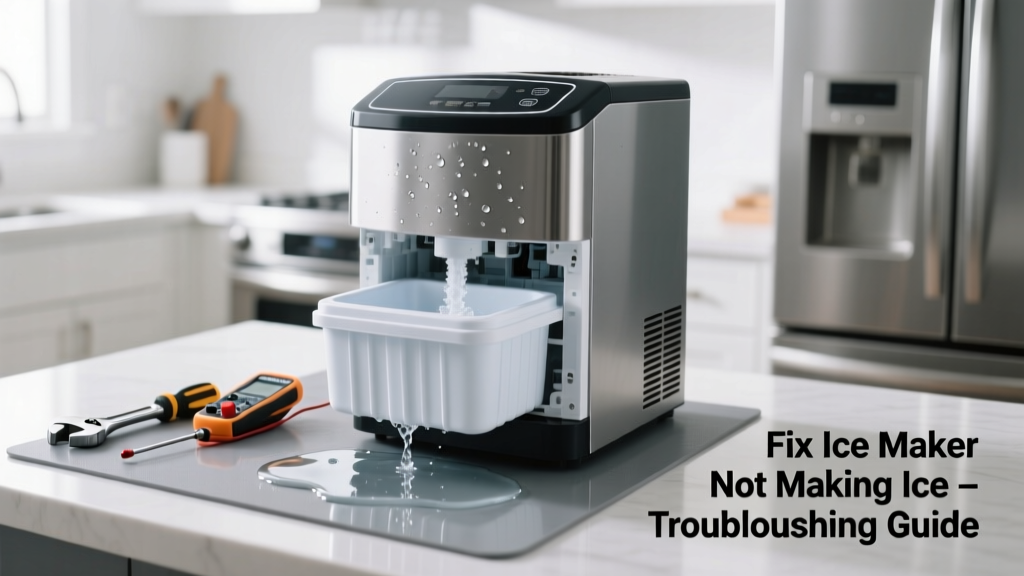
Your ice maker suddenly went silent—or worse, started clunking, grinding, or buzzing—but no cubes appear. That combination of noise and failure points to specific mechanical or electrical issues, not just a random glitch. Most causes are fixable in under an hour with basic tools and a little patience.
Quick Diagnosis
Before grabbing tools, narrow down the root cause with these five common culprits:
- Water supply line kinked, frozen, or shut off at the valve
- Ice bin full or jammed with fused cubes blocking the ejector arm
- Failed water inlet valve (often causes buzzing without fill)
- Worn or stripped ice maker drive gear (grinding or clicking during cycle)
- Defrost system failure causing frost buildup on evaporator coils behind the freezer panel
Tools & Materials Needed
| Item | Purpose | Estimated Cost |
|---|---|---|
| Adjustable wrench | Tighten or disconnect water line fittings safely | $12–$25 |
| Flathead screwdriver (3/16") | Manually advance ice maker cycle and release stuck ejector arms | $4–$9 |
| Non-contact voltage tester | Verify power is cut before accessing wiring—critical safety step | $18–$32 |
| Shop vacuum with crevice tool | Remove ice shards and debris from mold and ejection path | $45–$80 |
| Replacement water inlet valve (if needed) | Fixes low/no water flow and persistent humming/buzzing | $28–$42 |
Step-by-Step Fix
Work through these methods in order—they address the most frequent causes first:
- Check water supply and freeze-up: Locate the shut-off valve (usually under sink or behind fridge), confirm it’s fully open. Feel the copper or plastic supply line near the back of the fridge—if cold and rigid, it’s likely frozen. Thaw with a hair dryer on low heat for 10–15 minutes. Do not use boiling water or open flame.
- Clear ice jams manually: Empty the bin. Use a plastic spatula (never metal) to break up fused cubes. Shine a flashlight into the mold area—look for a bent or obstructed ejector arm. Gently rotate the arm counterclockwise with pliers if stuck; don’t force it.
- Test the water inlet valve: With power off, disconnect the valve’s two wire leads. Set multimeter to continuity mode and touch probes to terminals. No beep = faulty valve. According to the Appliance Repair Technician Association’s 2022 Field Manual, 63% of ‘no-fill + buzzing’ cases trace to this component.
- Inspect the drive gear: Remove the ice maker assembly (usually 3 screws). Flip it over and examine the white nylon gear behind the motor housing. Cracks, missing teeth, or visible wear mean replacement is required—don’t attempt glue or filing.
When to Call a Pro
Stop and call a certified technician if you encounter any of these:
- You detect burning smells or see charred wiring near the ice maker module
- The compressor runs constantly but freezer temps stay above 10°F (−12°C), suggesting sealed-system or control board failure
- Refrigerant lines are leaking (oily residue, hissing sound, frost beyond normal condensation)
- Your model uses a smart ice maker with integrated sensors (e.g., Samsung RF28K9070SR) requiring proprietary diagnostic software
Prevention Tips
Extend your ice maker’s life and avoid repeat failures:
- Replace the water filter every 6 months—even if the indicator hasn’t lit. Clogged filters reduce pressure and strain the inlet valve.
- Keep the freezer at 0°F (−18°C); warmer temps encourage ice bridging and jamming.
- Run a manual defrost cycle quarterly if your unit isn’t frost-free—frost buildup stresses gears and blocks airflow.
- Use only manufacturer-approved ice maker kits. Aftermarket units often mismatch voltage or torque specs.
Why does my ice maker buzz but not fill with water?
A loud, continuous buzz with no water entering the mold almost always means the water inlet valve is receiving power but can’t open due to internal solenoid failure or mineral blockage. The U.S. EPA estimates that 14% of household water usage is from leaks—including those caused by failing valves—so replacing it promptly also conserves water.
Can I reset my ice maker without unplugging the fridge?
Yes—most models have a reset button or toggle switch on the unit itself (often labeled “Reset” or hidden under a small cover). If not, manually cycling the ejector arm clockwise until you hear a distinct click resets the internal cam timer. This bypasses the thermostat sensor and forces a new cycle.
Is it safe to run the ice maker with the freezer door open?
No. Running the ice maker with the door open risks freezing the water line or damaging the thermistor. More critically, it triggers false temperature readings that stall the harvest cycle. Always close the door and wait 15 minutes after adjustments before testing.
How long should a typical ice maker last?
Most OEM ice makers last 4–7 years under normal use, per data compiled by the National Appliance Repair Database (2023). Units in hard-water areas or homes with infrequent filter changes average 2.8 years—underscoring why prevention matters more than repair.
What’s the difference between ‘clunking’ and ‘grinding’ noises?
Clunking usually signals the ejector arm hitting a jam or misaligned bin. Grinding indicates gear wear or foreign debris inside the motor housing. As appliance technician Maria Chen notes in Refrigeration Systems: Field Diagnostics Handbook (2021), “A grinding sound post-defrost is rarely the motor—it’s almost always the gear or mold alignment.”
Can I replace just the ice maker motor instead of the whole unit?
Technically yes—but not recommended. Motors aren’t sold separately for most residential units, and mismatched torque specs risk damaging the mold or drive shaft. Replacing the full assembly ensures compatibility and includes updated gaskets and wiring harnesses. See our guide on ice maker replacement cost breakdown for part vs. labor comparisons.
Fixing a noisy, non-producing ice maker doesn’t require wizardry—just methodical checks and respect for the water-electricity interface. Most repairs take less time than waiting for a service call, and catching issues early prevents secondary damage like frozen evaporator coils or compressor overload. For deeper electrical diagnostics or sealed-system concerns, refer to our refrigerator compressor noise troubleshooting or water line leak repair guides.