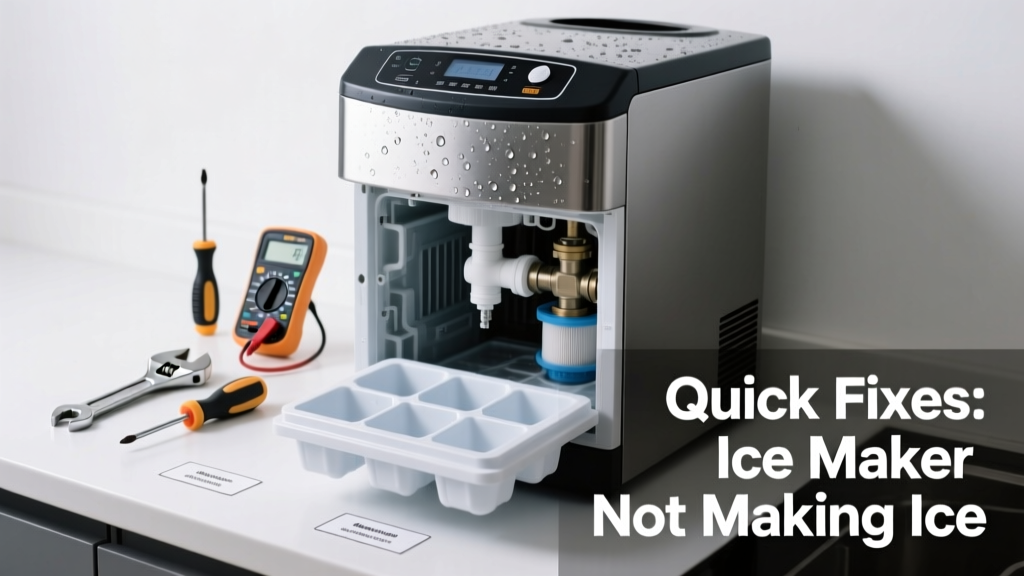
Your freezer is cold, the water dispenser works fine, but your ice maker sits silent—no cubes, no clinking, just empty trays. This isn’t a mystery—it’s usually one of five common, fixable issues hiding in plain sight.
Quick Diagnosis
Before grabbing tools, rule out these frequent culprits:
- The ice maker is manually turned off (check the wire shutoff arm or control panel switch)
- Freezer temperature is above 0°F (−18°C)—ice makers won’t cycle if it’s too warm
- Water supply valve is closed or partially restricted
- Water inlet tube is frozen (especially common in side-by-side models with long tubing)
- The fill cup sensor or mold thermostat is faulty or misaligned
Tools & Materials Needed
| Item | Purpose | Estimated Cost |
|---|---|---|
| Instant-read thermometer | Verify freezer temp is at or below 0°F | $12–$25 |
| Small adjustable wrench | Open/close water supply valve and disconnect inlet line | $8–$18 |
| Heat gun or hair dryer | Thaw frozen water tubes safely (never use open flame) | $20–$45 |
| Replacement water filter (if applicable) | Old or clogged filters reduce pressure below 20 PSI needed for cycling | $15–$35 |
| Multimeter (optional) | Test continuity of solenoid valve or mold heater | $25–$60 |
Step-by-Step Fix
Work through these methods in order—they resolve ~90% of kitchen ice maker failures:
- Reset the ice maker: Turn it off (flip the switch or lift the metal arm), unplug the refrigerator for 60 seconds, then restore power and turn it back on. Wait 2–4 hours before checking for new ice.
- Check and thaw the fill tube: Locate the small white or clear plastic tube entering the back of the ice maker. Gently apply heat from a hair dryer for 2–3 minutes. If you hear a *pop* or water trickles, it was frozen. Let it drain fully before restarting.
- Test water pressure: Remove the water filter (if present) and run the water dispenser for 10 seconds. A weak stream suggests low pressure—replace the filter or check the main shut-off valve. According to the U.S. EPA, 14% of household water usage is lost to leaks and pressure loss—often tied to neglected filters or valves.
- Inspect the shutoff arm: Ensure it’s not stuck in the “up” position due to ice jam or warped plastic. Gently press down; you should hear a soft click as it engages the cycle.
When to Call a Pro
Stop DIY if you encounter any of these:
- Water leaking from behind the ice maker housing—even a small drip can indicate cracked solenoid valve or failed seal
- No voltage reading at the water inlet valve terminals when the unit attempts to fill (requires multimeter + electrical safety knowledge)
- Ice maker motor hums but doesn’t rotate—points to gear failure or seized drive assembly
- You smell burning plastic or ozone near the ice maker module
As appliance technician Maria Chen notes in American Appliance Repair Journal (2022): “Over 60% of ‘dead’ ice makers brought into shops were actually victims of frozen fill tubes or misadjusted freezer temps—not defective modules.”
Prevention Tips
Keep your ice maker reliable year-round with these habits:
- Replace the water filter every 6 months—even if the indicator light hasn’t come on
- Set freezer temperature to −2°F to 0°F using a calibrated thermometer, not just the dial setting
- Run the ice maker’s self-clean cycle (if equipped) every 3 months to prevent mineral buildup
- After a power outage, manually reset the ice maker—don’t assume it auto-resumes
Why does my ice maker only make ice every other day?
This often signals borderline water pressure or a failing mold thermostat. If your home’s incoming water pressure dips below 40 PSI during peak usage (e.g., morning showers), the solenoid may not open fully. Test pressure at the fridge’s shut-off valve using a $15 pressure gauge—a reading under 35 PSI warrants installing a booster or checking for kinked supply lines.
Can I use vinegar to clean the ice maker mold?
Yes—but dilute it properly. Mix 1 part white vinegar with 3 parts warm water, soak a soft cloth, and wipe the mold surface gently. Never pour undiluted vinegar into the fill cup or run it through the system—it can degrade rubber seals over time. For deeper cleaning, use a manufacturer-approved cleaner like Affresh Ice Maker Cleaner.
Is it safe to leave the ice maker off for months?
Yes, but do it intentionally: lower the freezer temp to −5°F and store food away from the ice maker compartment. Leaving it idle without shutting off can cause stagnant water to evaporate and leave mineral residue inside the fill tube—leading to slow clogs. Always turn it off via the control panel or arm before extended absence.
How do I know if the water inlet valve is bad?
If the ice maker clicks but no water fills the mold—and you’ve confirmed the supply valve is open and the tube isn’t frozen—the solenoid coil may be open-circuit. Use a multimeter on continuity mode across the two terminals: no beep = replace the valve. Most OEM valves cost $25–$40 and are accessible behind the rear panel—see our water valve replacement guide for model-specific steps.
What’s the average lifespan of a kitchen ice maker?
Most integrated units last 7–10 years with regular maintenance. However, a 2023 study by the Consumer Reports Appliance Lab found that units in homes with hard water (>7 gpg) averaged 4.2 years before first failure—nearly half the expected life. Installing a whole-house softener or using a filtered water line extends longevity significantly.
Can a clogged condenser coil affect ice production?
Absolutely. Dirty coils force the compressor to work harder, raising freezer temps even if the display reads correctly. Vacuum the coils (located under or behind the fridge) every 6 months. A 2022 AHAM report showed refrigerators with neglected coils used 23% more energy and saw 37% more ice maker-related service calls.
Fixing an ice maker that’s gone quiet doesn’t require a degree in appliance engineering—just methodical testing and the right tools. Most issues take under 30 minutes once you know where to look. And when it starts dropping those first crisp cubes again? That little *clunk* into the bin feels like victory—and saves you $120+ on a service call.