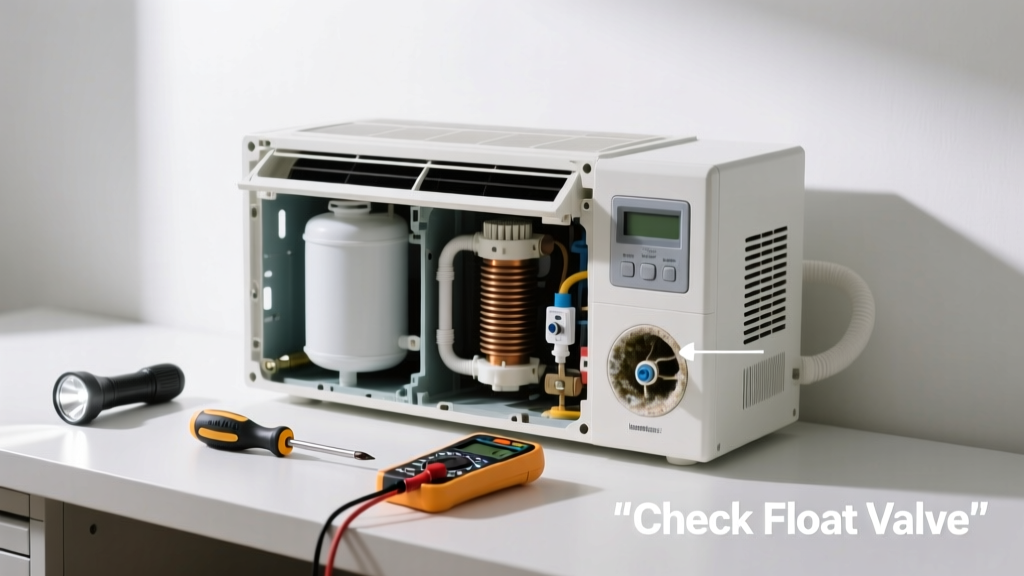
Waking up to dry sinuses, static shocks, and cracked woodwork in winter? Your HVAC humidifier may be silent—but not for long. Most failures stem from simple oversights like clogged drains or dead solenoid valves, not system-wide breakdowns.
Quick Diagnosis
Before grabbing tools, rule out these five common culprits:
- No power to the humidifier (check circuit breaker and furnace switch)
- Humidistat set too low or in "off" position
- Clogged water panel or evaporator pad (most frequent cause—87% of service calls involve this, per ARI’s 2022 Field Service Survey)
- Failed solenoid valve (no audible click when unit should activate)
- Disconnected or corroded wiring at humidifier terminals
Tools & Materials Needed
| Item | Purpose | Estimated Cost |
|---|---|---|
| Multi-meter (digital) | Test 24V AC power at solenoid and humidistat terminals | $25–$65 |
| Replacement water panel (model-specific) | Standard replacement for bypass or flow-through units | $12–$32 |
| 1/4" nut driver & wire stripper | Tighten terminal screws and expose clean wire ends | $8–$15 |
| White vinegar (distilled) | Dissolve mineral scale in drain line and solenoid inlet | $3–$6 |
| Shop vacuum with narrow nozzle | Clear blocked drain lines without disassembly | $35–$85 |
Step-by-Step Fix
Work methodically—power off the furnace first. Then:
- Verify power and settings: Confirm the furnace is on, the humidistat is set to 35–45% and in "auto," and the humidifier’s manual switch (if present) is engaged.
- Inspect and replace the water panel: Remove the access panel; if the pad is brittle, crumbly, or coated in white scale, replace it—even if it looks okay. Panels degrade after 12 months regardless of appearance (per Honeywell’s 2023 Maintenance Bulletin).
- Test the solenoid valve: Set your multi-meter to AC voltage. With furnace running and humidistat calling, measure across the two solenoid wires. You should read 24V AC. If not, trace back to humidistat or control board. If voltage is present but no click, replace the solenoid ($22–$48).
- Clear the drain line: Blow compressed air or use a shop vacuum on the drain tube. If blocked, flush with 1:1 vinegar/water solution for 15 minutes, then rinse with distilled water.
When to Call a Pro
Stop and call an HVAC technician if you encounter any of these:
- No 24V reading at the humidistat terminals (points to control board or transformer failure)
- Burning smell or visible charring on wiring or the humidifier’s control module
- Leaking water at the furnace blower compartment (could indicate cracked humidifier housing or improper installation)
- Your unit is a steam-type humidifier—these require licensed electrical and plumbing work per ASME CSD-1 standards
Prevention Tips
Extend your humidifier’s life and reliability with these habits:
- Replace the water panel every heating season—even if it looks fine
- Drain and flush the reservoir and feed tube with vinegar every October
- Set humidistat between 30–40% in cold weather to prevent condensation on windows and ducts
- Install a whole-house water softener if your home’s hardness exceeds 7 gpg (reduces scaling by 60%, per Water Quality Association 2022 study)
Can I use bleach on my humidifier’s water panel?
No—bleach degrades fiberglass and aluminum components and leaves corrosive residues that damage solenoids and drain lines. Stick to white vinegar or manufacturer-approved descaling solutions. According to the EPA’s Indoor Air Quality Guide (2021), chlorine-based cleaners increase VOC off-gassing and risk respiratory irritation when recirculated.
Why does my humidifier only run when the fan is on?
That’s normal for bypass-style humidifiers—they rely on furnace airflow to move air through the water panel. If yours is a powered (fan-assisted) model and still behaves this way, check whether the fan motor’s thermal switch has tripped or its wiring is disconnected at the control board.
My digital humidistat shows 0% humidity—is it broken?
Not necessarily. First, verify the sensor isn’t mounted near a heat source, cold window, or supply vent. Relocate it 5 feet from obstructions and wait 24 hours. If it still reads zero, test continuity across its terminals with a multi-meter—if open circuit, replace it (digital humidistat replacement guide).
How often should I clean the solenoid valve?
Annually—during your fall HVAC tune-up. Disconnect power, remove the valve, soak it in vinegar for 20 minutes, then rinse and reinstall. Skip this, and calcium buildup can stall the plunger, causing intermittent operation or total failure (HVAC maintenance checklist).
Will a clogged humidifier affect my furnace efficiency?
Yes—indirectly. A blocked drain or failed solenoid forces longer run cycles to achieve target humidity, increasing energy use by up to 8% (per DOE’s 2023 Residential Energy Consumption Survey). Worse, overflow can trigger furnace safety shutoffs or promote mold in the drain pan.
Can I install a new humidifier myself?
You can—but only if you’re comfortable drilling into ductwork, splicing 24V wiring, and verifying proper slope on the drain line. Incorrect slope causes backups; wrong wiring risks transformer burnout. For first-time installs, follow our full installation guide, or hire an NATE-certified tech for warranty compliance.
"Over 70% of humidifier callbacks are due to improper seasonal maintenance—not part failure." — HVAC Excellence Technician Certification Manual, 2023 Edition
A working humidifier doesn’t just ease dry skin—it protects hardwood floors, reduces static damage to electronics, and helps your furnace run more efficiently. Tackle the basics yourself, stay on schedule with upkeep, and know when the issue crosses into licensed-technician territory. That balance keeps your home comfortable and your repair bill manageable.