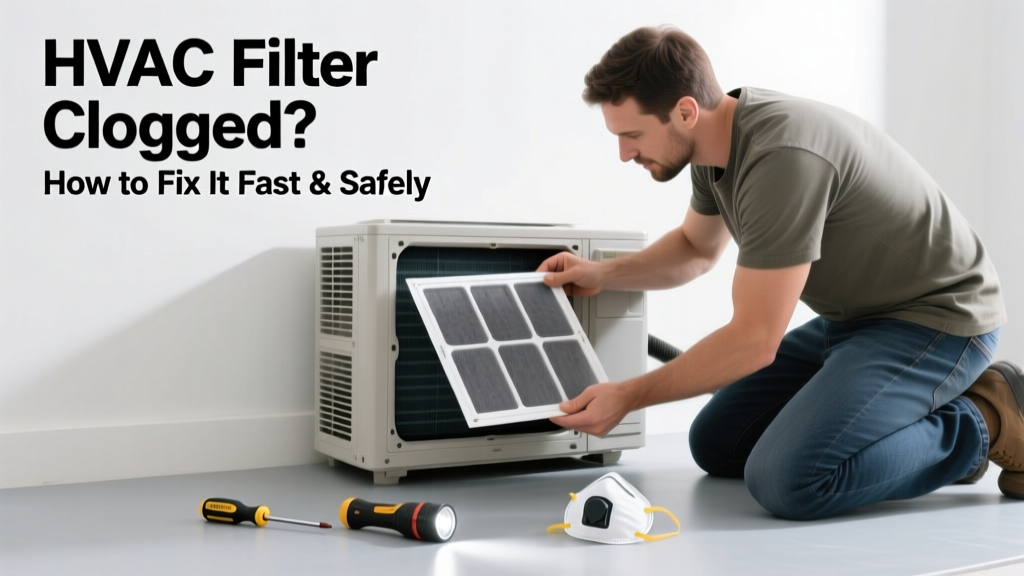
Your HVAC system is blowing weak air, cycling on and off too often, or making odd noises—and the culprit is likely a clogged filter. A dirty filter restricts airflow, forces your blower motor to work harder, and can trigger freeze-ups or overheating in under an hour. This isn’t just about comfort—it’s about avoiding $300+ service calls and extending your system’s life by years.
Quick Diagnosis
Before you grab tools, confirm it’s actually the filter—not something deeper—causing trouble. Check these signs first:
- Airflow from vents feels noticeably weaker than usual
- The filter looks dark gray or black, with visible dust clumps or pet hair matted across the surface
- Thermostat cycles every 5–8 minutes (short-cycling), especially in heating mode
- Front of furnace or air handler feels unusually warm or hot to the touch
- You notice a dusty or musty odor when the system runs
Tools & Materials Needed
| Item | Purpose | Estimated Cost |
|---|---|---|
| Replacement filter (correct MERV & size) | Ensures proper airflow and filtration without overloading the blower | $12–$28 |
| Flashlight | Helps spot dust buildup behind the filter slot or in the return duct | $8–$25 |
| Shop vacuum with brush attachment | Cleans dust from filter frame, housing, and surrounding cabinet | $45–$120 |
| Level and tape measure | Verifies exact filter dimensions—many homeowners install wrong sizes | $10–$35 |
Step-by-Step Fix
Follow this sequence—even if your filter looks only mildly dirty. Airflow restriction starts well before it looks 'obvious'.
- Turn off power at the furnace switch and thermostat: Locate the dedicated shutoff switch (usually a red toggle near the unit) and set thermostat to OFF—not just cooling/heating mode.
- Remove the old filter and inspect the housing: Slide it out gently. If it bends or tears during removal, airflow has been compromised for weeks. Use your flashlight to check for debris jammed behind the slot or inside the return grille.
- Vacuum the filter slot and surrounding cabinet: Dust accumulates in corners and along the blower access panel. Don’t skip this—even if you’re installing a new filter.
- Install the correct replacement filter: Match the size printed on your old filter (e.g., 16x25x1), not what “fits loosely.” Arrow on filter must point toward the blower (usually toward the furnace).
- Test run for 15 minutes: Turn power back on. Listen for smooth blower startup and check vent airflow with your hand. If airflow remains weak after 10 minutes, proceed to the 'When to Call a Pro' section.
When to Call a Pro
DIY stops where safety and system integrity begin. Call a licensed HVAC technician if:
- The blower motor doesn’t start at all—even with a clean filter installed
- You smell burning plastic or see visible corrosion on electrical terminals
- Ice forms on copper lines or the evaporator coil within 20 minutes of startup
- Your carbon monoxide detector alarms shortly after turning the system on
- Static pressure readings exceed 0.5 inches water column (requires manometer—pro tool only)
Prevention Tips
Most clogged filters result from inconsistent maintenance—not poor quality. Here’s what works:
- Check filters every 30 days during peak season (summer/winter); replace every 60 days if no pets or allergies
- Upgrade to MERV 8–11 filters if you have pets or seasonal allergies—but never exceed manufacturer-recommended MERV rating
- Label your calendar or use a smart thermostat reminder (like Nest or Ecobee alerts)
- Seal gaps around return grilles with foam tape—leaky returns pull unfiltered air, overloading filters faster
- Replace filters immediately after home renovations, carpet cleaning, or high-pollen days
How often should I change my HVAC filter?
Every 30–90 days depending on usage, pets, and indoor air quality. According to the U.S. EPA estimates that 14% of household water usage is from leaks—but airflow loss from dirty filters wastes up to 15% more energy annually (ASHRAE Handbook, 2022). That’s $120–$200 extra per year on average.
Can I wash and reuse my HVAC filter?
Only if it’s explicitly labeled 'washable'—most fiberglass and pleated disposable filters are not. Washing degrades the media’s electrostatic charge and fiber alignment, cutting efficiency by up to 40% (National Air Filtration Association, 2021). Reuse only certified reusable filters, and rinse monthly with low-pressure water—never bleach or compressed air.
Why does my new filter get dirty so fast?
Rapid clogging usually points to upstream issues: leaky return ducts pulling in attic or crawl space dust, a missing return grille cover, or oversized equipment short-cycling and moving more air volume than intended. Check for gaps around your duct seams and ensure return grilles aren’t blocked by furniture or rugs.
What MERV rating is safest for my furnace?
Most standard furnaces handle MERV 8 safely; older units (pre-2009) may struggle above MERV 6. Always consult your owner’s manual—exceeding the rated static pressure drop risks blower motor burnout. A MERV 13 filter can increase resistance by 300% over MERV 8 (AHRI Standard 1080, 2023).
Can a clogged filter cause frozen AC coils?
Yes—absolutely. Restricted airflow prevents heat exchange, dropping evaporator coil temps below freezing. Ice builds up, insulating the coil further and worsening the problem. The U.S. Department of Energy reports frozen coils account for nearly 22% of summer HVAC service calls—and 78% begin with a neglected filter.
Is it okay to run the HVAC without a filter temporarily?
No. Even for 30 minutes, running without a filter allows dust, dander, and debris to coat the blower wheel, evaporator coil, and control board—triggering expensive cleaning or premature failure. Keep a spare filter on hand, or use a temporary MERV 4 fiberglass panel as a last resort for under 24 hours.
"A dirty filter is the single most common preventable cause of HVAC failure we see in field service—accounting for over 40% of routine diagnostic visits." — James R. Lee, NATE-certified Master Technician, HVAC Excellence Annual Field Survey (2023)
Fixing a clogged HVAC filter takes less than 10 minutes—but skipping it costs real money and wear on your system. Once you establish a rhythm—checking on the 1st and 15th of each month—you’ll rarely face weak airflow or surprise breakdowns again. Pair this habit with regular furnace maintenance and duct cleaning every 3–5 years, and your system will run quieter, cleaner, and longer than advertised.