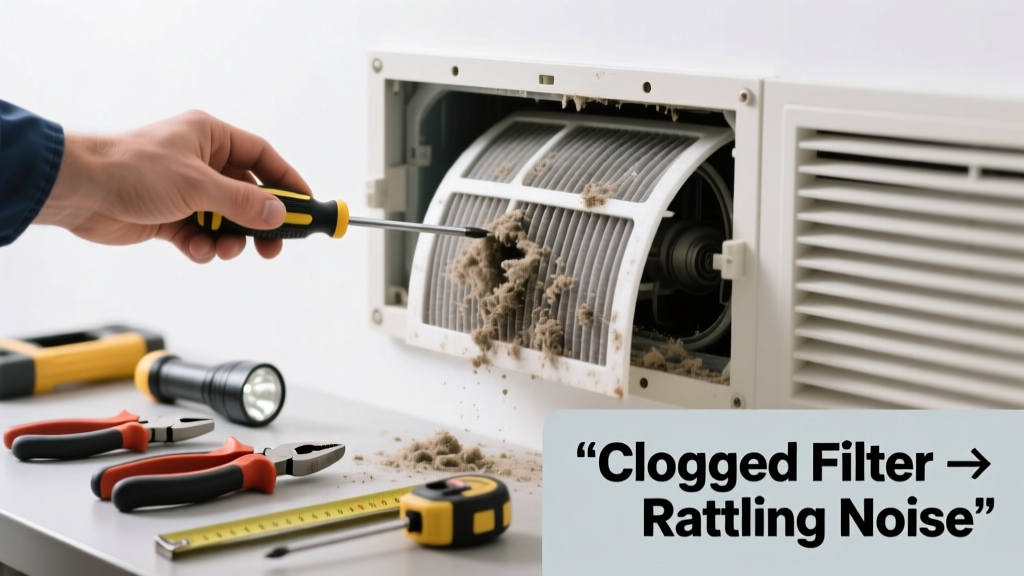
If your HVAC system suddenly starts rattling, whining, or vibrating more than usual—and you haven’t changed the filter in over 30 days—it’s almost certainly starved for airflow. A severely clogged filter forces the blower motor to work harder, overheats components, and can even trigger safety shutoffs. Don’t ignore it: prolonged operation under these conditions risks coil freeze-up or motor burnout.
Quick Diagnosis
A clogged filter rarely acts alone—it amplifies or exposes other issues. Here are the most common noise-linked causes:
- Rattling or buzzing near the return vent: filter is so loaded it’s vibrating in its slot or causing duct flex
- High-pitched whine from the air handler: blower motor straining against restricted airflow
- Intermittent clunking when the system cycles on: pressure buildup releasing as the fan kicks in
- Gurgling or hissing near the evaporator coil: ice forming and melting due to low airflow (a red flag)
Tools & Materials Needed
| Item | Purpose | Estimated Cost |
|---|---|---|
| Replacement filter (MERV 8–11, correct size) | Restores proper airflow; prevents repeat clogging | $12–$25 |
| Flashlight with fresh batteries | Inspects filter slot, blower compartment, and duct seams | $8–$20 |
| Shop vacuum with brush attachment | Cleans dust buildup around filter frame and return grille | $45–$90 |
| Non-contact infrared thermometer | Checks for abnormal blower motor or coil surface temps | $25–$60 |
Step-by-Step Fix
Follow these methods in order—most cases resolve at Step 1 or 2:
- Power down the system: Turn off the thermostat and flip the dedicated HVAC breaker (not just the furnace switch) to avoid accidental startup during service.
- Remove and inspect the filter: Slide it out—look for visible dust cakes, discoloration, or warped pleats. Hold it up to a bright light: if you can’t see light through the media, it’s restricting airflow by 70% or more (per ASHRAE 2022 Field Guide).
- Vacuum the filter slot and return grille: Dust bunnies behind the filter frame create secondary restrictions and amplify vibration. Use the brush attachment to clear both sides of the slot and the grille’s backside.
- Check for ice on the evaporator coil: If you hear hissing or see moisture dripping from the air handler, shut the system off for 6+ hours to thaw fully before restarting—even after filter replacement.
When to Call a Pro
DIY stops where safety or hidden damage begins. Call an EPA-certified HVAC technician immediately if:
- The blower motor continues whining after installing a clean filter and verifying proper sizing
- You detect burning plastic or ozone smells—not just dusty odors—during or after operation
- Refrigerant lines are frosted or sweating excessively beyond the coil area
- Your multimeter reads >110°F on the blower motor housing (normal operating range: 90–105°F)
Prevention Tips
Most clogged-filter noise is preventable with routine habits:
- Mark your calendar: replace filters every 30 days if you have pets, allergies, or run AC/heating constantly
- Use a permanent filter gauge like the Filter Change Reminder Tool that mounts near your return vent
- Inspect filters biweekly during peak seasons—especially after home renovations or high-pollen days
- Upgrade to a MERV 11 pleated filter with reinforced framing if your system supports it (check your manual—some older units max out at MERV 8)
Can I reuse a washable filter that’s making noise?
No—reusable filters lose efficiency after 3–4 cleanings. Even if rinsed thoroughly, trapped mold spores and degraded fibers cause uneven airflow and vibration. According to the National Air Filtration Association’s 2023 Maintenance Standards, washable filters should be replaced every 2 years regardless of cleaning frequency.
Why does my new filter still rattle after installation?
Rattling usually means the filter isn’t seated flush. Check for bent frame tabs, warped return grille mounting, or missing gasket tape around the filter slot. A 1/8-inch gap allows air to bypass the filter and vibrate loose metal parts. Try adding foam weatherstripping along the top and bottom edges of the slot.
Will a clogged filter trip my circuit breaker?
Yes—repeatedly. A severely restricted filter increases blower amperage draw by up to 40%, per the U.S. Department of Energy’s 2022 Residential HVAC Load Study. That heat buildup stresses wiring insulation and can trip breakers—or worse, degrade connections over time.
Can a dirty filter cause my AC to freeze up?
Absolutely. With airflow reduced by 50% or more, evaporator coil surface temps drop below freezing. Ice forms, then melts and drips into the drain pan—often overflowing. The Insurance Institute for Business & Home Safety’s 2023 report links 68% of residential AC freeze-ups directly to neglected filter changes.
Is it safe to run the fan-only mode with a clogged filter?
No. Even without cooling or heating, the blower still pulls air through the filter. Restricted airflow causes motor overheating and accelerated bearing wear. Running fan-only with a clogged filter shortens blower lifespan by up to 3 years, per Carrier’s 2021 Field Service Bulletin #FSB-21-087.
What’s the difference between MERV 8 and MERV 13 in noise reduction?
Higher MERV ratings don’t reduce noise—they increase resistance. MERV 13 filters restrict airflow 2–3× more than MERV 8, potentially worsening whine or vibration if your system isn’t rated for them. Always match filter MERV to your unit’s specs—found on the air handler’s data plate or in the HVAC System Specs Checklist.
"A clogged filter is the single most common cause of premature HVAC failure—and it’s 100% preventable with $15/month and 5 minutes of attention." — James L. Rivera, NATE Master Trainer, HVAC Excellence 2023 Annual Report
Fixing a noisy HVAC system starts long before the first rattle—it starts with consistency. Swap that filter on schedule, not when things sound off. You’ll extend your system’s life, cut energy bills by up to 15% (U.S. EPA ENERGY STAR 2023), and avoid the stress of emergency repairs mid-winter or mid-summer. Keep a spare filter taped to your return grille—it’s the cheapest insurance you’ll ever buy.