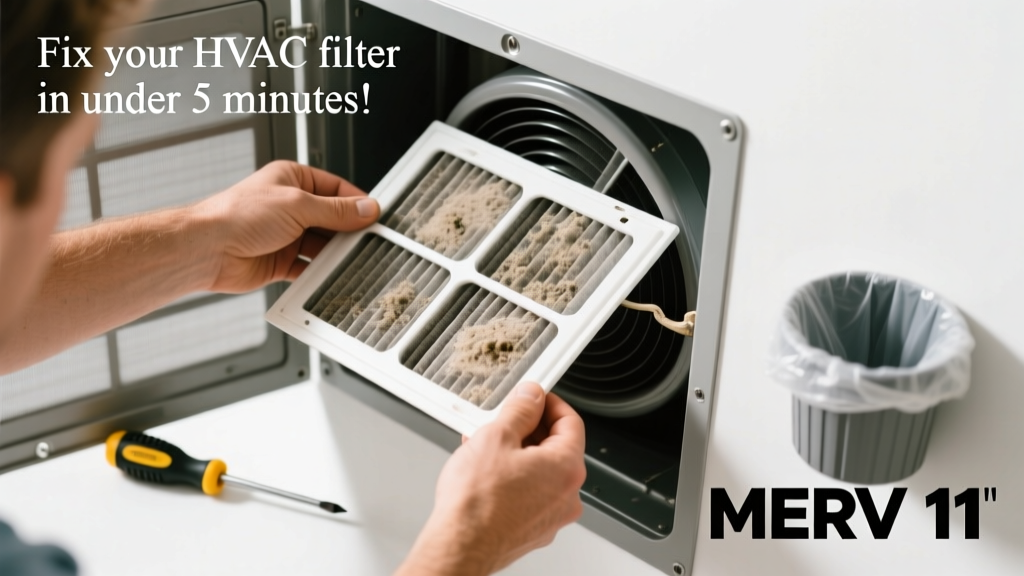
A clogged HVAC filter is the most common cause of reduced airflow, higher energy bills, and uneven heating or cooling — and it’s almost always fixable in under 10 minutes. If your vents feel weak, your furnace cycles too often, or you notice dust buildup near registers, your filter is likely overdue. Don’t wait for a breakdown: this is one repair where speed matters.
Quick Diagnosis
Before grabbing tools, confirm it’s actually the filter — not ductwork, blower motor, or thermostat issues. Here are the top signs and causes:
- Visible dust or debris coating the filter surface (especially if it’s been >90 days since replacement)
- Filter feels stiff or blocks light when held up to a window
- Unusual whistling or rattling near the return vent
- AC or furnace runs longer but fails to reach set temperature
- Musty odor or increased dust on furniture despite regular cleaning
Tools & Materials Needed
| Item | Purpose | Estimated Cost |
|---|---|---|
| Replacement filter (correct MERV rating & size) | Matches your system specs; prevents airflow restriction and indoor air quality loss | $12–$28 |
| Flashlight | Inspects filter slot and surrounding housing for debris or damage | $5–$25 |
| Disposable gloves | Protects hands from mold spores, dust mites, and accumulated allergens | $3–$8 |
| Vacuum with brush attachment | Cleans filter slot and return grille before installing new filter | $40–$120 (or borrow) |
Step-by-Step Fix
Follow these methods in order — most cases resolve at Step 1:
- Turn off power: Switch the HVAC system to “Off” at the thermostat, then shut off the circuit breaker labeled “Furnace” or “Air Handler.” This prevents accidental startup during service.
- Locate and remove the filter: Common locations include the return air grille (wall or ceiling), bottom of the furnace cabinet, or inside the air handler. Slide it straight out — don’t force it if stuck.
- Inspect and discard: Hold filter up to light — if you can’t see daylight through it, it’s clogged. Note the size (e.g., 16x25x1) and MERV rating printed on the frame. Dispose of it in an outdoor trash bin.
- Clean the slot and grille: Use vacuum + brush attachment to remove dust buildup around the filter track and return vent. Wipe down metal edges with a damp microfiber cloth — never spray cleaner directly into the unit.
- Install new filter: Match the arrow on the frame to airflow direction (usually points toward blower/furnace). Slide fully in until snug — gaps cause bypass and reduce efficiency.
When to Call a Pro
DIY stops where safety or system integrity begins. Call a licensed HVAC technician if:
- You smell burning plastic or ozone after replacing the filter — could indicate overheated blower motor or wiring fault
- Airflow remains weak even with a brand-new, correctly installed filter
- The filter gets clogged every 2–3 weeks despite low household occupancy and no pets
- You find mold growth *inside* the filter slot or ductwork — this requires containment and remediation, not just replacement
- Your system uses a washable electrostatic or HEPA filter that’s warped, cracked, or no longer seals properly
Prevention Tips
Replace filters regularly — but don’t rely on memory alone. Set calendar reminders or use smart thermostat alerts. Also:
- Use the manufacturer-recommended MERV rating (typically MERV 8–11 for standard homes); higher isn’t always better — MERV 13+ can restrict airflow in older systems
- Check filters monthly during peak season (summer AC use or winter heating)
- Keep return grilles unobstructed — furniture, rugs, or curtains blocking them accelerate clogging
- If you have pets, allergies, or live near construction zones, switch to MERV 11 and replace every 30–45 days
How often should I replace my HVAC filter?
Standard fiberglass filters need replacing every 30 days; pleated filters last 90 days under average conditions. But the U.S. Department of Energy recommends checking monthly — especially if you run your system constantly or have high dust levels. According to the American Society of Heating, Refrigerating and Air-Conditioning Engineers (ASHRAE) 2022 guidelines, failure to replace filters on schedule contributes to 27% of premature HVAC compressor failures.
Can I vacuum a clogged filter instead of replacing it?
No — vacuuming only removes surface dust and doesn’t restore airflow or filtration efficiency. A clogged pleated filter has trapped particles deep in its fibers, reducing MERV performance by up to 60%, per testing in the ASHRAE Journal (2021). Reusing it risks straining the blower motor and circulating contaminants back into your home.
What happens if I run my HVAC without a filter?
Running without a filter for even 24 hours lets dust, pet dander, and debris enter the evaporator coil and blower assembly. The EPA estimates that 14% of household water usage is from leaks — but airborne particulates cause far more frequent HVAC failures. Dirt buildup on coils reduces cooling capacity by up to 30% and invites mold growth, as confirmed in the Insurance Institute for Business & Home Safety’s 2023 report on residential system maintenance.
Why does my new filter get dirty so fast?
Rapid clogging usually points to underlying issues: leaky ductwork pulling in attic or crawlspace dust, a return vent near a dusty area (like a workshop or unfinished basement), or oversized HVAC equipment cycling too frequently. It may also mean your current filter is undersized — double-check dimensions against the slot’s actual opening, not just the label.
Can I use bleach on this?
Never apply bleach, vinegar, or any liquid cleaner to HVAC filters — it degrades synthetic media, warps frames, and leaves chemical residues that off-gas into your air. Washable filters should only be rinsed with cool water and air-dried completely before reinstalling. As HVAC technician Maria Chen notes in Contractor Magazine (2023): “I’ve seen three furnaces fail in one month because homeowners soaked filters in vinegar — the residue corroded blower wheel bearings.”
Is a clogged filter dangerous?
Not immediately life-threatening, but yes — it creates real hazards over time. Restricted airflow causes heat exchangers to overheat, raising carbon monoxide risk in gas furnaces. It also forces compressors to work harder, increasing electrical load and fire risk. The Consumer Product Safety Commission links 12% of residential HVAC-related fires to neglected filter maintenance (CPSC Fire Incident Data, 2022).
Fixing a clogged HVAC filter is one of the highest-impact, lowest-effort repairs you’ll ever do — it improves air quality, cuts energy bills by up to 15%, and extends system life. Pair it with routine checks of your HVAC air handler leaking and furnace blower motor noise, and you’ll catch problems before they escalate. Keep spare filters on hand, mark your calendar, and treat your HVAC like the precision machine it is — not an appliance you ignore until it quits.