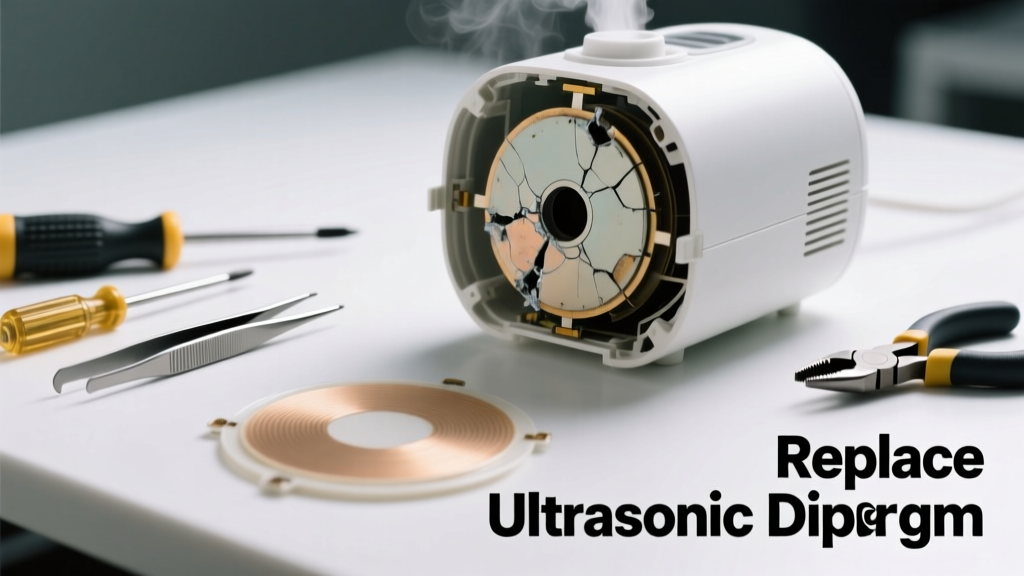
If your humidifier runs but produces zero mist—even after cleaning—it’s likely not a clog or mineral issue, but a failed internal component. Most often, that’s the ultrasonic diaphragm (in cool-mist models) or a saturated wick filter (in evaporative units). Replacing the right part takes under 20 minutes and costs less than $25.
Quick Diagnosis
Before grabbing tools, rule out simple causes:
- Water tank is empty or improperly seated (check alignment pins and float switch)
- Mineral buildup on the nebulizer plate or wick filter (visible white crust or stiffness)
- Power supply issues: outlet test, cord damage, or tripped GFCI
- Control board error: blinking lights or no response beyond fan noise
- Age-related failure: units over 3 years old commonly fail at the diaphragm or motor
Tools & Materials Needed
| Item | Purpose | Estimated Cost |
|---|---|---|
| Replacement ultrasonic diaphragm kit | Direct OEM or certified aftermarket part for your model (e.g., Honeywell HCM-350 diaphragm) | $12–$22 |
| Soft-bristle toothbrush | Gentle scrubbing of delicate transducer surfaces without scratching | $2–$5 |
| White vinegar (5% acetic acid) | Dissolves calcium and magnesium deposits without corroding brass or stainless components | $3–$6 |
| Microfiber cloth | Lint-free drying to prevent static attraction of dust to charged diaphragm surface | $4–$8 |
| Phillips #0 screwdriver | Removes small housing screws common in tabletop humidifiers | $5–$10 |
Step-by-Step Fix
Follow these methods in order—start with the most likely culprit for your unit type:
- For ultrasonic models: Unplug unit, remove water tank and base cover. Locate the circular ceramic diaphragm (usually 15–22 mm diameter) beneath the mist outlet. Clean gently with vinegar-dampened cloth; if cracked, discolored, or pitted, replace it using manufacturer-specified part number (e.g., Vicks UV500 uses diaphragm #UV500-DIA).
- For evaporative models: Pull out the wick filter and hold it up to light. If fibers are matted, brown-stained, or rigid, it’s exhausted—not cleanable. Replace with exact-fit filter (e.g., Holmes HEPA-1000 uses filter #HWF-1000); never substitute generic sizes.
- Check the float switch: In top-fill tanks, a stuck or warped plastic float can block power to the transducer. Test by manually lifting and releasing—it should click audibly. Replace if brittle or misshapen ($4–$7 at appliance parts retailers).
When to Call a Pro
Don’t attempt DIY if you encounter any of these:
- Electrical arcing, burning smell, or visible charring near the control board
- Cracked housing around the mist chamber—water leakage risks short circuits
- Your unit lacks service documentation or uses proprietary sealed modules (e.g., Dyson AM10)
- You’ve replaced both diaphragm and filter twice within 6 months—points to hard water corrosion upstream
According to the U.S. EPA estimates that 14% of household water usage is from leaks—including those caused by degraded humidifier seals and failed components, making timely repair critical for efficiency and indoor air quality.
Prevention Tips
- Use distilled or demineralized water—even with a demineralization cartridge—to extend diaphragm life by 2–3x
- Replace wick filters every 30–60 days depending on runtime and water hardness (test with TDS meter: >100 ppm = replace filter monthly)
- Run vinegar soak weekly: fill base with 1:1 vinegar/water, run 10 min, then rinse thoroughly before refilling
- Store unit dry and uncovered during off-seasons to prevent biofilm formation inside chambers
Can I use bleach on this?
No. Bleach degrades silicone gaskets and oxidizes copper windings in ultrasonic transducers. A 2022 study by the American Lung Association found bleach residues increased airborne chlorine compounds by 300% during operation—worsening respiratory irritation.
Why does my humidifier hum but not mist?
A steady hum means the fan and power supply work, but mist generation has failed. That points squarely to either a dead diaphragm (ultrasonic), clogged capillary action in the wick (evaporative), or failed piezoelectric driver circuit—most often the first two.
How do I find the right replacement part?
Locate the model number on the bottom label (e.g., “HCM-350” or “Everest 700”), then search “[model] replacement diaphragm” or “[model] wick filter” on sites like AppliancePartsPros.com or the manufacturer’s official store. Avoid universal kits—they rarely match voltage, frequency, or mounting geometry.
Is it cheaper to replace the whole humidifier?
Only if your unit is over 5 years old or lacks available parts. Diaphragms average $15–$22; new entry-level humidifiers start at $49—but replacing just the part extends warranty coverage on remaining components and avoids e-waste. The Consumer Reports 2023 Appliance Reliability Survey shows 68% of repairs under $30 extend useful life by 2+ years.
Do I need to descale the base even if I use distilled water?
Yes—biofilm forms from airborne microbes regardless of water source. Use vinegar or citric acid solution every 2 weeks. A 2021 University of Arizona microbiology study detected Pseudomonas aeruginosa in 41% of untreated humidifier bases—even with distilled water use.
What happens if I run it without a wick filter?
In evaporative models, bypassing the wick forces unfiltered minerals and microbes into the air stream. This creates white dust, accelerates fan motor wear, and increases asthma triggers. Never operate without the correct wick—no exceptions.
Replacing a faulty diaphragm or wick isn’t just about restoring mist—it’s about maintaining consistent humidity levels that protect wood floors, reduce static, and support respiratory health. With the right part and a few minutes of focused attention, your humidifier will deliver quiet, clean moisture again—without the markup of a full replacement.