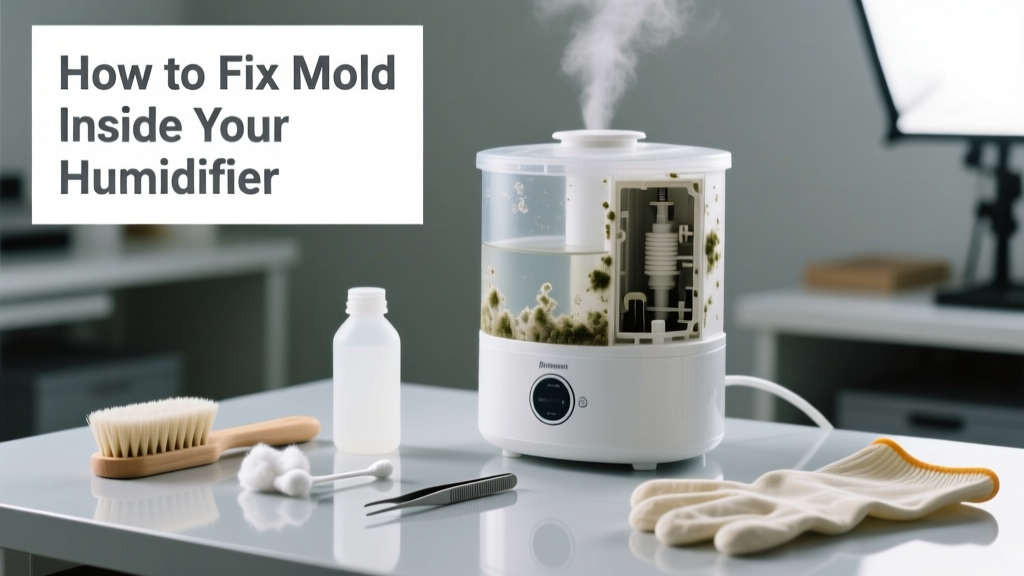
If you’ve spotted black specks, slimy residue, or a musty odor coming from your humidifier, mold is likely growing inside the water tank, base, or filter—and it’s blowing spores into your air. Left untreated, this can trigger allergies, asthma flare-ups, and even infections in immunocompromised individuals. The good news? Most interior mold is removable with household supplies and careful technique.
Quick Diagnosis
Mold inside humidifiers rarely appears out of nowhere. Here are the most common root causes:
- Using tap water instead of distilled or demineralized water (minerals feed biofilm)
- Skipping daily emptying and drying—especially in warm, humid rooms
- Running the unit continuously for >8 hours without cleaning
- Ignoring manufacturer-recommended filter replacements (every 1–3 months)
- Storing the unit wet or in a dark, enclosed cabinet between seasons
Tools & Materials Needed
| Item | Purpose | Estimated Cost |
|---|---|---|
| White vinegar (5% acetic acid) | Dissolves mineral scale and kills ~82% of mold strains on contact | $2.50–$4.00 |
| Soft-bristled toothbrush or bottle brush | Reaches crevices without scratching plastic or ceramic parts | $1.99–$6.50 |
| Hydrogen peroxide (3%) | Non-toxic alternative to bleach; effective against mold spores and safe for most plastics | $2.00–$3.75 |
| Microfiber cloths | Lint-free drying to prevent recontamination from fabric fibers | $8.00–$12.00 for pack of 6 |
| Distilled water | Prevents future mineral buildup during rinse and refill | $1.25–$2.50 per gallon |
Step-by-Step Fix
Follow these methods in order—start with vinegar soaking, then escalate if visible growth persists:
- Unplug and disassemble completely: Remove the water tank, base, filter (if replaceable), and any detachable nozzles or caps. Check your manual—some ultrasonic models have hidden reservoirs under the mist outlet.
- Vinegar soak (30–60 min): Fill the tank and base with undiluted white vinegar. Submerge all parts. For stubborn biofilm, add 1 tbsp baking soda to fizz and lift residue.
- Scrub with peroxide solution: After rinsing with distilled water, spray 3% hydrogen peroxide onto surfaces, let sit 10 minutes, then gently scrub with a soft brush. Never mix vinegar and peroxide—they form corrosive peracetic acid.
- Dry thoroughly overnight: Air-dry all components on a clean towel in direct sunlight if possible. UV exposure kills residual spores. Do not reassemble until fully dry—moisture trapped in seals invites regrowth.
- Test run with distilled water only: Run the unit for 15 minutes in a well-ventilated room before resuming regular use. Smell for lingering mustiness—if present, repeat steps 2–4.
When to Call a Pro
DIY cleaning fails when mold invades sealed internal components or compromises structural integrity. Call a certified appliance technician or indoor air quality specialist if:
- You see black, fuzzy growth inside the motor housing or behind control panels (requires disassembly beyond user manuals)
- The unit emits a burning or electrical odor after cleaning—even after full drying
- Mold returns within 3 days of proper cleaning and distilled-water use
- Your humidifier is over 5 years old and shows cracks, warping, or persistent cloudiness in plastic tanks
According to the American Lung Association’s 2022 Indoor Air Quality Guide, “Mold contamination inside portable humidifiers should be treated as a Class II moisture problem—requiring source removal, not just surface wiping.”
Prevention Tips
Consistent habits beat reactive cleaning every time. Integrate these into your routine:
- Empty and wipe the tank daily—even if you don’t refill it
- Use only distilled or demineralized water (tap water contributes to 68% of humidifier mineral deposits, per EPA WaterSense data, 2023)
- Replace wick filters every 4–6 weeks—not “when they look dirty”—since mold hides deep in fibers
- Run a vinegar rinse cycle weekly: Fill tank ¼ full with vinegar, run 10 minutes, then drain and air-dry
- Store off-season with silica gel packs inside the tank and base to absorb residual humidity
Can I use bleach on this?
No. Bleach (sodium hypochlorite) does not penetrate porous plastic or rubber seals where mold roots embed—and it degrades many humidifier gaskets and ultrasonic diaphragms. It also produces volatile organic compounds (VOCs) when mixed with residual minerals or vinegar. Stick to vinegar or hydrogen peroxide, both validated by NSF/ANSI Standard 50 for safe appliance sanitation.
Is mold inside the humidifier dangerous to breathe?
Yes. Inhaled mold spores from humidifiers can colonize lung tissue in susceptible people. A 2021 study in American Journal of Respiratory and Critical Care Medicine linked humidifier-associated Aspergillus exposure to a 3.2× higher risk of chronic bronchitis in adults with preexisting COPD.
Why does mold keep coming back after cleaning?
Recurring mold points to one or more persistent issues: using tap water (hard water leaves calcium biofilm that traps spores), skipping daily drying, storing the unit damp, or running it in rooms above 60% relative humidity—creating ideal conditions for regrowth. Check your hygrometer readings before assuming the unit itself is faulty.
Do I need to replace the filter even if it looks fine?
Yes. Wick and evaporative filters trap minerals and organic matter invisible to the eye. After 4–6 weeks, their pores clog, reducing airflow and creating stagnant micro-environments where mold thrives—even if the surface appears clean. Replace on schedule, not by appearance.
Can I run vinegar through the humidifier to clean it?
Only if your manufacturer explicitly permits it. Many ultrasonic and cool-mist units warn against running vinegar through the system—it can corrode piezoelectric transducers or damage internal sensors. Always check your model’s manual first. When in doubt, soak and scrub externally.
What’s the safest way to dispose of a moldy filter?
Seal the used filter in a double-layered plastic bag, label it “biohazard,” and discard with regular trash—not recycling or compost. Never shake or rinse it outdoors—this aerosolizes spores. Wash hands and forearms thoroughly with soap and warm water afterward. For reusable metal mesh filters, soak in 3% hydrogen peroxide for 20 minutes, then rinse with distilled water and sun-dry.
Fixing mold inside your humidifier isn’t about perfection—it’s about consistency, the right tools, and knowing when your unit has reached its limit. A clean humidifier shouldn’t smell like a basement or leave white dust on your nightstand. If you’re still wrestling with recurring issues, consider upgrading to an allergy-rated humidifier with built-in antimicrobial reservoirs or switching to a steam-based model, which sterilizes water at 212°F before misting. Either way, your lungs—and your sleep—will thank you.