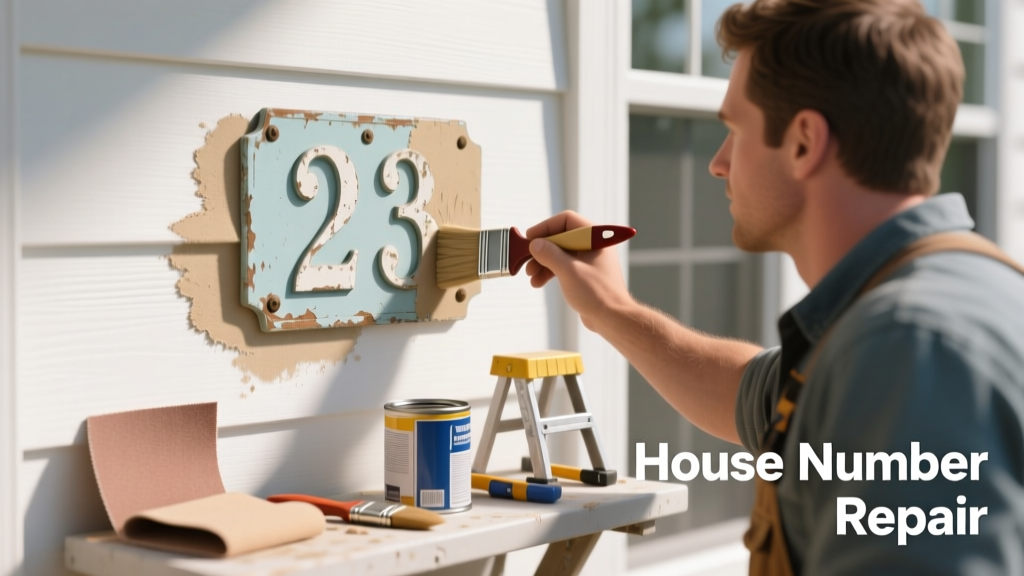
Faded house numbers aren’t just an eyesore—they’re a safety hazard for emergency responders and delivery drivers. If your address is barely legible in daylight, it’s time for a practical, low-cost refresh. Most fixes take under an hour and cost less than $25.
Quick Diagnosis
Fading rarely happens overnight. Here are the most common root causes:
- UV exposure degrading paint or vinyl over 3–5 years
- Chalky residue from oxidized acrylic or latex paint
- Moisture trapped behind metal or plastic mounts causing corrosion
- Low-quality adhesive backing failing on peel-and-stick numbers
- Repeated pressure washing at high PSI (above 1,200 PSI) stripping finishes
Tools & Materials Needed
| Item | Purpose | Estimated Cost |
|---|---|---|
| 320-grit sandpaper (or orbital sander) | Removes chalky layer without gouging substrate | $4–$12 |
| Acrylic exterior primer (e.g., Zinsser Bulls Eye 1-2-3) | Blocks UV degradation and seals porous surfaces | $14–$18 |
| High-opacity exterior acrylic paint (matte or satin) | Covers evenly, resists fading longer than standard paint | $12–$22 |
| Painter’s tape (3M Blue 2090) | Creates crisp edges without bleeding on uneven surfaces | $6–$9 |
| Microfiber cloths + isopropyl alcohol (70%) | Cleans grease/dust without leaving residue before painting | $5–$8 |
Step-by-Step Fix
Choose the method that matches your number type and condition:
- For painted numbers on wood or masonry: Lightly sand with 320-grit, wipe clean, apply one coat of primer, then two thin coats of exterior acrylic paint using a 1-inch angled brush.
- For metal or aluminum numbers: Use fine steel wool (0000 grade) to remove oxidation, then apply Rust-Oleum Protective Enamel in matte black or white—dries in 2 hours.
- For vinyl or plastic numbers: Clean with alcohol, lightly scuff with Scotch-Brite pad, then spray with Krylon Fusion All-In-One (formulated for plastics). Let cure 7 days before handling.
- For severely degraded numbers: Remove entirely, fill mounting holes with exterior-grade wood filler or epoxy putty, sand smooth, then reinstall new numbers using stainless-steel screws and silicone sealant at base.
When to Call a Pro
DIY isn’t always safe or effective. Call a licensed handyman or sign specialist if:
- Your numbers are mounted on stucco, EIFS, or fiber-cement siding—and you’re unsure about anchoring depth or moisture barriers
- You need to rewire illuminated numbers (120V AC) or replace transformer wiring
- The mounting surface is cracked, bowed, or shows signs of rot or insect damage within 6 inches of the numbers
- You live in a historic district with strict signage ordinances—some require pre-approval for color, font, or size changes
Prevention Tips
Extend the life of your numbers with these proven tactics:
- Reapply a clear UV-resistant acrylic sealer (e.g., Minwax Helmsman Spar Urethane) every 2 years
- Avoid pressure washing within 12 inches of numbers—use a soft-bristle brush and mild detergent instead
- Install numbers in partial shade where possible; east-facing walls fade 40% slower than south-facing ones (U.S. Department of Energy, 2022)
- Choose cast aluminum or stainless-steel numbers over plastic—they last 15+ years with minimal upkeep
Can I use bleach on this?
No. Bleach accelerates UV degradation of plastics and corrodes metal substrates. It also breaks down paint binders, making fading worse within weeks. Stick to isopropyl alcohol or diluted vinegar for cleaning.
Will spray paint work permanently?
Only if it’s specifically formulated for exterior use and your surface type. Standard hardware-store spray paint fails within 6–12 months on sun-exposed exteriors. Krylon Fusion or Rust-Oleum Painter’s Touch 2X are exceptions—but still require proper prep and curing time.
How do I match my original number font?
Take a photo in even daylight and upload it to Font Squirrel Matcherator or WhatTheFont. Many municipalities publish approved address font lists—check your town’s zoning office website first.
Do I need a permit to replace house numbers?
Most single-family homes don’t—but verify with your local building department. In California, for example, cities like San Diego require permits only if numbers exceed 6 inches tall or include lighting. In contrast, Portland, OR mandates reflective material for all new installations (Portland City Code §17.80.020, 2023).
What’s the best color for visibility?
High-contrast combinations win every time: white numbers on dark brick, black on light stucco, or yellow on forest-green siding. The National Fire Protection Association recommends reflective white or silver on red or blue backgrounds for emergency response clarity.
Can I install numbers on vinyl siding without drilling?
Yes—but avoid adhesive-only mounts. Instead, use specialized vinyl siding clips (like those from Siding Solutions Inc.) that hook under the top edge of the panel. They distribute weight evenly and prevent warping or cracking.
"Over 60% of 911 dispatch delays in suburban areas are linked to unreadable or missing house numbers—especially during dusk, rain, or snow." — National Emergency Number Association (NENA) Addressing Best Practices Report, 2021
Fixing faded house numbers isn’t glamorous, but it’s one of the highest-impact, lowest-effort upgrades you can make. A clear, visible address protects your family, helps packages arrive on time, and adds subtle polish to your home’s first impression. Most importantly, it takes care of itself for years when done right—no annual touch-ups required.