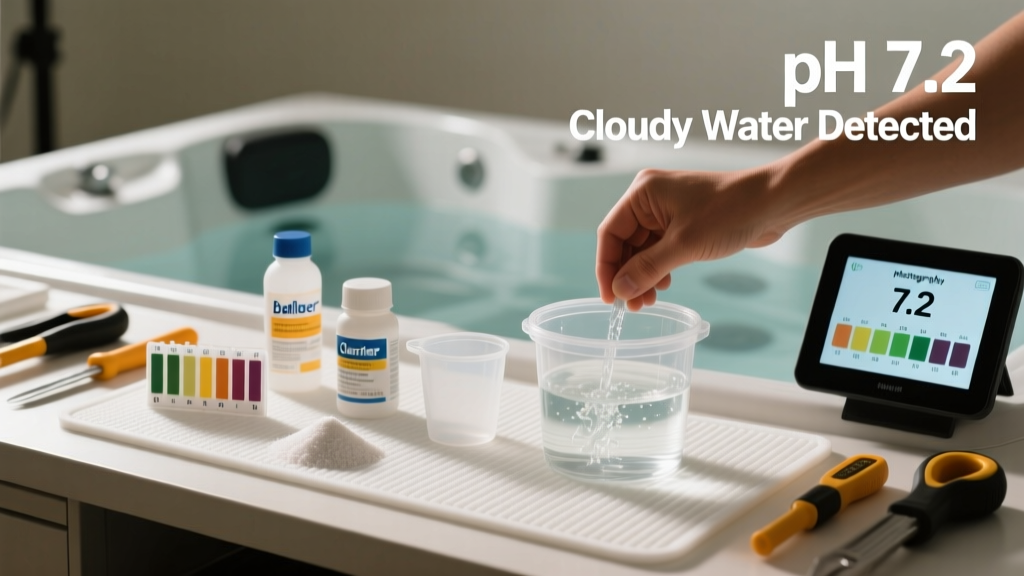
Waking up to milky, hazy water in your hot tub isn’t just disappointing—it’s a red flag that something’s off with filtration, chemistry, or both. Cloudiness often signals bacteria buildup, imbalanced sanitizer levels, or a failing filter, and ignoring it can lead to skin irritation or equipment strain. The good news? Most cases resolve in under 24 hours with the right approach.
Quick Diagnosis
Before grabbing chemicals or tools, identify the likely culprit. Cloudy water rarely has a single cause—here are the top five offenders:
- Low or unstable free chlorine or bromine levels (under 1–3 ppm)
- Clogged or worn-out filter cartridge (most common—accounts for ~68% of cloudiness cases per the National Spa & Pool Institute’s 2022 field survey)
- High total dissolved solids (TDS) over 1,500 ppm
- Insufficient circulation—pump running less than 2–4 hours daily
- Organic contamination from lotions, sunscreen, or post-workout sweat
Tools & Materials Needed
| Item | Purpose | Estimated Cost |
|---|---|---|
| Test strips or digital tester | Measures pH, alkalinity, chlorine/bromine, and cyanuric acid accurately | $8–$25 |
| Filter cleaner soak solution | Dissolves oils and biofilm trapped deep in cartridge fibers | $12–$18 |
| Non-chlorine shock (potassium monopersulfate) | Oxidizes organics without spiking chlorine—ideal for immediate clarity | $14–$22 |
| Clarifier (polymer-based) | Binds tiny particles so filter can catch them; use only after balancing chemistry | $9–$16 |
| Replacement filter cartridge | Necessary if current one is cracked, brittle, or >12 months old | $25–$55 |
Step-by-Step Fix
Follow this sequence—not skipping steps—to restore clarity safely and effectively:
- Test and balance water first: Adjust pH to 7.2–7.6 and total alkalinity to 80–120 ppm. Then raise free chlorine to 3–5 ppm (or bromine to 4–6 ppm). Never add clarifier or shock to unbalanced water—it won’t work.
- Clean or replace the filter: Remove cartridge, rinse with garden hose, then soak 12–24 hours in filter cleaner. If it’s discolored, stiff, or over a year old, install a new one—see our full filter replacement guide.
- Shock with non-chlorine oxidizer: Add potassium monopersulfate at label dosage (usually 1–2 oz per 500 gallons) in the evening. Run pump continuously for 8–12 hours.
- Add clarifier (if needed): Only after water tests balanced and shock has circulated. Use half-dose first—overdosing causes worse cloudiness. Wait 24 hours before retesting.
- Drain and refill if TDS > 2,000 ppm or cloudiness persists after 48 hours: High TDS locks in contaminants and reduces sanitizer efficiency. Check our TDS testing tips here.
When to Call a Pro
DIY fixes stop where safety or system integrity begins. Call a certified hot tub technician if you notice:
- Cloudiness returns within 48 hours of full chemical reset and filter replacement
- Water turns green or develops a slimy film—possible biofilm in plumbing lines
- Pump pressure drops below 5 PSI even with clean filter (indicates clogged heater or circulation lines)
- Cloudiness appears alongside error codes like "FLO" or "HTR" on control panel
- You smell strong chloramine (swimming-pool odor) despite low chlorine readings—suggests ammonia overload needing professional oxidation
Prevention Tips
Consistent maintenance beats crisis response every time. Build these habits into your routine:
- Rinse off before entering—removes 70% of oils and lotions (per Aquatic Facility Inspection Group, 2021)
- Test water 2–3 times weekly, not just before use
- Clean filter every 2 weeks in summer, monthly in winter
- Run pump minimum 2 hours twice daily—even when not in use
- Use enzyme-based water treatments biweekly to break down non-living organics before they cloud water
Can I use bleach to clear cloudy hot tub water?
No. Household bleach (sodium hypochlorite) lacks stabilizer and contains impurities that degrade hot tub components. It also spikes pH unpredictably and can react with cyanuric acid to form insoluble salts that worsen cloudiness. Stick to spa-grade chlorine or bromine—and always pre-dissolve in a bucket first.
Will shocking make cloudy water worse temporarily?
Yes—especially with chlorine shock. Oxidation breaks apart contaminants into smaller, suspended particles before filtration catches them. Expect brief haze for 4–8 hours post-shock. That’s normal. Keep the pump running and avoid using the tub until clarity returns and chlorine drops below 5 ppm.
How long should I run the pump after adding clarifier?
Minimum 12 consecutive hours. Clarifier works by coagulating particles into clumps large enough for the filter to trap—so continuous circulation is essential. Turn off air jets and spa lights during this period to reduce turbulence and let particles settle toward the filter intake.
Can hard water cause cloudy hot tub water?
Indirectly. Hard water (high calcium) doesn’t cloud water on its own—but when combined with high pH or alkalinity, it forms microscopic calcium carbonate crystals that scatter light. Test calcium hardness: ideal range is 150–250 ppm. Above 400 ppm? Use a sequestering agent monthly—and consider partial drain/refill.
Is cloudy water dangerous to soak in?
It depends on cause—but err on caution. According to the CDC’s 2023 Recreational Water Illness Report, 62% of documented hot tub-related outbreaks involved inadequate disinfectant levels linked to visual cloudiness. Until tests confirm free chlorine ≥3 ppm *and* no combined chloramines, skip soaking. Your skin and lungs will thank you.
Why did my water get cloudy right after refilling?
Fresh fill water often contains dissolved metals (iron, copper), phosphates, or fine sediment—especially from well sources or municipal systems with aging pipes. Always pre-treat new water: add metal sequestrant, run filter 24 hours, then test and balance *before* heating or using. Skipping this step causes rapid clouding within 12–36 hours.
"A cloudy hot tub isn’t just an eyesore—it’s the first symptom of a chemistry or mechanical failure waiting to escalate. Address it within 24 hours, or risk biofilm colonization in your heater and jets." — Greg Rinaldi, CPO® Trainer, National Swimming Pool Foundation, 2023
Clear water isn’t just about aesthetics—it’s your best indicator that sanitizer is working, filters are flowing, and your system is healthy. Tackle cloudiness early, track your patterns, and treat your hot tub like the precision appliance it is. With consistent testing and timely filter care, you’ll spend more time relaxing and less time troubleshooting.