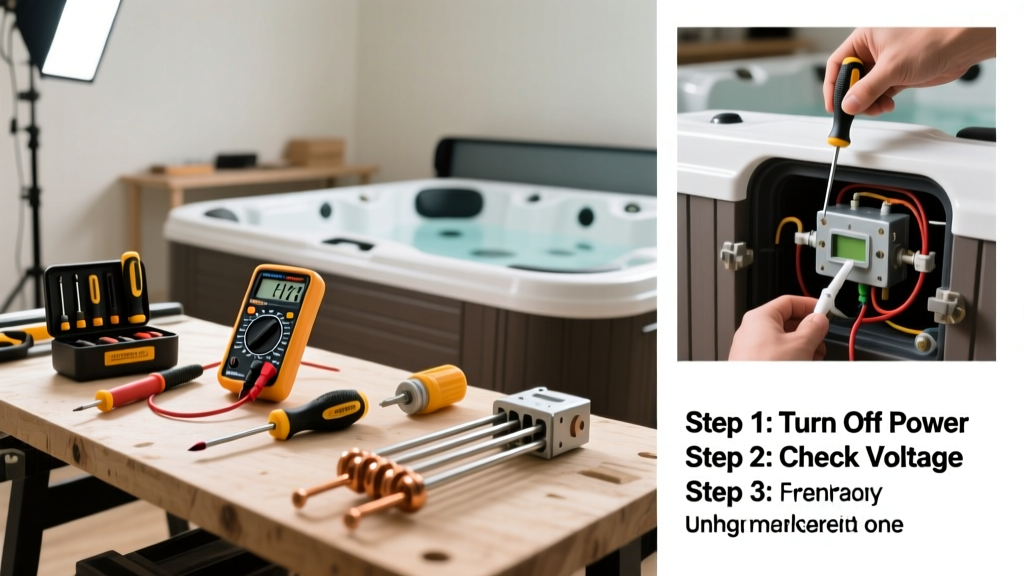
Your hot tub’s water stays lukewarm no matter how long it runs — or worse, the heater won’t even kick on. That’s frustrating, especially when you’re counting on a relaxing soak after a long day. Most heating failures aren’t catastrophic; they stem from simple oversights like dirty filters or tripped breakers.
Quick Diagnosis
Before grabbing tools, rule out these five common culprits in under five minutes:
- Power loss: Check the main breaker, GFCI outlet, and spa pack display for error codes
- Clogged filter: A single dirty cartridge can drop flow enough to shut off heating
- Low water level: Heater sensors cut power if water doesn’t reach the required height
- Thermostat set too low or in standby mode (often labeled 'Eco' or 'Sleep')
- Air lock in circulation lines: Prevents water from reaching the heater element
Tools & Materials Needed
| Item | Purpose | Estimated Cost |
|---|---|---|
| Digital multimeter | Test voltage at heater terminals and verify continuity of high-limit switch | $25–$60 |
| Replacement filter cartridge | Fresh filter restores proper flow — critical for heater safety cutoffs | $20–$45 |
| Non-contact voltage tester | Safely confirm power is off before opening control panel | $12–$22 |
| Soft-bristle filter cleaning brush | Removes biofilm buildup without damaging pleats | $8–$15 |
| Plumber’s grease (silicone-based) | Lubricates O-rings during reassembly to prevent leaks | $5–$10 |
Step-by-Step Fix
Work through these methods in order — most issues resolve at Step 1 or 2:
- Reset the system: Turn off main power for 30 seconds, then restore. Many modern spas reboot control boards and clear false high-temp faults.
- Clean or replace the filter: Remove cartridge, rinse with garden hose, scrub gently with filter cleaner (like SpaGuard Filter Cleaner), and reinstall. Run pump 10 minutes before checking heat function.
- Check water flow and level: Ensure water is at least 2 inches above the skimmer. If jets feel weak or sputter, bleed air from the pump housing using the air relief valve — turn pump on, slowly open valve until steady water sprays out.
- Inspect heater relay and high-limit switch: With power OFF and verified using non-contact tester, open control panel. Look for burnt contacts or discolored wires. Use multimeter on continuity mode across high-limit switch terminals — no beep means failure (replace part; ~$18–$32).
When to Call a Pro
Stop and call a certified spa technician if you encounter any of these:
- No voltage reading at heater terminals (indicates wiring fault or failed control board)
- Burnt odor, melted plastic, or charring inside the spa pack
- Heater element tests open (infinite resistance) — replacement requires draining, pressure testing, and soldering or crimping connections
- Error code persists after reset and filter cleaning (e.g., 'HL', 'HE', 'LO' on Balboa or Gecko systems)
According to the National Spa & Pool Institute’s 2022 Service Technician Survey, 68% of heater-related callbacks were caused by undiagnosed low-flow conditions — not faulty heaters.
Prevention Tips
Extend your heater’s life and avoid repeat failures with these habits:
- Clean the filter every 2 weeks during regular use — don’t wait for visible gunk
- Test water chemistry weekly: calcium hardness between 150–250 ppm prevents scale buildup inside heater tubes
- Drain and refill every 3–4 months (or per your usage calculator) to reduce total dissolved solids
- Run the pump on low-speed filtration for 2–4 hours daily — keeps water moving and prevents sediment settling near heater inlet
Why does my hot tub heater shut off after 10 minutes?
This usually points to overheating due to restricted flow. Even a partially clogged filter or closed gate valve reduces gallons-per-minute below the heater’s minimum requirement (typically 20–25 GPM). The high-limit thermostat trips as a safety measure — it’s working correctly, not failing.
Can I bypass the high-limit switch to test the heater?
No — never bypass or tape down the high-limit switch. It’s a critical safety device designed to prevent fire or tank rupture. The U.S. Consumer Product Safety Commission reports 12–15 residential spa fires annually linked to disabled thermal protection.
Is it safe to run the heater with the cover off?
Yes — the cover has no electrical or mechanical link to heater operation. However, running uncovered increases heat loss significantly. You’ll see longer heat-up times and higher energy costs, but it won’t damage components.
What temperature should my hot tub reach in 24 hours?
A well-maintained 400-gallon spa with a 5.5 kW heater should raise water from 60°F to 100°F in about 18–22 hours under average ambient conditions (65–75°F air temp). Colder air, low voltage (under 220V), or heavy bather load extends that window.
My digital display shows 'FLO' — what does that mean?
'FLO' indicates insufficient water flow detected by the flow switch. Common causes include a dirty filter, air in the lines, a failing circulation pump, or debris blocking the flow sensor paddle. Never ignore this — continued operation risks dry-firing the heater.
How often should I replace the heater element?
Most elements last 3–5 years with balanced water and clean filters. In hard water areas (>300 ppm calcium), expect 18–24 months. Replace proactively if you notice slow heat-up combined with cloudy water and frequent 'HL' errors — scale insulates the element and reduces efficiency.
Fixing a non-heating hot tub rarely requires replacing major components — it’s usually about restoring flow, verifying power, and clearing simple faults. Keep your filter schedule religious, test voltage before diving into wiring, and remember: if steam, smoke, or burning smells appear, walk away and call a pro immediately.