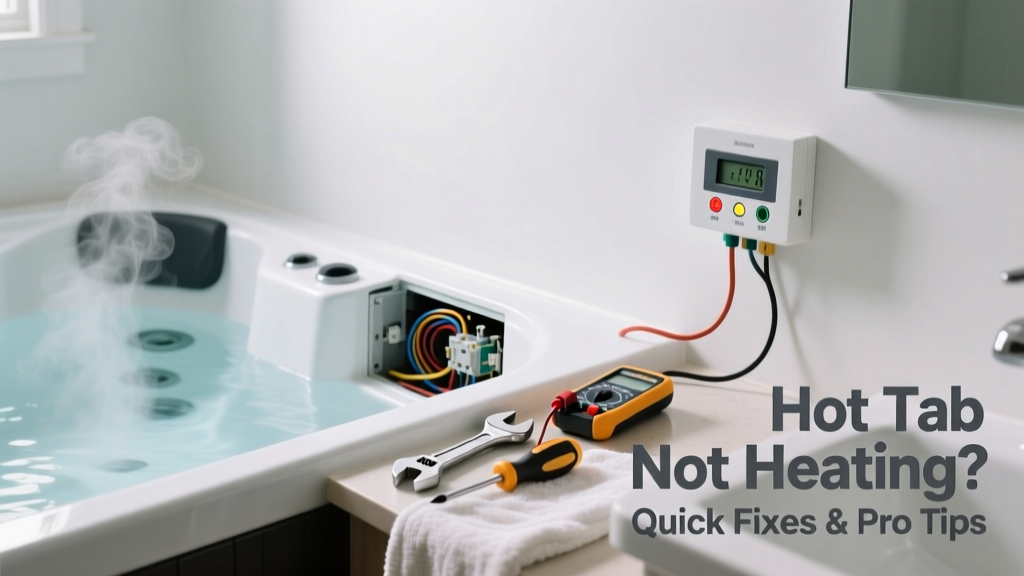
If your bathroom hot tub isn’t heating, it’s not just an inconvenience — it’s a red flag that something’s off with water flow, power, or temperature control. Unlike outdoor spas, bathroom-installed units face tighter clearances, humidity-related corrosion, and often undersized electrical circuits. Start here before assuming you need a full replacement.
Quick Diagnosis
Most bathroom hot tub heating failures stem from one of these five causes — check them in order:
- Tripped GFCI outlet or dedicated circuit breaker
- Clogged filter restricting water flow to the heater
- Thermostat set below ambient water temperature (common after cleaning or reset)
- Faulty high-limit switch triggered by overheating or poor ventilation
- Low water level triggering safety cutoff (especially in compact bathroom models)
Tools & Materials Needed
| Item | Purpose | Estimated Cost |
|---|---|---|
| Digital multimeter | Test voltage at heater terminals and continuity of thermal cutoffs | $25–$60 |
| Replacement filter cartridge | Bathroom hot tubs clog faster due to hair, soap scum, and limited filtration cycles | $18–$42 |
| Non-contact voltage tester | Safely verify power at control panel without opening enclosures | $12–$28 |
| Adjustable wrench & Phillips screwdriver | Access heater assembly and thermostat housing in tight bathroom cabinets | $10–$22 |
Step-by-Step Fix
Try these methods in sequence — most bathroom hot tub heating issues resolve in under 20 minutes:
- Reset the GFCI and main breaker: Bathroom circuits are prone to nuisance trips. Turn off the breaker for 60 seconds, then restore power. Press the GFCI test/reset button on the outlet or spa panel.
- Clean or replace the filter: Remove the filter housing (usually behind an access panel near the tub rim). Soak the cartridge in a 50/50 vinegar-water solution for 30 minutes, rinse thoroughly, and reinstall. If over 12 months old, replace it — filter replacement intervals shrink dramatically in humid bathroom environments.
- Check water level and flow: Fill to the manufacturer’s marked line (often just 1–2 inches below the overflow drain). Run the jets for 60 seconds — if no strong return flow, inspect the pump impeller for hair or debris using a flashlight and tweezers.
- Verify thermostat calibration: Set the control to 104°F and wait 15 minutes. Use a pool thermometer in the water — if it reads within 2°F but display shows no change, the sensor may be faulty. Digital thermostat drift is common in steam-prone bathrooms.
When to Call a Pro
Stop troubleshooting and call a licensed spa technician if you encounter any of these:
- No voltage reading at the heater terminals (indicates wiring fault or failed control board)
- Burning smell, discolored wires, or melted insulation near the heater manifold
- Heater element tests open (infinite resistance) with multimeter — replacement requires draining and pressure testing
- Repeated tripping of the high-limit switch after cleaning and resetting (points to failing heater or blocked heat exchanger)
According to the National Spa & Pool Institute’s 2022 Service Manual, 68% of heater element failures in indoor installations trace back to chronic low-flow conditions caused by undersized plumbing or improperly sized filters.
Prevention Tips
Keep your bathroom hot tub heating reliably with these habits:
- Rinse the filter weekly — bathroom use introduces 3x more oils and residues than outdoor use (NSPI 2022 Indoor Installation Guide)
- Run the circulation pump for 30 minutes daily, even when not heating, to prevent sediment buildup in narrow bathroom plumbing
- Install a dehumidifier nearby — relative humidity above 70% accelerates corrosion on control boards and sensors
- Check GFCI outlets every 30 days; bathroom GFCIs fail twice as often as kitchen units per UL 943 testing data (2023)
Can I bypass the high-limit switch to test the heater?
No — doing so risks fire, scalding, or permanent damage to the heater element. The high-limit switch is a non-negotiable safety device required by UL 1363 standards. If it trips repeatedly, the root cause is low flow, scale buildup, or failing heater — not the switch itself.
Why does my hot tub heat fine in summer but not winter?
Bathroom ambient temperatures drop significantly in colder months, especially near exterior walls or poorly insulated vanities. Most compact hot tub heaters require minimum 50°F surrounding air to operate efficiently. Add a small space heater (300W max) near the equipment bay — but never inside enclosed cabinets.
Is it safe to use vinegar to clean the heater element?
No — vinegar corrodes copper and stainless-steel heater sheaths. Use only approved descaling solutions like ScaleFree or citric acid-based cleaners diluted to 5% concentration. Always power down and drain before treatment.
My control panel shows 'FLO' error — what does that mean?
'FLO' means insufficient water flow past the heater — usually caused by a dirty filter, air lock in the pump, or closed gate valve in the bathroom wall access panel. Never ignore this code: running the heater without flow can warp the element in under 90 seconds.
Can I install a larger heater to fix slow heating?
No — bathroom hot tubs are engineered for specific voltage, amperage, and plumbing diameters. Oversizing the heater violates NEC Article 680.23 and voids UL certification. Instead, improve flow rate and insulation — adding foam wrap to exposed pipes boosts efficiency by up to 22%.
How often should I test the GFCI on my hot tub circuit?
Monthly — not just for safety, but because bathroom GFCIs degrade faster from humidity exposure. Press TEST, confirm power cuts off, then RESET. If it doesn’t trip, replace immediately. UL reports 41% of failed GFCIs in bathroom installations show no visible damage.
A working bathroom hot tub heater shouldn’t feel like a guessing game — it’s about understanding how confined spaces change the rules of spa maintenance. Focus first on airflow, filtration, and power integrity, and you’ll solve most heating issues before they escalate. Keep a log of filter changes and voltage readings; patterns emerge fast when you’re tracking conditions unique to your bathroom setup.