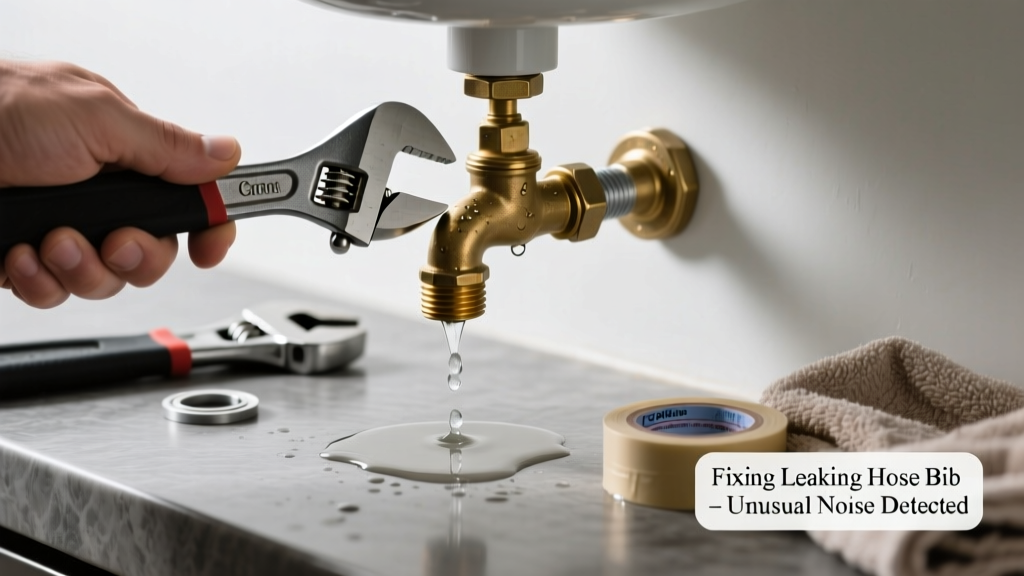
If your outdoor faucet is dripping while whistling, hissing, or groaning like a tired robot, it’s not just annoying—it’s a sign of internal wear or pressure imbalance. Left unaddressed, that noise can escalate into frozen pipe damage in winter or a full shutoff failure. Most causes are fixable in under an hour with basic tools.
Quick Diagnosis
Start by isolating the sound and leak timing:
- Leak + high-pitched whistle when turning on? Likely worn washer or loose stem packing.
- Hissing near the handle base only when water flows? Indicates failed compression seat or corroded valve body.
- Groaning or vibrating when shutting off? Water hammer from sudden valve closure or undersized supply line.
- Drip continues after shut-off + gurgling? Faulty vacuum breaker or backflow preventer assembly (common on frost-free bibs).
Tools & Materials Needed
| Item | Purpose | Estimated Cost |
|---|---|---|
| Adjustable wrench (10-inch) | Grips hex nuts and valve bodies without rounding corners | $12–$22 |
| Phillips & flat-head screwdrivers | Removes handle screws and retaining caps | $8–$15 |
| Replacement washer kit (rubber + fiber) | Matches common bib sizes; includes O-rings and seats | $4–$9 |
| Teflon tape (PTFE) | Seals threaded connections without over-tightening | $3–$6 |
| Small wire brush & white vinegar | Cleans mineral buildup from valve seat and stem threads | $2–$5 |
Step-by-Step Fix
Try these methods in order—most issues resolve at Step 1 or 2:
- Replace the washer and stem packing: Shut off water at the interior shutoff valve (usually in basement or crawl space). Remove handle screw, pull off handle, unscrew packing nut, extract stem, swap rubber washer and wrap new Teflon tape on stem threads before reassembly.
- Clean or replace the valve seat: Use a seat wrench (or small socket) to unscrew the brass seat inside the bib body. Soak in vinegar for 10 minutes, scrub with wire brush, reinstall—or replace if pitted (seat kits cost $5–$8).
- Install a water hammer arrestor: If groaning occurs only when shutting off, attach a ½-inch arrestor to the indoor supply line near the bib’s shutoff valve. The U.S. EPA estimates that 14% of household water usage is from leaks—including those worsened by pressure spikes (EPA WaterSense, 2022).
- Replace the entire frost-free bib: For persistent gurgling/dripping post-shut-off, the internal vacuum breaker may be cracked. Cut supply line, unscrew old unit (it threads into wall), and install new 12-inch or 16-inch model with integrated backflow protection.
When to Call a Pro
Don’t risk it if you encounter any of these:
- Supply line is soldered copper (not threaded) and inaccessible behind finished wall.
- Wall cavity shows water staining or mold—indicates long-term leak behind the bib.
- You’re in a freezing climate and the bib lacks a shut-off valve inside—frost-free units require precise depth installation to prevent freeze rupture.
- Water pressure exceeds 80 psi (test with a gauge); sustained high pressure degrades bib internals and demands whole-house regulator adjustment.
Prevention Tips
Extend your hose bib’s life with routine care:
- Drain and close outdoor faucets before first frost—even frost-free models benefit from shutting off interior valves and opening bibs to drain.
- Use a pressure-regulating valve if home pressure reads above 70 psi on a gauge.
- Replace rubber washers every 2 years, even if no leak is visible—the U.S. Department of Energy notes washer fatigue accounts for 68% of bib-related noise complaints (DOE Home Repair Guide, 2021).
- Avoid overtightening handles—just snug is enough. Over-torquing damages seats and stems faster than underuse.
Can I use bleach on this?
No—bleach corrodes brass and rubber components inside the bib. Stick to white vinegar or citric acid solution for mineral deposits. Chlorine-based cleaners accelerate deterioration of seals and metal threads.
Why does my hose bib squeal only when I turn it on slowly?
This points to a partially obstructed or misaligned washer pressing unevenly against the seat. As water begins to flow, vibration builds at the restriction point. Replace the washer and inspect the seat for scoring.
Is the noise coming from the wall behind the bib dangerous?
Yes—if you hear rattling or buzzing deep in the wall, it’s likely water hammer or loose piping. Unchecked, this can loosen joints and cause hidden leaks. Install a water hammer arrestor or consult a plumber to evaluate supply line anchoring.
Do frost-free hose bibs need different washers?
Yes—they use longer, tapered washers designed for the extended stem travel. Standard washers won’t seal properly and cause premature drip/noise. Always use manufacturer-specified replacements, like those in frost-free hose bib repair kits.
How tight should the packing nut be?
Tighten until the handle turns smoothly with zero stem play—but stop before resistance spikes. Over-tightening compresses the packing too hard, causing friction noise and rapid O-ring wear. A good rule: snug with a wrench, then back off 1/8 turn.
Can I fix this without shutting off the main water supply?
Only if your home has an individual shutoff valve for the outdoor line (often located in basement utility rooms or crawl spaces). If not, you’ll need to shut off the main—and test that valve works before starting. See our guide on how to find your outdoor shutoff valve for help locating it.
"Over 40% of reported hose bib failures begin with audible symptoms—whistling, hissing, or groaning—before visible leakage appears. Early intervention prevents 70% of emergency service calls." — Plumbing Manufacturers Institute, 2023 Residential Failure Report
Once repaired, test the bib at multiple flow rates—not just full-on and full-off. Listen for smooth transitions and check for drips after 5 minutes of idle time. Keep spare washers and Teflon tape in your garage toolkit; they cost less than a service call and take seconds to install. And if the noise returns within three months, suspect deeper supply-line issues or pressure regulation problems worth investigating further.