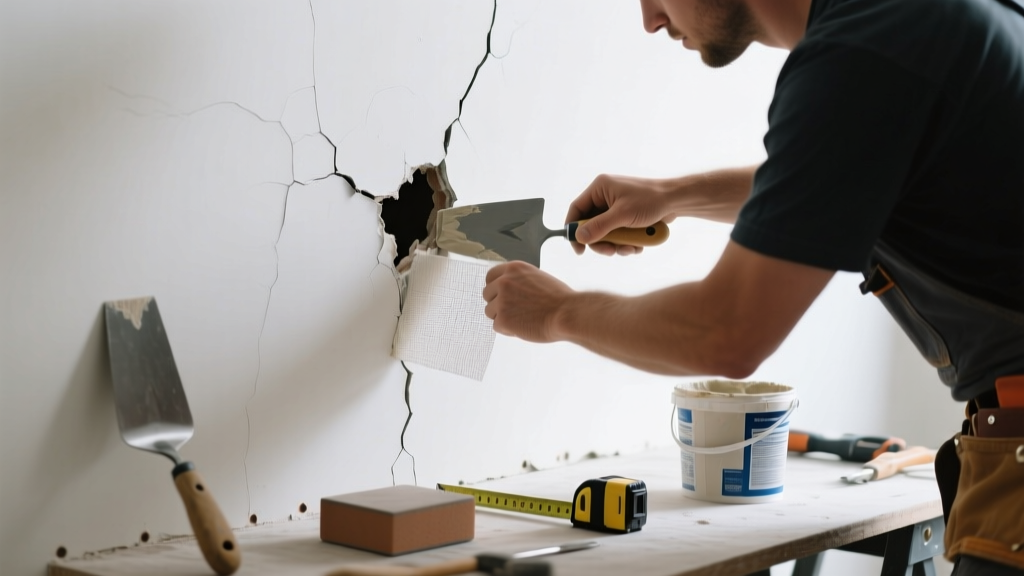
You’ve patched that hole in the drywall three times—and each time, it cracks, bubbles, or pulls away from the wall. It’s not you; it’s likely one of several overlooked structural or technique flaws hiding behind the surface. Let’s find and fix the real problem—not just the symptom.
Quick Diagnosis
Before grabbing spackle, rule out these common culprits:
- Moisture behind the drywall (from leaks, condensation, or plumbing)
- Loose or missing backing—especially around outlets, pipes, or stud gaps
- Over-sanding or under-drying joint compound between coats
- Using fast-setting 'hot mud' without proper feathering or reinforcement
- Applying tape over uneven or dusty substrate
Tools & Materials Needed
| Item | Purpose | Estimated Cost |
|---|---|---|
| Utility knife with fresh blades | Clean, precise cuts prevent fraying and improve tape adhesion | $3–$8 |
| Fiberglass mesh tape (not paper) | Bridges gaps better on unstable or flexing substrates | $4–$12 |
| Setting-type joint compound (90-minute) | Shrinks less than premixed mud; critical for deep or high-stress patches | $10–$18 |
| 120- and 220-grit sanding sponge | Prevents over-sanding while smoothing without gouging | $5–$9 |
| Stud finder with AC detection | Verifies if patch spans unsupported areas or crosses live wiring | $25–$60 |
Step-by-Step Fix
Use this sequence when standard patching fails. Start with Method 1—if that doesn’t hold, escalate.
- Re-cut and reinforce the perimeter: Use a utility knife to trim ragged edges back to solid drywall, then screw 1×2 furring strips horizontally behind the hole (anchored into studs) for rigid backing.
- Layer tape and mud correctly: Embed fiberglass mesh tape in a thin coat of setting compound—press firmly with a 6" taping knife, then let cure fully (not just surface-dry) before second coat.
- Add mechanical support for large holes: For openings over 6" wide, cut a plywood or drywall scrap backing plate, attach with drywall screws through the existing wall, then screw your patch panel into that plate.
- Prime before final coat: Seal bare drywall and compound with oil-based primer (e.g., Kilz Original) to prevent differential absorption—this stops flashing and improves topcoat adhesion.
When to Call a Pro
Don’t risk safety or code compliance in these scenarios:
- Hole exposes or is adjacent to active electrical wiring without a junction box
- Water stains surround the area and moisture readings exceed 15% (use a pinless meter)
- Structural damage is visible: sagging ceiling, cracked corners, or shifting framing
- The hole reappears within 30 days after two proper repairs—indicating ongoing movement or load stress
According to the Insurance Institute for Business & Home Safety's 2023 report, 68% of recurring drywall failures stem from unaddressed substrate movement or moisture—not poor finishing technique.
Prevention Tips
Stop future failures before they start:
- Always inspect behind the wall with a borescope before patching—look for insulation compression, rodent nests, or corroded fasteners
- Use greenboard or cement board behind showers and tubs—standard drywall fails predictably in high-humidity zones
- Install outlet and switch boxes with adjustable flanges to eliminate pressure points on surrounding drywall
- Let joint compound dry at least 24 hours between coats in basements or garages (humidity slows cure)
Why does my drywall patch keep bubbling?
Bubbling almost always means trapped air or moisture under the tape—or applying compound too thickly over non-porous surfaces like painted drywall. Sand the bubble down, prime the area with oil-based primer, then re-tape using thin, even layers of setting compound.
Can I use spackle instead of joint compound for small holes?
Only for nail holes under 1/4". Spackle lacks flexibility and shrinks more than all-purpose joint compound—so it cracks under minor wall movement. For any hole larger than a dime, use lightweight or setting-type joint compound with embedded tape.
Do I need to replace the entire drywall sheet if the patch fails twice?
Not necessarily—but if failure occurs near a seam, corner, or stud edge, check for loose screws or bowed framing. A drywall screw spacing guide can help verify if fastener density meets code (max 12" on edges, 16" in field).
How long should I wait before painting over a repaired hole?
Wait at least 48 hours after the final coat of joint compound dries completely—then test with light sanding. If dust is powdery (not gummy), it’s ready. Always use a stain-blocking primer like oil-based drywall primer before topcoats to prevent flashing.
What’s the best tape for high-movement walls (like near doors)?
Fiberglass mesh tape beats paper tape here—it bridges micro-movements without delaminating. But skip the cheap rolls: choose FibaTape UltraFlex or USG PaperTape Pro with self-adhesive backing for consistent tension control.
Can humidity cause drywall patches to fail?
Absolutely. The U.S. EPA estimates that indoor relative humidity above 60% increases drywall compound cure time by up to 300%, leading to weak bonds and eventual cracking. Use a hygrometer and run a dehumidifier for 48 hours pre- and post-repair in damp spaces like basements or bathrooms.
A properly diagnosed and reinforced drywall repair shouldn’t fail—even in older homes with settling foundations. The key isn’t faster work, but smarter prep: stable backing, compatible materials, and patience between steps. If your next patch holds smooth and flat for six months, you’ve nailed the root cause—not just covered it up.