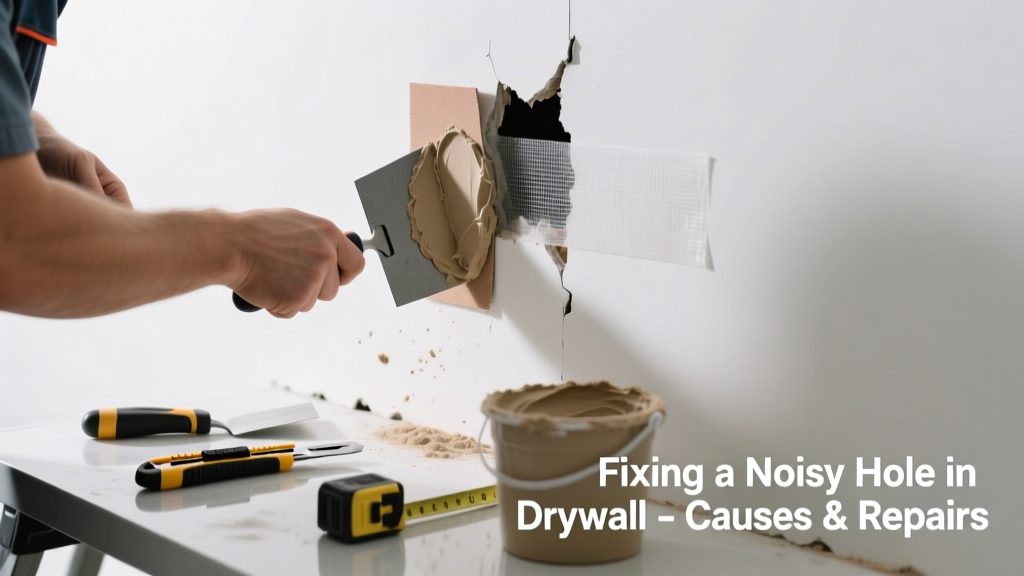
That faint tapping, buzzing, or hollow rattle coming from a hole in your drywall isn’t just annoying—it’s a red flag. Unlike silent holes from nails or screws, noise means something’s moving, vibrating, or interacting behind the wall. Ignoring it can lead to bigger issues like pest infestation, electrical hazards, or structural compromise.
Quick Diagnosis
Start by listening closely—time of day, weather, and appliance use matter. Then check these most likely culprits:
- Loose or vibrating electrical wires inside the cavity (especially near outlets or switches)
- Rodents or insects nesting or moving behind the wall (scratching, scurrying, or gnawing)
- Loose HVAC ductwork or flex vent touching drywall
- Water-damaged or delaminated drywall vibrating against framing
- Expansion/contraction of pipes or metal studs due to temperature shifts
Tools & Materials Needed
| Item | Purpose | Estimated Cost |
|---|---|---|
| Stud finder with AC detection | Finds live wires and framing without opening the wall further | $25–$60 |
| Inspection mirror + LED headlamp | See deep into cavities without enlarging the hole | $12–$28 |
| Flexible boroscope camera (3m) | Confirm rodent activity or pipe movement visually | $35–$75 |
| Fire-rated acoustic caulk | Seals gaps while damping vibration and blocking pests | $8–$14 |
| Self-tapping drywall screws (1¼") | Secure loose drywall to studs if sagging or vibrating | $4–$9 |
Step-by-Step Fix
Choose the method based on your diagnosis:
- For wire vibration: Turn off power at the breaker. Use your stud finder to locate nearby outlets or junction boxes. Gently secure loose NM cable with plastic staples—never nail or screw through insulation. Re-test with power restored.
- For pest activity: Insert a boroscope to confirm entry points. Seal all visible gaps >¼" with steel wool + fire-rated caulk. Place traps *outside* the wall cavity—not inside—and monitor for 72 hours before patching.
- For duct or pipe contact: Cut a small access panel (6"×6") below the noisy area. Inspect for flex duct rubbing framing or copper lines clanging against wood. Add rubber grommets or foam isolation pads where contact occurs.
- For drywall resonance: Drive two 1¼" drywall screws into the stud directly behind the hole’s edges. Apply acoustic caulk along the seam before applying joint compound.
When to Call a Pro
Stop and call a licensed specialist if you encounter any of these:
- Strong ozone smell, burning odor, or visible scorch marks near the hole (electrical fire risk)
- Multiple holes appearing across rooms—suggests widespread rodent or termite damage
- Water staining, mold growth, or damp insulation behind the wall (requires moisture remediation)
- Cracking plaster or shifting drywall beyond the immediate area (possible structural framing issue)
According to the Insurance Institute for Business & Home Safety's 2023 report, 68% of homeowner-reported 'mystery noises' behind walls involved either undetected plumbing leaks or compromised wiring—both requiring licensed assessment before repair.
Prevention Tips
Long-term quiet starts with smart habits:
- Install foam gaskets behind outlet and switch plates to reduce air transfer and vibration
- Use vibration-dampening mounts when securing HVAC ducts near interior walls
- Seal exterior penetrations (pipes, vents) annually with silicone-based sealant rated for UV exposure
- Keep attic and crawlspace humidity below 50% using dehumidifiers—this deters rodents and prevents drywall warping
Can I just spray insecticide into the hole?
No—most aerosol insecticides displace air but don’t penetrate deep nests, and they can contaminate insulation or trigger respiratory reactions. Instead, use dust formulations like diatomaceous earth *only* after confirming entry points and sealing them post-treatment. For persistent infestations, refer to our rodent-proofing interior walls guide.
Will spackling the hole stop the noise?
Not reliably. Spackle fills surface gaps but does nothing to address vibration sources or pests behind the wall. In fact, sealing over active rodent pathways can force them into living spaces. Always diagnose first—patch last.
Is this covered by my home insurance?
Rarely. Standard policies exclude wear-and-tear, pest damage, and routine maintenance. However, if noise stems from sudden water damage that led to structural weakening (e.g., burst pipe), coverage may apply—document everything before repairs. See our home insurance what repairs are covered breakdown.
How long should I wait before painting after the fix?
Wait until joint compound is fully cured (minimum 24 hours) and acoustic caulk has skin-set (4–6 hours). Use a moisture meter to confirm sub-12% humidity in patched areas—painting too soon causes bubbling or poor adhesion. For best results, prime with oil-based primer before topcoating.
Can cold weather cause drywall holes to make noise?
Yes. Temperature swings cause metal pipes, ducts, and framing to expand and contract. If your hole aligns with a supply duct or cold-water line, the ‘ticking’ or ‘popping’ often peaks at dawn or after furnace cycles. This is normal—but only if no pests, moisture, or electrical signs accompany it.
Do I need to replace the entire drywall sheet?
Almost never. Holes under 6 inches rarely require full-sheet replacement. Even for larger openings, a well-framed patch using backing blocks and tapered edges blends seamlessly. Full replacement becomes necessary only if the surrounding drywall is water-swollen, mold-infested, or structurally unsound—check with a drywall replacement guide.
A noisy hole isn’t just an eyesore—it’s your wall trying to tell you something’s off balance behind the surface. Taking time to listen, inspect, and match the fix to the root cause saves money, prevents repeat repairs, and keeps your home safer and quieter. Most cases resolve in under two hours with the right tools and a methodical approach.